
Direct B-Cell Cytolytics for Relapsed and Refractory DLBCL
Diffuse large B-cell lymphoma (DLBCL) can often be cured with one round of treatment. But with cancer that either doesn’t respond to treatment (refractory) or that gets better but then comes back (relapsed), it’s very difficult to get to a cure.
Options for your next treatment often include an immunomodulating drug, which is a medication that changes how a part of your immune system works. This includes drugs known as direct B-cell cytolytics.
What Are Direct B-Cell Cytolytics?
Direct B-cell cytolytics are a type of immunomodulatory treatment that uses the power of your own immune system to fight cancer. The drugs in this category approved to treat refractory or relapsed DLBCL are monoclonal antibodies – lab-made proteins that act like natural immune system proteins.
How Do Direct B-Cell Cytolytics Work?
Direct B-cell cytolytics are made to recognize certain other proteins found in large numbers on the surface of cancerous B cells. By attaching to these proteins, called antigens, they identify the cancer cells as dangerous and alert elements of your immune system to attack them.
These drugs can also kill cancer cells directly.
When Are Direct B-Cell Cytolytics Prescribed for Relapsed and Refractory DLBCL?
Rituximab is part of the first treatment most people get for DLBCL, but it’s also important in the treatment of refractory and relapsed DLBCL. It’s usually prescribed along with other types of cancer medication. You might get rituximab:
- As part of bridging therapy while you’re waiting for CAR T-cell therapy to be prepared
- If you can’t have a stem cell transplant or CAR T-cell therapy
- After you’ve tried two or more other treatments
Tafasitamab can be prescribed along with another immunomodulating drug, lenalidomide, if you aren’t able to have either CAR T-cell therapy or a stem cell transplant.
How Do You Take Direct B-Cell Cytolytics?
Rituximab and tafasitamab are liquid infusions delivered through a needle placed in a vein in your arm (IV). This is done at a clinic or infusion center.
You may be given antihistamines and fever reducers before each treatment to prevent a reaction.
With rituximab, your doctor may prescribe a different schedule depending on which drugs you’re taking in combination with rituximab, your overall health, and your stage of treatment.
Tafasitamab treatment is done in 28-day cycles. It starts with two infusions in the first week, then once-weekly infusions for the remainder of the first three cycles. You then have an infusion every two weeks for as long as the medication helps you. Along with tafasitamab, you’ll be prescribed lenalidomide for the first year. It’s a pill you take daily for three weeks, then take a one-week break.
How Effective Are Direct B-Cell Cytolytics?
Direct B-cell cytolytics have made a major difference in the treatment of DLBCL. Here are results from clinical trials.
Are Direct B-Cell Cytolytics Safe?
Rituximab, both the original and close copies called biosimilar versions, comes with a boxed warning about the risk of several possibly life-threatening side effects.
Infusion reaction. Similar to an allergic reaction, this can happen within minutes of starting an infusion or even days later. Symptoms include hives, swelling, trouble breathing, low blood pressure, and heart rhythm problems. The chances are highest with your first or second dose.
Mucocutaneous reaction. This causes symptoms that affect your skin and mucous membranes, such as inside your mouth and nose. You may have a rash, blisters or peeling skin, and mouth sores.
Hepatitis B reactivation. When you’re infected with hepatitis B, the virus DNA can stay in your body even after you’ve recovered. Weakening of your immune system can cause the infection to become active again.
Progressive multifocal leukoencephalopathy (PML). This is a rare brain infection that can develop when your immune system is weak. Symptoms include balance problems, trouble speaking, confusion, and muscle weakness.
Other serious side effects possible with rituximab include an increased risk of major infections, problems with your heart, kidneys, or intestines, and a condition called tumor lysis syndrome, where the destruction of a large number of cancer cells floods your bloodstream with waste products.
Tafasitamab doesn’t have a boxed warning, but it can also cause infusion reactions, increase your risk of serious infections, and lower the activity of your bone marrow, which can cause you to have too few blood cells.
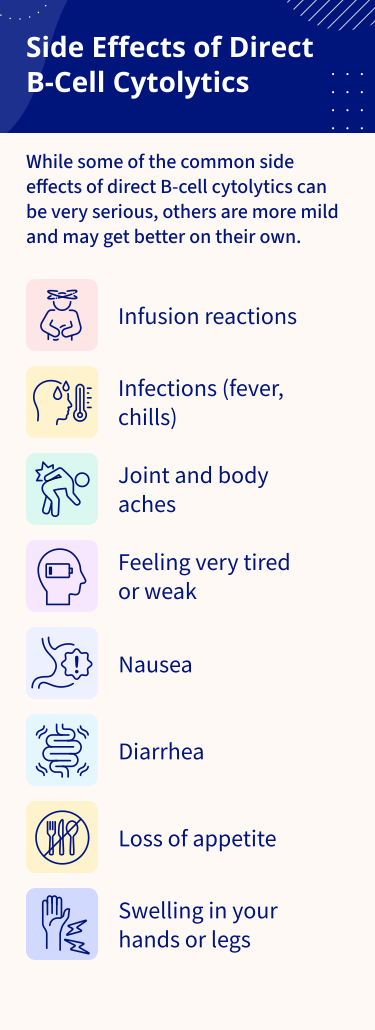
What Are the Common Side Effects of Direct B-Cell Cytolytics?
While some of the common side effects of direct B-cell cytolytics can be very serious, others are more mild and may get better on their own.
Who Should Not Take Direct B-Cell Cytolytics?
Direct B-cell cytolytics aren’t for everyone. Your doctor may not recommend taking one if:
- You’re pregnant or breastfeeding. These drugs can cause serious harm to a fetus.
- You have an active infection. Because these drugs make your immune system less effective, they may not be safe to take until you’re better.
How Much Do Direct B-Cell Cytolytics Cost?
Like other biologic drugs, direct B-cell cytolytics are hard to make and very expensive. Treatment with either rituximab or tafasitamab costs thousands of dollars each dose.
The amount you’ll pay depends on what type of health insurance you have and your plan’s coverage. You may be able to get help with your out-of-pocket-costs or qualify for free medication through drug company and charitable programs, including:
- Genentech Oncology Co-pay Assistance Program (Rituximab)
- Genentech Patient Foundation (Rituximab)
- IncyteCARES (Monjuvi)
- Amgen SupportPlus Co-Pay Program (Riabni)
- Pfizer Oncology Together (Ruxience)
- NeedyMeds
- HealthWell Foundation
Clinical Trials for Immunomodulators
Doctors are constantly working to improve the treatment options for refractory and relapsed DLBCL. Clinical trials are an important part of that process. Through these scientific studies, doctors test how well new medications work and learn the best ways to use existing treatments.
In the area of direct B-cell cytolytics, researchers are looking for alternatives to the currently approved medications. Many of the immunomodulating drugs used to treat DLBCL rely on the same antigens to identify and target cancerous B cells. But when DLBCL comes back, the cancer cells often don’t have those antigens anymore. That means the most common treatments don’t work. To get past that, doctors are working on direct B-cell cytolytics that target different antigens.
A clinical trial may be a good option for you, especially if your DLBCL has relapsed more than once. Ask your doctor what type of medication might help and whether you’re healthy enough to take part in a drug study.
Your doctor may know of a clinical trial that would be a good fit. You can also search a government-run database for trials taking place near you at ClinicalTrials.gov.
Is a Direct B-Cell Cytolytic Right for Me?
If your doctor recommends a B-cell cytolytic as part of your DLBCL treatment, talk with them about why they think it’s a good choice and how they expect it to help you. Here are four things to discuss with them.