
Antibody-Drug Conjugates for Relapsed and Refractory DLBCL
Diffuse large B-cell lymphoma (DLBCL) is the most common type of non-Hodgkin's lymphoma. Most people can be cured with a combination of chemotherapy and drugs called immunomodulators, which affect how your immune system works.
For others, either the cancer is refractory, meaning it doesn't respond to their first treatment, or they have a relapse, where the cancer goes into remission for a time but then comes back. Treatment in these situations is much more challenging.
Immunomodulating drugs have an important role in second-line DLBCL treatment and beyond, including a type of medication called an antibody-drug conjugate.
What Are Antibody-Drug Conjugates?
Antibody-drug conjugates (ADCs) are medications that treat cancer by taking chemotherapy directly to cancer cells, doing less damage to healthy cells. Antibody-drug conjugates have three parts: a lab-made protein called a monoclonal antibody, a chemo drug, and a chemical linking the two.
How Do Antibody-Drug Conjugates Work?
The monoclonal antibody portion of an ADC is designed to seek out and attach to a protein called an antigen on the surface of a cancer cell.
When the ADC reaches the cancer cell, the cell absorbs it and the chemotherapy portion goes to work destroying the cell. While ADCs can damage some healthy cells, the risk is much less than with traditional chemotherapy, which targets all fast-growing cells in your body.
When Are Antibody-Drug Conjugates Prescribed for Relapsed and Refractory DLBCL?
ADCs can be prescribed for people in several different phases of DLBCL treatment.
Polatuzumab vedotin is approved in combination with chemotherapy and other immunomodulators as a first-line treatment for DLBCL in patients considered moderate or high risk.
It's used in different combinations to treat refractory or relapsed DLBCL. You could get it:
- As part of bridging therapy while you're waiting for CAR T-cell therapy to be prepared
- As a second-line treatment if you can't have a stem cell transplant or CAR T-cell therapy
- After you've tried two or more other treatments
Loncastuximab tesirine can be used by itself after you've tried at least two other types of treatment.
Brentuximab vedotin is approved for people who've tried at least two other treatments, and who aren't able to have either a stem cell transplant or CAR T-cell therapy. It's used along with rituximab and lenalidomide.
How Do You Take Antibody-Drug Conjugates?
Antibody-drug conjugates are liquid infusions. They're delivered through a needle placed in a vein in your arm. You'll get treatment at a clinic or infusion center.
While your doctor may prescribe something different, the standard dosing schedule is:
- One infusion every three weeks
- Polatuzumab vedotin: a total of six doses
- Loncastuximab tesirine or brentuximab vedotin: as long as it helps you
Because these drugs are often used in combinations, you may have other cancer medications either along with the ADC infusions or on a different schedule.
How Effective Are Antibody-Drug Conjugates?
Here are results from clinical trials.
Are Antibody-Drug Conjugates Safe?
ADCs are considered safe for most people. While they're designed to be less harmful to healthy cells than traditional chemotherapy, they can still cause serious and possibly life-threatening side effects.
Brentuximab vedotin comes with a boxed warning about the risk for progressive multifocal leukoencephalopathy (PML). This is a rare brain infection that can develop when your immune system is weak. Symptoms include balance problems, trouble speaking, confusion, and muscle weakness.
Other serious possible side effects include:
- Nerve pain in your hands and feet (peripheral neuropathy)
- Infusion reactions (similar to an allergic reaction, causing hives, swelling, trouble breathing, low blood pressure, and heart rhythm problems)
- Increased risk of serious infection
- Tumor lysis syndrome (waste products from dead cancer cells flood your bloodstream)
- Liver, lung, and intestinal problems
- Serious skin reactions
- High blood sugar
Polatuzumab vedotin doesn't have a boxed warning, but it can cause many of the same serious side effects and others:
- Peripheral neuropathy
- Infusion reactions
- Lowered numbers of blood cells
- Increased risk of serious infections
- PML
- Tumor lysis syndrome
- Liver damage
Loncastuximab tesirine can cause these serious side effects:
- Fluid buildup in your chest, abdomen, arms, or legs
- Lowered numbers of blood cells
- Increased risk of serious infections
- Serious skin reactions
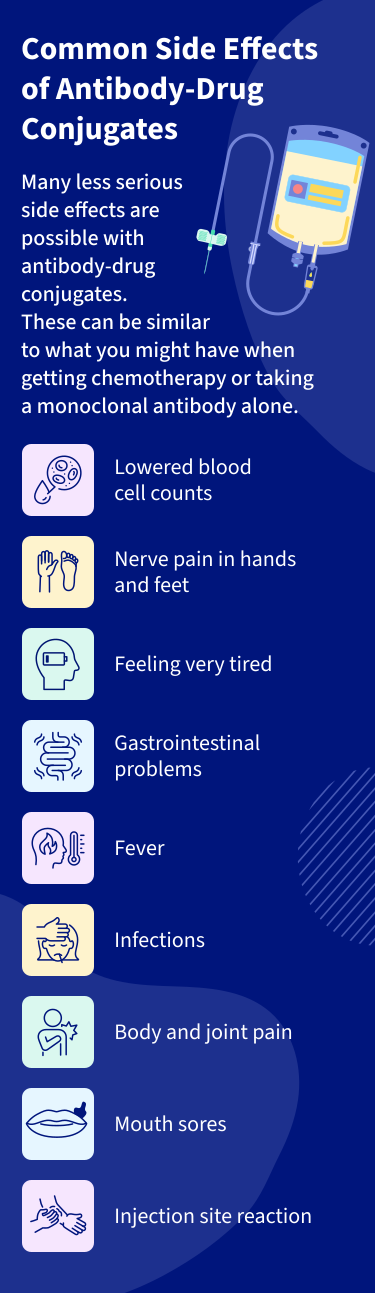
What Are the Common Side Effects of Antibody-Drug Conjugates?
Who Should Not Take Antibody-Drug Conjugates?
Not everyone should take ADCs. Your doctor may not suggest one if you:
- Are pregnant or breastfeeding. ADCs can cause serious harm to a fetus.
- Have an active infection
- Have serious liver or kidney problems
- Are in heart failure
How Much Do Antibody-Drug Conjugates Cost?
Antibody-drug conjugates are a type of biologic drug, which are difficult to make and very expensive. These medications can cost tens of thousands of dollars a month.
The amount you'll pay depends on what type of health insurance you have and your plan's coverage. You may be able to get help with your out-of-pocket-costs or qualify for free medication through drug company and charitable programs, including:
- Pfizer Oncology Together (Adcetris)
- Genentech Oncology Co-pay Assistance Program (Polivy)
- Genentech Patient Foundation (Polivy)
- Advancing Patient Support (Zynlonta)
- NeedyMeds
- HealthWell Foundation
Clinical Trials for Antibody-Drug Conjugates
Doctors are constantly working to improve the treatment options for people with refractory or relapsed DLBCL. Clinical trials are how they test new medications and find the best uses for already-approved medications.
Antibody-drug conjugates are a fairly new type of DLBCL treatment. Scientists are developing new ones with an antibody that targets a different cancer cell antigen than the currently approved medications do. That may help if the cancer stops responding to your existing treatment.
Taking part in a clinical trial can get you access to a new treatment before it's available to other patients. Ask your doctor if they know of one that could help you and if it would be safe for you to join. You can also search for clinical trials in your area at the government-run website ClinicalTrials.gov.
Is an Antibody-Drug Conjugate Right for Me?
Choosing a treatment for refractory or relapsed DLBCL can be complicated. When you discuss the pros and cons of ADCs with your doctor, keep these four things in mind.