
Drugs that harness the power of your immune system to fight cancer are very important in the treatment of diffuse large B-cell lymphoma (DLBCL). That includes medications called bispecific T-cell engagers.
Most people can be cured with a first-line treatment combining chemotherapy with an immunomodulating drug. But if the disease doesn't respond to this treatment (refractory), or goes away and then comes back (relapsed), it's very hard to find a successful treatment.
If you have DLBCL that didn't respond to second-line treatment, or you've relapsed more than once, a bispecific T-cell engager could be part of your next treatment.
What Are Bispecific T-Cell Engagers?
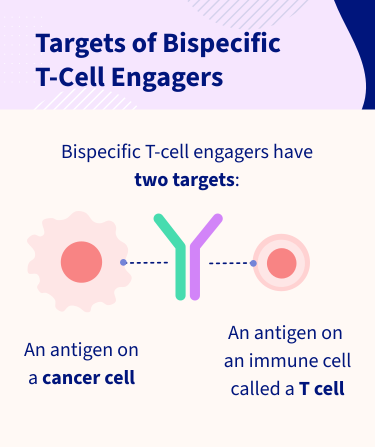
Bispecific T-cell engagers (BiTEs) are drugs that activate your immune system to attack DLBCL by bringing cancer cells together with infection-fighting cells. They are lab-made versions of immune system proteins called antibodies that attach to targets on the surface of cells called antigens.
How Do Bispecific T-Cell Engagers Work?
B cells and T cells are both blood cells that are part of your immune system. In DLBCL, B cells are defective and grow out of control. T cells have the ability to destroy cancer cells if they recognize them as dangerous.
A bispecific T-cell engager connects to both types of cells. That brings them close together, which stimulates the T cell to launch an immune attack on the cancer cell.
Which Bispecific T-Cell Engagers Are Used to Treat Relapsed and Refractory DLBCL?
When Are Bispecific T-Cell Engagers Prescribed for Relapsed and Refractory DLBCL?
Bispecific T-cell engagers are usually prescribed for DLBCL that is considered hard to treat. Epcoritamab and glofitamab are approved for refractory or relapsed disease after you've tried at least two other treatments. Your doctor might recommend using a BiTE off-label along with chemotherapy if you can't have CAR T-cell therapy or a stem cell transplant.
How Do You Take Bispecific T-Cell Engagers?
Epcoritamab is given as a shot under your skin at your doctor's office or a treatment center in 28-day cycles.
- Cycles 1-3: One shot each week
- Cycles 4-9: One shot every two weeks
- Cycles 10 and beyond: One shot every four weeks
You keep taking epcoritamab for as long as it helps you.
After dose number three (your first full dose) you'll stay in the hospital for 24 hours in case you have a reaction.
Glofitamab is a liquid infusion you get through a needle inserted into a vein in your arm (IV) at your doctor's office or a treatment center in 21-day cycles. You'll start with an infusion of the monoclonal antibody obinutuzumab to try to avoid serious side effects.
- Cycle 1: obinutuzumab infusion week one glofitamab infusion weeks two and three
- Cycles 2-12: glofitamab infusion every three weeks
Glofitamab treatment is for a set length of time.
You'll stay in the hospital for 24 hours after your first dose in case you have a reaction.
Bispecific T-Cell Engager Dosing Schedule
Epcoritamab
- Subcutaneous injection
- 28-day cycles
Cycle 1:
- .16 mg shot week 1
- .8 mg shot week 2
- 48mg shot weeks 2-3
Cycles 2-3:
- 48mg shot each week
Cycles 4-9
- 48 mg shot every 2 weeks
Cycles 10+
- 48mg shot each month
- 24-hr hospitalization after 3rd shot
- Treatment continues until cancer progresses
Glofitamab
- IV infusion
- 21-day cycles
Cycle 1
- Pretreatment with obinutuzumab day 1
- 2.5 mg glofitamab infusion week 2
- 10 mg glofitamab infusion week 3
Cycles 2-12
- 30 mg glofitamab infusion every 3 weeks
- 24-hr hospitalization after first glofitamab infusion
- No more than 12 treatment cycles
How Effective Are Bispecific T-Cell Engagers?
Here are results from clinical trials.
Are Bispecific T-Cell Engagers Safe?
While serious side effects happen less often than with other treatments, bispecific T-cell engagers carry a boxed warning because of the chance of even life-threatening complications.
Cytokine release syndrome
Both epcoritamab and glofitamab can cause this by launching a powerful immune system attack against the cancer. Your bloodstream is suddenly flooded with chemical messengers called cytokines, causing widespread inflammation that can lead to organ damage. Symptoms may start out mild but can quickly become serious. They include:
- Fever
- Chills
- Muscle or joint pain
- Trouble breathing
- Nausea, vomiting, or diarrhea
- Fast or irregular heartbeat
- Low blood pressure
- Feeling dizzy or lightheaded
- Feeling very tired or weak
You'll get medication before each treatment to try to prevent this. If you have symptoms, you may be treated with IV fluids, breathing support, anti-inflammatory medications, and immunomodulators.
Nervous system damage (neurotoxicity)
Epcoritamab also can cause problems affecting your brain and nerves. This happens when inflammatory proteins released during the immune system attack on the cancer cross into the fluid around your brain and spinal cord. It's not clear exactly what causes this. Symptoms include:
- Headache
- Confusion
- Restlessness or agitation
- Shaking, tingling, or numbness
- Trouble speaking
- Blurred vision
- Poor coordination
- Muscle weakness
- Loss of consciousness
- Seizures
Treatment may include corticosteroids to calm your body's immune response.
Both BiTEs approved for refractory or relapsed DLBCL can raise your risk of serious infections and lower your levels of blood cells. Glofitamab can also cause neurological problems and a side effect called tumor flare, where the cancer may get worse for a short time before it gets better.
What Are Common Side Effects of Bispecific T-Cell Engagers?
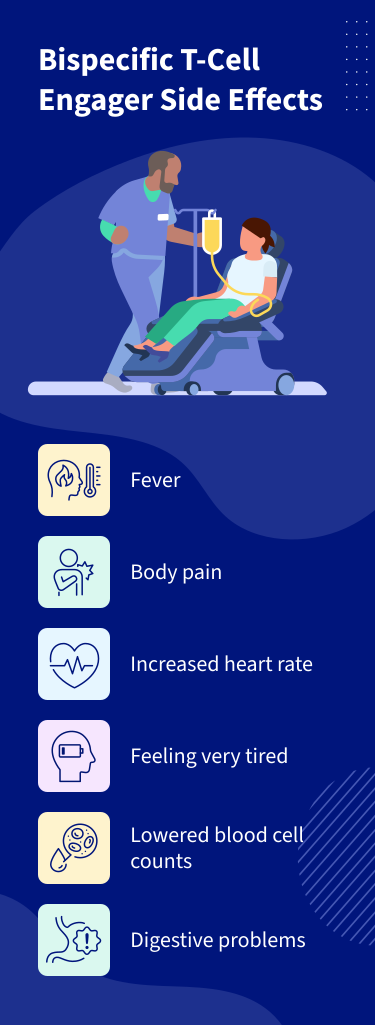
Like all medications, BiTEs can cause both serious and milder side effects.
Who Should Not Take Bispecific T-Cell Engagers?
People who are pregnant or breastfeeding shouldn't take bispecific T-cell engagers because they can cause serious harm to a fetus.
How Much Do Bispecific T-Cell Engagers Cost?
As biologic drugs, bispecific T-cell engagers are hard to make and very expensive. They can cost tens of thousands of dollars a month – hundreds of thousands for a typical course of treatment. What you'll have to pay depends on the type of insurance you have and your plan's coverage.
If you need help covering your out-of-pocket expenses, you can look into assistance programs run by drug companies and charitable groups. For example:
- MyNavCare Patient Support (Epkinly)
- Genentech Oncology Co-pay Assistance Program (Columvi)
- Genentech Patient Foundation (Columvi)
- NeedyMeds
- HealthWell Foundation
Clinical Trials of Bispecific T-Cell Engagers
Clinical trials are an important part of how doctors learn about diseases and come up with better treatments. These studies test new drugs and new combinations of already-approved drugs for safety and effectiveness. Taking part in one could be a good option for you, especially if the cancer has come back more than once or if you had CAR T-cell therapy but it didn't help.
Bispecific T-cell engagers are the newest type of treatment approved for refractory or relapsed DLBCL. Researchers are working to come up with new types of BiTEs that have different antigen targets and that may cause fewer serious side effects. They're also testing BiTEs along with either chemotherapy or antibody-drug conjugates to learn how well they work as a second-line treatment for people who can't have CAR T-cell therapy or a stem cell transplant.
If you're interested in joining a clinical trial, ask your doctor whether you're healthy enough to take part and what types of experimental treatment might help you. They may know about clinical trials going on in your area. You can also search for studies in the government-run database ClinicalTrials.gov.
Is a Bispecific T-Cell Engager Right for Me?
Your doctor may recommend a bispecific T-cell engager based on several things, including your overall health and where you are in your treatment journey. As you're considering your options, here are three things to keep in mind.