
First-line treatment for diffuse large B-cell lymphoma (DLBCL) is straightforward. Most people start with a combination of chemotherapy drugs and medications called immunomodulators, which affect the way your immune system works. But if the cancer either doesn't respond to this first treatment, or goes away and then comes back, the next treatment options are more complicated.
While most people with DLBCL can be cured, successful treatment for refractory or relapsed disease is much more difficult. However, it's possible for some people using a type of immunomodulating treatment called CAR T-cell therapy.
What Is CAR T-Cell Therapy?
CAR T-cell therapy is a type of treatment that engineers your body's own immune cells to be better able to fight your cancer. In DLBCL, immune cells called B cells are defective and grow out of control. T cells, which lead your body's response to infections and disease, may not recognize those B cells as harmful. CAR T-cell therapy changes that.
How Does CAR T-Cell Therapy Work?
In CAR T-cell therapy, a sample of T cells is taken from your blood and sent to a lab where doctors genetically change the cells, adding a chimeric antigen receptor (CAR). This receptor is made to attach to a certain protein that's found in large amounts on the surface of cancerous B cells.
When the CAR T cells are returned to your body, they seek out and attack the cancer cells, which signals other parts of your immune system to destroy them.
Which CAR T-Cell Therapy Medications Treat Relapsed and Refractory DLBCL?
When Is CAR T-Cell Therapy Prescribed for Relapsed and Refractory DLBCL?
CAR T-cell therapy is considered the best treatment for refractory DLBCL, and it's a top option for many people with relapsed disease.
You could have lisocabtagene maraleucel (liso-cel) in any of these situations. Axicabtagene ciloleucel (axi-cel) is approved for refractory disease, an early relapse, or third-line therapy. Tisagenlecleucel (tisa-cel) can only be used after at least two other types of treatment.
How Do You Take CAR T-Cell Therapy?
Getting CAR T-cell therapy requires several steps that can take two months or more. It's done at specialized treatment centers, mainly in larger cities.
How Effective Is CAR T-Cell Therapy?
CAR T-cell therapy has significantly improved the outlook for people with refractory or relapsed DLBCL. Here are results from clinical trials.
Is CAR T-Cell Therapy Safe?
In many cases, CAR T-cell therapy is considered safer than DLBCL treatments that involve strong chemotherapy, especially for people over age 70 or who have other health problems. But it also has risks.
CAR T-cell therapy medications come with a boxed warning because of the chance of serious, life-threatening complications. You'll be watched closely for symptoms while you've having the infusion of CAR T cells and for a week afterward. Because these are most likely to happen in the first two weeks after the infusion, you need to stay close by the treatment center. These complications can be reversed if they're treated in time.
Other serious possible side effects of CAR T-cell therapy include allergic reactions, an increased risk of serious infections, low blood cell counts, and a weakened immune system.
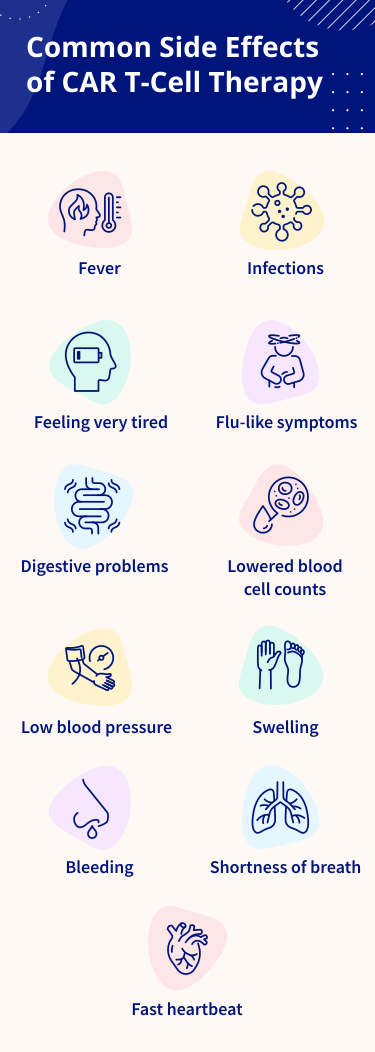
What Are Common Side Effects of CAR T-Cell Therapy?
The most common side effects of CAR T-cell therapy include both serious side effects that need treatment and milder ones that may get better on their own.
Who Should Not Have CAR T-Cell Therapy?
While not everyone is a good candidate for CAR T-cell therapy, the requirements are generally less restrictive than they are for other types of treatment, like a stem-cell transplant.
Overall health. Your doctor may be cautious if you have heart, lung, kidney, or liver disease. They may delay treatment if you have an active infection.
Cancer progression. CAR T-cell treatment can take months to prepare. If the cancer is getting worse quickly, you may not be able to wait that long.
How Much Does CAR T-Cell Therapy Cost?
CAR T-cell therapy is very expensive. The total cost of treatment can be over $500,000. Medicare and commercial insurance usually cover some but not all of that amount.
You may have significant other expenses, such as travel to a treatment center. Ask your medical team if the drugmaker has a financial assistance program. There are also organizations that can help you with nonmedical costs related to your treatment. Places to try:
- Cell Therapy 360 (Breyanzi)
- Blood Cancer United's Susan Lang Pre CAR T-cell Therapy Travel Assistance Program
- BMT InfoNet Patient Assistance Fund
Clinical Trials of CAR T-Cell Therapy
Hundreds of research studies on DLBCL are going on right now around the world, including dozens in the United States that are looking for volunteers. Clinical trials are an important step in the development of new treatments, when drugs and drug combinations are tested for safety and effectiveness.
In the area of CAR T-cell therapy for refractory or relapsed DLBCL, here's some of what scientists are studying:
New CAR T-cell drugs. Doctors are working to improve current CAR T-cell therapy with new drugs that target different antigens, have fewer side effects, and can be made more quickly.
Allogenic CAR T-cell therapy. Instead of waiting possibly months for a medication to be made from your own T cells (autologous), this would allow you to get a pre-made medication right away.
Relapse after CAR T-cell therapy. Doctors are working to expand the available next-line options if CAR T-cell therapy doesn't give you lasting remission.
What to Know if You're a Caregiver
A caregiver's role is especially important with CAR T-cell therapy. The person getting care has to be watched closely for at least two weeks afterward, and they won't be allowed to drive. Plus, many people have to have the treatment far from home, which limits the number of friends and family members available to help.
Is CAR T-Cell Therapy Right for Me?
Getting CAR T-cell therapy is a major undertaking, and you should make the choice carefully. It's helpful to do your research and talk with your doctor so you understand how it works and what to expect.