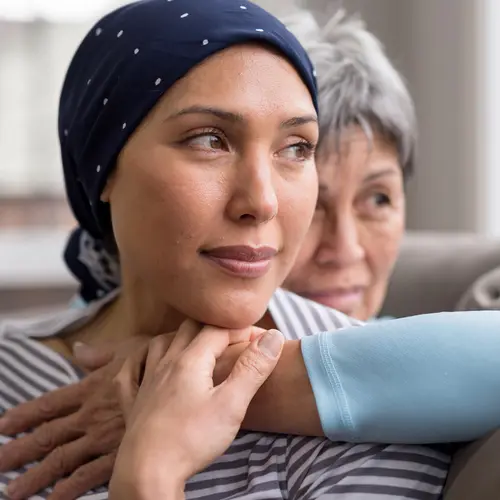
If you’re going through or have already completed the treatment for early-stage or locally advanced breast cancer, you may find yourself worrying about whether the cancer could come back in the future.
What may help ease your mind is that lifestyle strategies, especially regular exercise, may help lower your risk of recurrence.
What Do Studies Show?
Research shows that exercise really makes a difference after a breast cancer diagnosis.
“We know from large studies that women with higher levels of physical activity have lower rates of recurrence,” says Jessica Scott, PhD, director of the Exercise Oncology Program at Memorial Sloan Kettering Cancer Center.
One large study in France followed more than 10,000 women with stage I, II, and III breast cancer for six years. The study found that women who did at least five hours of exercise (such as brisk walking) per week had fewer recurrences than women who were less physically active. The benefits grew as exercise duration went up to about 25 hours a week. Beyond that, doing more exercise didn’t seem to add extra protection.
In this study, the protective effect of exercise was especially strong for women who were premenopausal and those with certain tumor types, such as hormone-receptor-negative/human epidermal growth factor receptor 2-negative (HR-/HER2-) cancer and HR-negative/HER2-positive (HR-/HER2+) cancer.
Research also shows that exercise may help you respond better to treatment. The fewer cancer cells remain after treatment, the less likely the cancer is to return. In one trial, 180 women took part in supervised aerobic or resistance exercise while they received chemotherapy. Women with HR-positive breast cancer who exercised had more tumor shrinkage, better response to treatment, and less need for surgical lymph node removal compared with women who did not exercise. All women who exercised, regardless of their tumor type, were less likely to stop chemotherapy early.
How Does Exercise Help Prevent Recurrence?
Doctors don’t yet fully understand how exercise lowers the risk of breast cancer coming back, but they believe it has several protective effects, says Jennifer Ligibel, MD, a professor at Harvard Medical School and a senior physician in the Breast Oncology Center at the Dana-Farber Cancer Institute.
High levels of the hormones estrogen and insulin are linked to tumor development, says Scott. Exercise helps lower these hormones, thus cutting the risk of recurrence.
Exercise also helps lower inflammation, says Scott. Long-term inflammation increases the risk of cancer because it causes DNA damage. By lowering inflammation, exercise lowers the risk of cancer.
Another way exercise may help prevent cancer from coming back is by reducing excess body fat (obesity).
“We know fat increases breast cancer risk because it produces an excess of estrogen, leads to insulin resistance and causes chronic inflammation,” says Paige Aiello, MD, a breast surgeon at Barbara Ann Karmanos Cancer Institute. “Physical activity helps rid the body of excess fat and therefore reduces the risk associated with those factors.”
Physical activity also boosts the immune system, which defends the body from cancer, says Aiello.
Exercise also helps you tolerate cancer treatment better, says Kerri Winters-Stone, PhD, an exercise scientist and Penny and Phil Knight Endowed Professor in Cancer Research Innovation at Oregon Health and Science University. If you experience less side effects, you are more likely to complete treatment, which leads to better health outcomes.
Other Benefits of Exercise
Research shows that when you exercise during treatment, you feel less tired, keep your heart and lungs strong, stay active and mobile, and hold on to your strength. For some people, exercise also boosts quality of life and helps ease anxiety and depression.
Some studies showed that exercise — especially resistance training and yoga — lowered the severity of lymphedema (swelling in the body) in breast cancer survivors.
What Types of Exercise Are Safe?
Experts agree that many types of exercise are safe, as long as you follow medical guidance.
It is important to check in with your health care team before starting an exercise program to make sure it is tailored to your age, fitness level, and stage of treatment. If you’ve had a mastectomy, other surgery, or are going through treatment like radiation, Aiello recommends an in-depth conversation with your doctor about which exercises are safe and beneficial.
Generally, doctors encourage two main types of exercise during cancer treatment: aerobic and resistance exercise.
Aerobic exercise. This is any physical activity that uses your body’s large muscle groups and is rhythmic and repetitive. It increases your heart rate and how much oxygen your body uses. Examples of aerobic exercises include walking, cycling, swimming, and dancing.
Resistance training. Also known as strength training, your muscles work against an outside force. This can be your own body weight, weight machines, medicine balls, resistance bands or dumbbells.
Studies show that both aerobic exercise and strength training are safe for patients with breast cancer during and after cancer treatment, says Ligibel.
“A balanced exercise program is ideal,” says Scott. “Current guidelines recommend building up to at least 150 minutes/week of aerobic exercise and two days/week of resistance training.”
Scott also suggests adding activities like yoga or tai chi to help improve your flexibility, balance, and mobility.
When Is It Best to Start Exercising?
Experts agree that earlier is better. Research shows that starting exercise during treatment — and continuing afterward — helps manage fatigue, preserve strength and fitness, and improve quality of life, say Scott and Ligibel. Exercising during treatment can also help limit side effects and improve treatment tolerance, says Winters-Stone.
Still, you might not feel ready to think about exercise during treatment — and that’s completely OK, says Winters-Stone. Exercise has benefits after treatment, too.
“Physical activity before, during, and after treatment has been shown to reduce recurrence, so the best time is whenever a patient feels ready to start,” says Aiello.
Whenever you begin, Winters-Stone suggests keeping in mind the mantra ‘start low and go slow.’ Your health care team can be a great starting point. They may know about programs or other resources to help you get started with exercise, says Ligibel. They can also connect you with a physical therapist, if needed, to help improve your exercise capacity, says Winters-Stone.
What Else Helps Prevent Recurrence?
“Beyond exercise, maintaining a healthy diet, a healthy weight, and limiting alcohol intake are other ways to help reduce the risk of recurrence,” says Aiello.
It’s also important to quit smoking, manage stress, and stay engaged in regular follow-up care, says Scott.
Healthy diet and weight
Along with exercise, eating a healthy diet can help lower your risk of cancer coming back by keeping your weight in a healthy range. This matters because being overweight or having obesity is linked to a higher risk of cancer coming back. Research shows that losing weight and keeping it off can make a real difference. One study found that women over 50 who lost 2 kilograms (4.4 pounds) or more and maintained the loss had a lower breast cancer risk compared to women who didn’t lose weight.
A healthy diet also offers other protective benefits. Plant-based foods contain fiber, which helps control the levels of insulin and estrogen — hormones linked to cancer risk. Antioxidants in plant-based foods neutralize free radicals that can damage your DNA and trigger changes that lead to cancer. Other nutrients that may protect you from cancer include vitamin D, calcium, omega-3 fatty acids, and soy foods such as tofu and edamame.
Following a mostly plant-based or Mediterranean-style diet — rich in colorful fruits and vegetables, legumes, whole grains, olive oil, fish, herbs, and spices — has been linked to a lower risk of breast cancer, particularly for postmenopausal women.
At the same time, it’s wise to limit foods linked to a higher cancer risk. Try to cut back on meat, high-fat dairy (such as butter and cheese), fried foods, and foods with added sugars (like candy, cookies, pies, cake, juice, and soda).
Limit alcohol intake
Drinking any type of alcohol — beer, wine, or liquor — increases your risk of breast cancer. Alcohol may also harm you if you have already been diagnosed with breast cancer. Research is still mixed, but early studies suggest that drinking could be linked to worse breast cancer outcomes, especially for women who are postmenopausal or have estrogen receptor (ER)-positive breast cancer.
Quit smoking
Research suggests that smoking may cause breast cancer. Even secondhand smoke has been linked to a higher risk of breast cancer. Early evidence suggests vaping and cannabis could be linked to breast cancer, though more studies are needed to fully understand the risks.