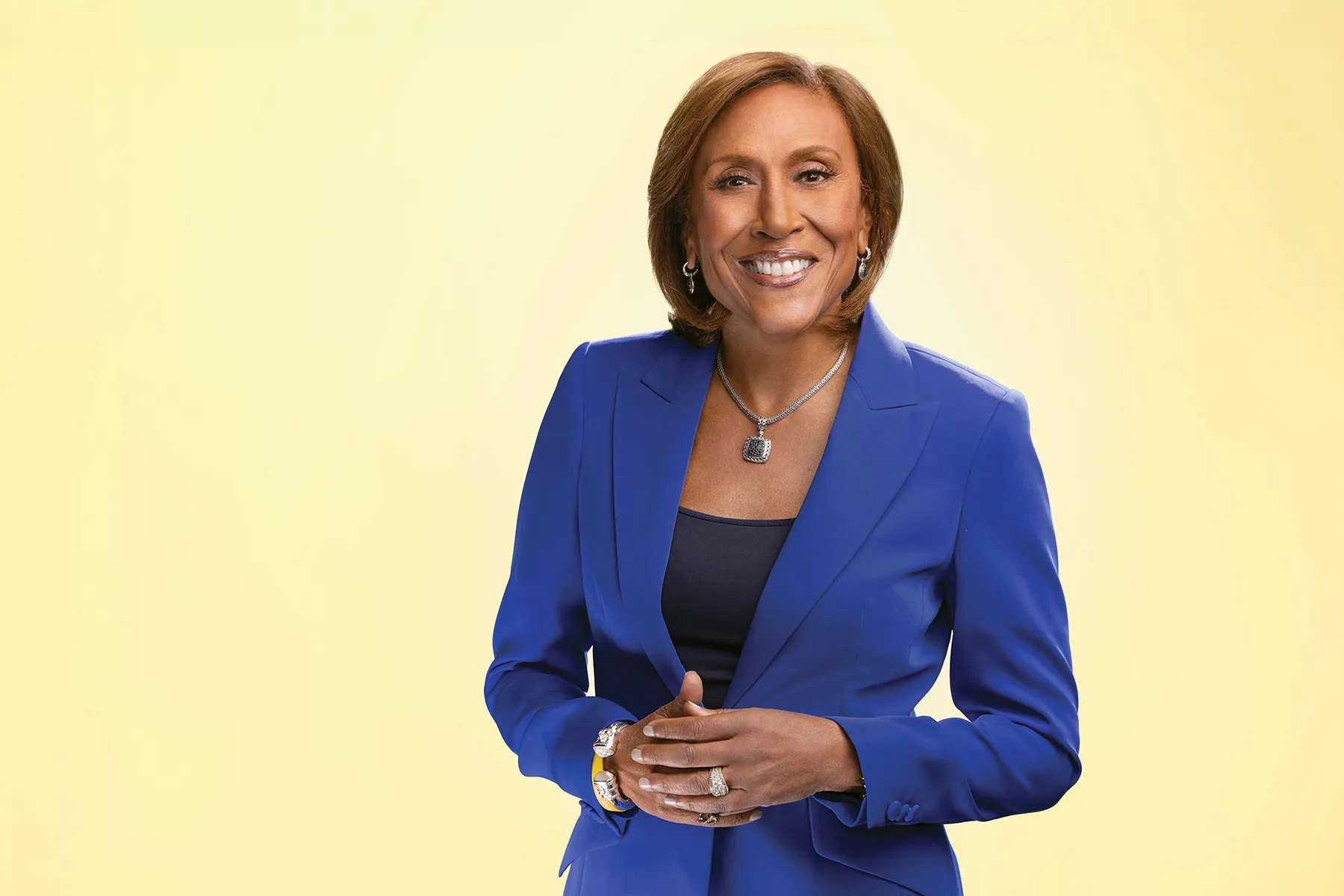
Robin Roberts has always represented strength under pressure. The Emmy Award-winning journalist and former college basketball star has built a career defined by tenacity. But after a diagnosis of triple-negative breast cancer in 2007, she had to navigate something unexpected: vulnerability. Suddenly, Roberts faced fear, uncertainty, and the reality of needing support.
What came next wasn’t just a medical battle, but a very real and very personal moment of asking: Who am I now, and what do I actually need? “I never really gave much thought to my health before breast cancer,” Roberts says. Like many women, she believed she was doing everything right. She exercised, ate well, and lived a generally healthy lifestyle. Her diagnosis didn’t just change her habits, but also her awareness.
Today, she is more intentional about what she eats, how she moves her body, and how she cares for her emotional well-being. But not everything changed. Her trademark positive outlook remained. “Optimism is a muscle that gets stronger with use,” she says. And it became one of the most important tools. It didn’t erase the fear, but it gave her a way to move through it. But that optimism came with an expectation she hadn’t anticipated.
The Myth of Constant Strength
A common misconception about cancer is that patients must be strong all the time. People often labeled her courageous, but that didn’t always match how she felt. “I got so tired of hearing the word ‘brave,’” says the Good Morning America co-anchor.
In the early days after her diagnosis, the updates kept changing, each one a bit worse than the last. At one point, surrounded by family who rarely let her out of their sight, she asked for a moment alone. She slipped into a store while they waited in the car. That’s when her doctor called to tell her the tumor looked more aggressive than they had thought. The plan would have to change. “I was a puddle,” she recalls. “That was the moment I thought, ‘I don’t got this.’”
It was a drastic contrast to the version of herself she had been trying to project. “I was putting on a brave face,” she says. “But in that moment, I didn’t feel strong at all.” Moments like this taught her that not feeling strong didn’t mean she was failing. It meant she was human. And she couldn’t carry it alone.
What Support Really Looks Like
One of the biggest fears around a serious diagnosis is what it will do to your relationships. Roberts heard the stories of partners who left and friends who disappeared when things got hard.
At the time of her diagnosis, she had been dating her now-wife Amber Laign for less than two years. “I wouldn’t have blamed her if she had said, ‘This isn’t for me,’” Roberts says. But Laign rallied around her. So did a small, tight group of friends. “I don’t have a wide circle,” she says. “I have a nucleus.” Without being asked, they quietly organized themselves and created a schedule so that someone was always there, making sure Roberts and Laign were supported. “They weren’t just showing up for me,” she says. “They were showing up for Amber, too.” That distinction mattered. Laign and Roberts’ family members didn’t have to carry it all alone.
Support also came in quieter, unexpected ways. One morning, a colleague stopped her to offer a bag of lemon drops to help ease the side effects of treatment. He kissed her cheek and left. No questions, no lingering. “That left me in tears of joy,” she says.
Moments like that reshaped how she thinks about care. It isn’t always big or performative. Often, it’s noticing and anticipating without making the other person explain what they need.
For caregivers, her advice is simple: Don’t overwhelm yourself trying to do everything. And don’t keep asking what you can do. Pay attention instead, step in where you can, and sometimes, give the person space. But while support carried her through the hardest days, there was another role she had to step into.
Advocating for Yourself in the Exam Room
When you are navigating cancer, one of the most important skills is self-advocacy. But that can feel intimidating and overwhelming. When Roberts first heard the words, “You have breast cancer,” everything else faded into the background. “I just zoned out,” she says. Later, when it was time to make decisions about treatment, she relied on a simple move: coming to the appointment with a list of questions. Armed with information, she began asking about her options, from types of surgery to chemotherapy plans. At times, she even switched doctors when the match didn’t feel right.
For women who have spent years prioritizing others, this can be a tough shift. Many worry about being perceived as difficult. That instinct, insists Roberts, must be ignored. Advocating for yourself may also mean asking someone to speak for you when you cannot. A partner, a friend, or family member can help ask questions and process information when you feel overwhelmed.
A New Definition of Survivor
Early on, someone told her she was already a survivor. She didn’t have to wait until after treatment or remission. She was a survivor from the moment she was diagnosed. “That really stuck with me,” she says. If you’re living with metastatic breast cancer or still in treatment, that shift in thinking can be powerful. It takes the pressure off the idea that survival is something you reach someday. It’s not. It’s what you’re doing right now and continue to do even when things feel uncertain. That shift in identity changed something else, too: how she chose to live each day.
Living While You Are Living
Weeks become centered on appointments, treatment, and fear. Roberts believes strongly that life must continue alongside illness. Some people want to talk openly about their experience while others prefer privacy. “Everybody’s path is different,” she says. What matters is honoring what feels right to you. For some, that may mean returning to small joys, like a walk outside, a lunch with a friend, or a favorite hobby. For others, it may simply mean stepping outside for a few minutes.
Daily Rituals That Keep Her Steady
Over time, Roberts developed practices that support her mental, emotional, and physical health. Mornings begin with a positive message or prayer. She prioritizes meditation, often practicing twice a day, and focuses on movement that feels sustainable, such as Pilates, walking, and strength training. There was also a shift in her approach to food. Now she first thinks about vegetables and nourishment rather than just protein. Most importantly, “I don’t strive for perfection,” she explains. “I strive for progress.” These simple routines help her stay grounded during challenging times.
Turning Pain Into Purpose
For Roberts, breast cancer is not her whole story. It’s the chapter that shaped her sense of purpose. Her mother once told her, “Make your mess your message.” That idea has guided her advocacy ever since. By sharing her experience, she hopes to help other women feel less alone and more empowered to take control of their health. “Hope is real,” she says. And for women navigating breast cancer today, especially with advances in treatment and research, there is more reason than ever to hold on to it.
What She Hopes Women Carry Forward
“It’s your life. Your life is on the line,” Roberts says. Don’t shrink yourself during the process of healing. Speak up, ask questions, and trust your instincts. “We just want to be seen,” she says. “And we want to be heard. And we want to be understood.”