People joke about cats and their picky eating habits, but it's actually a serious issue if your cat won't eat.
Although a refusal to eat is a cause for concern for all pets, it can be more dangerous for cats.
When animals don't eat enough, they must rely on their fat reserves for energy. Before stored fat can be used for fuel, it must be processed by the liver. This step needs enough supplies of protein.
When a cat stops eating and loses weight quickly, its protein runs out and fat builds up in the liver. This results in a dangerous condition known as hepatic lipidosis, which can lead to liver failure.
A loss of appetite often means your cat is ill, so you should consult your veterinarian as soon as you notice a change in eating habits. The more quickly you respond to the problem, the more able you'll be to do something that will help.
Why Your Cat Won't Eat
Illness. Loss of appetite is one of the key clues that something is wrong. So, be sure to pay attention if your cat suddenly stops eating. Many conditions may be responsible for this, including infections, kidney failure, pancreatitis, intestinal problems, and cancer. Even a toothache can make your cat stop eating.
Recent vaccination. Did you notice your cat's loss of appetite shortly after you took them to the vet for routine vaccinations? If so, the reason your cat won't eat may be a reaction to the shots. Although vaccines have been lifesavers for millions of animals, they do cause side effects in some. Loss of appetite is among the more common of these side effects, which are usually temporary and mild.
Travel and unfamiliar surroundings. Like many people, many cats are creatures of habit. So, a change in routine can result in a loss of appetite. And some animals get motion sickness when traveling by car or plane, which can lead to nausea and a refusal to eat.
Finickiness or psychological issues. If your veterinarian has found that your cat is not physically sick, then anxiety or depression could be the reason your cat won't eat. Changes in their routine or in the household can be disturbing to sensitive cats. Sometimes, new people or pets — or the disappearance of another pet — can affect a cat's emotional well-being. Or your cat could just be a picky eater. Keep in mind that cats, in general, take a long time to adjust to new types of food, so a recent change in diet could be the issue.
Other situations that may upset your cat include too much noise, other animals in their feeding area, dirty food dishes, or their food dish being too close to their litter box.
Why Is My Kitten Not Eating?
Most of the time, kittens have a hearty appetite because they're growing so quickly. But if you notice your kitten isn't eating as much, there could be many causes, including:
Illness. If your kitten has an upper respiratory infection, upset stomach, parasite, diarrhea, vomiting, or unusual fatigue, they may be less interested in food. If you notice these symptoms, reach out to your vet as soon as possible.
Teething pain. Kittens lose their baby teeth just like humans, and the process can make their mouths hurt. You may need to provide softer food while your kitten is teething.
Vaccinations. It's important to keep your kitten up to date with their vaccinations. But sometimes shots can make your cat more tired than normal, which may disrupt their appetite. Their reactions to vaccines are usually mild, though. So, if your cat skips meals for more than a day, contact your vet right away.
Bowl placement and cleanliness. The conditions of their food bowl may make your cat fussier about eating. Your kitten may skip meals if their bowl is dirty or in a loud, high-traffic area. Move your cat's food dish away from their litter box, and try setting it up high on a table or countertop to help them feel more secure when they eat.
Stress. If your kitten is in a new environment, it may take them a few days to decompress before they feel safe enough to regularly eat. Provide your kitten with private, secluded places to eat and rest while they adapt to your home.
New food. Kittens can be picky eaters. If you switch their food too quickly, they may refuse to eat it. To ease the transition, mix in the new food to their old food gradually.
Causes of Weight Loss in Cats
Unexpected weight loss in a cat is usually a sign of a health issue. If it happens gradually, you may not notice right away, especially if your cat has long hair. It's a good idea to weigh your cat and do a condition check regularly, in which you use your hands to physically check your cat's body for changes. Let your vet know right away if you notice any differences. There are some reasons why your cat could suddenly lose weight. These include:
Diabetes. This disease, which may be caused by a failure to produce the hormone insulin or an impaired ability to respond to it, commonly causes weight loss in cats, often with a change in appetite. Cats with diabetes may also drink too much water, urinate more than usual, act sluggish, get urinary tract infections, and have sweetly scented breath.
Feline infectious peritonitis (FIP). This virus, which most commonly occurs in cats raised in catteries, is known to cause weight loss. Cats with FIP will seem sick, often with a fever that doesn't respond to antibiotics.
Gastrointestinal (GI) problems. There are a variety of conditions in the gastrointestinal tract that may cause cat weight loss. When this is the case, other symptoms may include diarrhea, lack of appetite, and vomiting. Common GI problems that produce weight loss in cats include inflammatory bowel disease, food allergies, certain infections, and cancer (such as intestinal lymphoma).
Intestinal parasites. Also known as worms, intestinal parasites may be the cause of your cat's unintentional weight loss. Although symptoms are not always present, these parasites also may cause diarrhea, bloating, vomiting, and trouble breathing.
Organ failure. Many older cats lose weight. It can be hard to know the exact cause of the problem, especially because metabolism changes with age. Conditions such as kidney disease become more common as cats get older. Your veterinarian can identify these problems with simple blood and urine tests.
Hyperthyroidism. Your cat may have a good appetite. In fact, they may be eating more than usual but still losing weight. Hyperthyroidism results from a benign hormone-producing tumor on the thyroid gland that raises thyroid hormone levels. In addition to weight loss, hyperthyroidism may cause increased drinking and urination, increased activity, vomiting, diarrhea, and muscle wasting. In later stages, it may even lead to heart problems or death. Older cats are also particularly prone to this condition.
Cancer. Different types of cancer can affect your cat in many ways. Weight loss can be an early indicator that your cat has some form of it.Cancerous growths can affect a cat's ability to eat and may also interfere with their ability to absorb nutrients. Lymphoma affects the lymphatic system (which runs throughout the body), affecting many areas and even causing masses. Other symptoms include vomiting, diarrhea, and loss of appetite.
How Can I Get My Cat to Eat?
Whether your cat is sick, anxious, or just plain picky, remember that a complete refusal of food can have serious health risks. So, even if you're trying to make your cat follow a doctor-prescribed diet, never starve your cat into eating a certain type of food.
If illness is the reason your cat won't eat, work with your veterinarian to design the best plan for you and your pet. This may include a change in food type or consistency. Some cats can be encouraged to eat by offering canned foods when they are unwell. In more extreme cases, veterinarians may prescribe medicines that act as appetite stimulants or recommend syringe-feeding your cat a liquid diet. Or the vet may recommend placement of a feeding tube to make sure your cat gets enough nutrition.
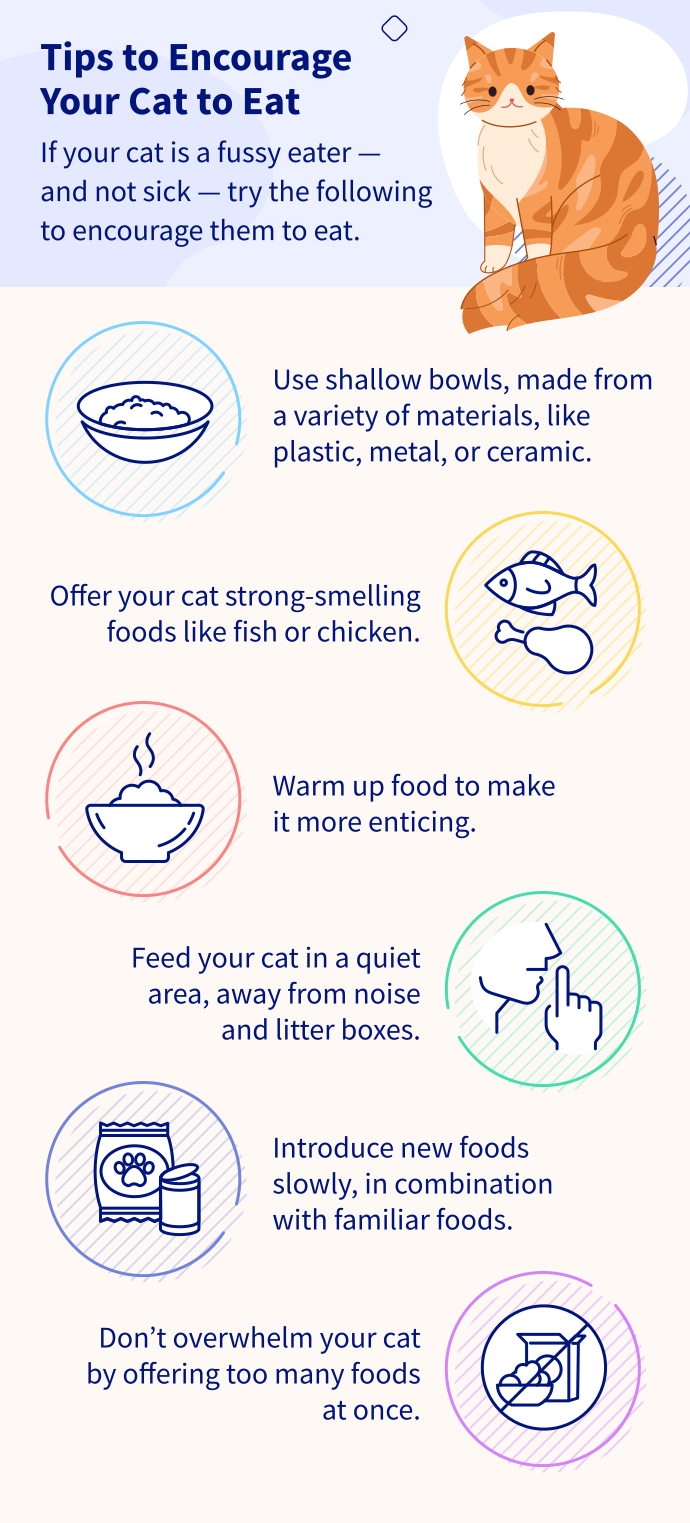
When illness is not the culprit, there are things you can try to encourage your cat to eat:
- You may have found that certain foods, such as liver or canned tuna, can stimulate a cat's appetite. Remember to offer these foods only in small amounts. Large amounts may harm your pet by causing a lack of vitamins or too much of them.
- Instead of relying on human food, try encouraging your cat to eat commercial canned food. You may find that heating the food or mixing in fish oil, broth (make sure it does not contain onions, which are toxic to cats), or cooked egg could make your picky cat eat. If your cat still won't eat, take the food away, and provide fresh food later in the day. If the food is left to harden and become stale, your cat may learn to avoid it in the future.
- If your cat has been eating human food exclusively, take a few weeks to shift them to cat food by mixing their favorite human food with regular cat food. Over time, you should be able to change the ratio until your pet is eating only cat food.
- Many experts recommend rotating your cat's diet among different brands two to four times a year by using a similar method. This practice may help lower their pickiness and also lessen food allergies and intestinal problems.
When to Go to the Vet
It's important to take your cat to the vet immediately if they haven't eaten for more than 24 hours. Cats, especially those that are overweight, can quickly develop a liver condition if they suddenly stop eating. If you notice your cat has other symptoms in addition to their lack of appetite — including labored breathing, straining to pee, diarrhea, vomiting, disorientation, or extreme fatigue — get the help of a vet right away.
Takeaways
Cats may lose their appetites because of stress, dehydration, or illness. If your cat hasn't eaten in 24 hours, it may be a sign of serious illness or health issue, so contact your vet right away. Cats, particularly those who are overweight, can quickly develop a serious liver condition if they suddenly stop eating. Don't try to force-feed your cat on your own.
FAQs About Cat Appetite
How long can a cat safely go without eating before it becomes an emergency?
If your cat hasn't eaten in 24 hours, seek emergency veterinary care.
My cat is drinking water but refusing food; is that still an emergency?
Yes. Even if your cat is still drinking water, get emergency care if they haven't eaten in 24 hours.
Is syringe-feeding or force-feeding my cat at home safe?
Don't syringe-feed your cat unless you're under the strict guidance of your vet. Improper force-feeding can put your cat at risk of choking, injury, and too much stress.
Does "whisker fatigue" or bowl placement really make a cat stop eating?
A 2020 study that looked at whether wider, "whisker-friendly" food dishes encouraged cats to eat more than they would from their normal food bowls found that the bowl made very little difference in how much the cats ate.