Cat owners tend to be very familiar with their pets' bathroom habits, thanks to litterbox duty. Cleaning the box isn't anyone's favorite chore, but it can be an excellent way to keep an eye on your pet's urinary tract health.
If your cat's bathroom habits change, it might be a sign that they have a urinary tract problem.
Cats of any age can have problems with their lower urinary tracts. Some cats are prone to urinary tract infections (UTIs) that go away after taking antibiotics. Other cats get blockages and bladder stones that need surgery to fix.
Learn more about cat UTIs and other urinary tract problems and how to treat them.
What Are the Symptoms of Urinary Tract Problems in Cats?
The lower urinary tract includes the bladder and urethra. Urine is formed and stored in the bladder until it flows out of your cat's body through the urethra.
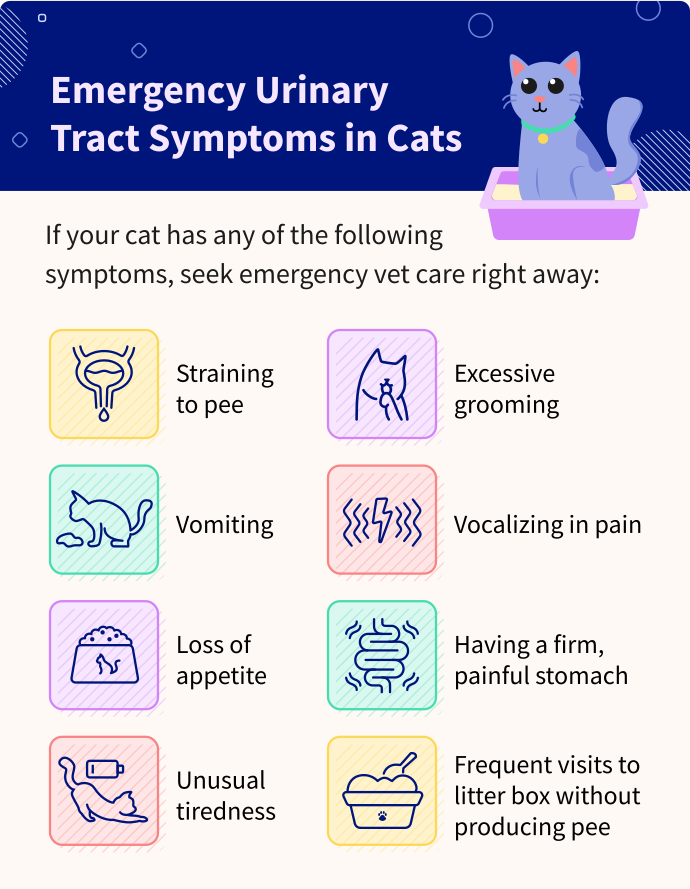
When those body parts get infected or obstructed, your cat won't be able to urinate (pee) normally. You might notice some of the following symptoms when your cat has a UTI or other urinary tract problem:
- Frequent urination, but only passing a small amount of urine
- Peeing outside the litter box
- Blood in the urine (color change from yellow to red or reddish brown)
- Straining to urinate
- Crying out in pain while urinating
- Increased licking of the urinary opening
If you notice these symptoms, you should call your vet right away. This could be a sign that your cat needs medical attention right away.
What Causes Lower Urinary Tract Problems in Cats?
When you take your cat to the vet, they may have questions about your cat's symptoms , which may help them narrow down the cause of the problem. There are many common reasons for urinary tract problems in cats, including:
Urinary tract infection (UTI)
Cats get UTIs when there is a bacterial infection in their bladder or urethra. Your vet will need a urine sample to diagnose this condition.
Uroliths (urinary stones)
Urine naturally contains minerals that can clump up and form tiny crystals (and even large stones) in your cat's bladder. They can irritate the lining of the bladder or urethra and cause bloody urine and pain while urinating.
Your vet will need to do urine tests, X-rays, or an ultrasound to diagnose urinary stones.
Urethral obstruction
In some cases, your cat's urethra can be completely blocked, either by stones or by a buildup of minerals and tissue called a "urethral plug."
A cat with an obstruction like this won't be able to pass urine at all. An obstruction of the urethra is a medical emergency, and you should call your vet right away.
Feline idiopathic cystitis
Occasionally, the inside of a cat's lower urinary tract will get irritated without an infection or stones being present. Sometimes, it can be a symptom of stress or a reaction to a change in diet.
Other causes
Other health conditions can also affect cats' urinary tract health. Diabetes and thyroid issues are sometimes to blame. In rare cases, cats get tumors in their urinary tract. Your vet will need to do blood and urine tests (urinalysis and urine culture) to diagnose these conditions.
Can Both Male and Female Cats Have Urinary Tract Problems?
All cats can get urinary tract problems. But male cats are more likely to have urethral obstructions. They have longer, thinner urethras than female cats. The narrower passage can get blocked more easily because of its size and shape.
How Do Vets Diagnose UTIs in Cats?
If your feline friend is showing symptoms of a UTI, your vet will likely begin their evaluation by taking a thorough physical examination. Your vet may ask you questions about your cat's living environment. They may also take samples of your cat's pee to check their pH levels and look for any signs of blood, crystals, or infection.
If your vet still can't figure out the cause of your cat's symptoms, they may recommend blood tests, a bacterial culture of your cat's urine, or imaging tests such as ultrasound or X-ray for more insight.
It can be tricky to diagnose the exact cause of a UTI in a cat, but taking these steps can help your vet find the right treatment option for your pet. Be sure to tell them about any symptoms you've noticed.
What Are The Treatments for Lower Urinary Tract Problems?
When you bring your cat to the vet, they will examine your pet for any injuries or physical problems that might be adding to the urinary problems.
The treatment will differ depending on the diagnosis.
Antibiotics
Your vet will prescribe the right medication for your pet. They can advise you on diet changes that might help avoid future UTIs.
Clearing obstructions in the urethra
Obstruction often requires hospitalization and is life-threatening. Not all cats will survive a urinary tract obstruction, even when treated quickly. The vet will insert a tube into the urinary opening and flush the area with sterile fluid to clear the obstruction. Follow-up care may also be needed.
Dietary changes
In other cases, a special diet can dissolve stones in your cat's bladder. Your vet may suggest special food to keep more stones from forming in the future.
Why does my cat keep getting UTIs?
If your cat has diabetes, thyroid disease, or cancer, talk to your vet about treatment options. You can also help your cat by reducing their stress, keeping their litter box clean, feeding them a proper diet, checking them for underlying diseases, and helping them with weight management.
Cat urinary tract issues are serious, and you should not ignore the symptoms. Call your vet if you think your cat has a UTI or other urinary tract problem.
Recovery and Management of UTIs in Cats
Urinary tract diseases are common in cats and can cause discomfort and distress. If left untreated, a UTI can lead to partial or complete blockage of the urethra. This can lead to kidney failure or rupture of the bladder, which could be deadly.
Depending on how serious the infection is, some at-home remedies and treatments can help lower your cat's risk of developing UTI. But always seek treatment from your vet before you try to manage your cat's UTI on your own.
Water. Encourage your cat to drink more water to help flush out the infection. Try putting several water bowls around the house or get a water fountain to encourage them to drink more water and lower their risk of future UTIs.
Cranberries. While cranberries are known as a UTI treatment in humans, they can also be used to manage cat UTIs. The proanthocyanidins found in cranberries help stop bacteria from sticking to your cat's bladder wall, which can help stop UTIs from coming back. But there will be no way to confirm that your cat specifically has an infection or another issue. More research is needed to confirm the effectiveness of using cranberries in cats.
Many cranberry juices are high in sugar. Instead, you can find cranberry capsules (pills), supplements, or powder to add to your cat's diet.
Before giving your cat cranberry, you should first talk with your vet and test the pH levels in your cat's urine. While the acidity of cranberries may help with some UTIs, in other cases, it could make the condition worse. Give cranberry supplements only if your cat's urine is too alkaline.
Apple cider vinegar. Apple cider vinegar can also lower the pH in your cat's urine, getting rid of and preventing any harmful bacteria. Add half a teaspoon of apple cider vinegar to your cat's food each day. To reduce the bitter taste, you can mix it in with chicken or beef broth. Just make sure the broth isn't high in sodium and that it doesn't contain onions, as this is toxic to cats.
Like cranberries, apple cider vinegar is only effective if your cat's urine is too alkaline. You can test your cat's pH using at-home kits or diagnostic cat litter, as well as through a reliable test given by your veterinarian. Talk with your vet before giving your cat apple cider vinegar.
Glucosamine and chondroitin. There are many nutritional supplements that are available over the counter that can be used to reduce the symptoms of a feline UTI. These include glucosamine and chondroitin. Glucosamine can help replace a compound in the lining of the cat's bladder wall. Chondroitin helps prevent this compound from breaking down.
Combining these two supplements can rebuild the bladder wall and avoid further damage from bacteria. This reduces inflammation and other UTI symptoms. For every 10 pounds of your cat's weight, you can give the cat 100 milligrams of glucosamine and 50 milligrams of chondroitin. But always ask your vet before giving your cat any supplements.
Bone broth. In addition to treating the pH level and strengthening the bladder wall, an important part of treating a cat UTI is to make sure that your cat stays well hydrated. This will help flush the bladder and avoid the buildup of harmful bacteria.
To make sure your cat is staying hydrated, you can introduce tasty fluids such as bone broth. Make sure the broth has no sodium. Not only will this provide necessary hydration, but bone broth also contains nutrients and minerals that can help fight the infection. The amino acids (organic compounds that form protein in the body) found in bone broth, including glycine and arginine, have been shown to reduce inflammation.
Takeaways
Urinary tract infections in cats can escalate into urinary blockages — a life-threatening condition. It's important to recognize the symptoms so you can get your pet treatment right away. Common warning signs including straining to pee, vocalizing in pain, and a loss of appetite. Male cats are more prone to getting urinary tract infections than female cats. Make sure your cat has plenty of places to get water. If they live in an environment with multiple cats, try to have more than one litter box to reduce stress and lower their risk of UTI.
Cat Urinary Tract Infection FAQs
Why does my cat keep getting urinary tract infections or FLUTD flare-ups?
Your cat may be prone to developing urinary stones, or uroliths. Older cats (those over the age of 10) are more likely to have UTIs if they have other conditions, such as kidney issues or diabetes. The cause of feline lower urinary tract disease (FLUTD) in younger cats isn't well understood. But sometimes it's caused by chronic anxiety. This can be due to changes to the cat's environment, such as a new cat in the space. Provide plenty of clean litter boxes and water options in quiet parts of your home to help keep your cat healthy.
What is the difference between behavioral spraying and a medical urinary issue?
If your cat is straining to pee but only passing small amounts, has blood in their urine, looks like they're in physical pain when they're trying pee, or is frequently grooming their genital areas, your cat has a medical urinary issue. So, watch out for these symptoms and signs.
Can female cats get a blocked urethra from urinary problems?
It's rare, but female cats can develop urinary blockages.
What surgical options are available if my cat suffers from repeated urinary blockages?
The most common surgical option is called a perineal urethrostomy (PU), where the narrowest part of the urethra is removed to keep future urinary blockages from happening. This surgery is most commonly done in male cats.