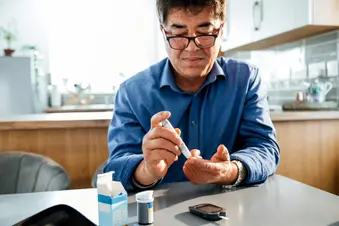
A diagnosis of type 2 diabetes (T2D) requires significant lifestyle changes, from the foods you eat to the amount of exercise you get to how you sleep and manage stress. How can you adapt to daily life with this condition?
A growing number of Hispanic American adults face this question as T2D has become what some researchers refer to as an epidemic in this community. According to the U.S. Department of Health and Human Services' Office of Minority Health, Hispanic/Latino adults get diagnosed with T2D at a rate that's 13% higher than other American adults.
Managing your new life will be challenging, but there's plenty that you can do to make it feel less burdensome. One critical thing to keep in mind: You don't have to transform your life overnight.
"It's all about making small changes that, over time, will translate into big lifestyle changes," says Shiara Ortiz-Pujols, MD, MPH, a lifestyle medicine specialist and the director of obesity medicine at Northwell's Staten Island University Hospital in Staten Island, New York.
Make Positive Changes to Your Diet
Healthy eating should be a priority. It will help you manage your blood sugar level and lose weight.
"There are many simple lifestyle changes that one can make around their dietary patterns that can support medical management [of their diabetes]," says Mercedes Carnethon, PhD, the chair of the Department of Preventive Medicine at Northwestern Medicine's Feinberg School of Medicine in Chicago. "One concern people often have is whether they can still enjoy foods that are important to them and reflect their culture."
The answer to that is yes. Ortiz-Pujols recommends focusing first on how much you eat, not what you eat.
"Many of us have been conditioned since childhood to finish everything on your plate," she says. "You visit Grandma, who keeps piling food on your plate, and you don't want to offend her."
The trick she recommends: Use a salad plate rather than a dinner plate.
"Visually, you're still eating everything on your plate," she says, "but by virtue of the fact that you're using a smaller plate, you're actually eating less."
Once you've gotten used to smaller portions, think about food substitutions.
"Examples include replacing flour tortillas with corn tortillas, which have a lower glycemic index and so cause less blood sugar spike," says Carnethon. "Even better – wrap the filling with lettuce instead of a tortilla."
Ortiz-Pujols suggests riced cauliflower and quinoa as substitutes for high-carb white rice.
"I have been surprised at how many people have been receptive to that," she says. "And you can still eat it with your beans or your protein, and it's actually quite acceptable."
Other swaps she recommends:
- Olive oil instead of vegetable oils
- Lean meats, poultry, and fish instead of fatty red meats
- Baking, grilling, or cooking in a pan with a small amount of oil instead of deep frying
"These are small changes that don't dramatically shock other family members but can be palatable and get buy-in from your family," she says.
Finally, focus on the order you eat things. Start with vegetables, then proteins like meat and beans, and finish with carbs, Ortiz-Pujols recommends.
"That improves your insulin sensitivity, mitigates big spikes in blood sugar, and fills you up faster, helping you eat less," she explains.
Build Physical Activity Into Your Day, Every Day
The CDC considers physical activity the "foundation of diabetes management." That's because it helps keep your blood sugar down and reduces your risk of heart disease, a common complication of T2D.
Your first step: Know what in your daily routine does and doesn't count as adequate physical activity.
"Oftentimes, my patients will tell me I'm cleaning the house or on my feet all day," says Ortiz-Pujols. "That is a form of activity, but it is not sufficient. You need to figure out ways to integrate non-work physical activity into your day."
As with dietary changes, start small.
"We all know the recommendation is 150 minutes per week because that has great health benefits, including better insulin sensitivity," says Ortiz-Pujols. "But telling someone to start with that much exercise will fall on deaf ears."
Instead, work toward that 150-minute goal, recommended by the American Diabetes Association, by gradually increasing the amount of activity you do each day. Ortiz-Pujols suggests the following:
- Take the stairs whenever you can.
- Park farther away from your destination so you get more walking in.
- If you work in an office, get up and walk to the bathroom every hour (even if you don't have to go).
As for specific types of exercise, find something that you enjoy rather than something that will feel like a chore.
"Dancing is a great form of movement that is less onerous and less scary for many people," says Ortiz-Pujols. "And it's something you can do with family members, especially kids."
Make sure to incorporate strength training into your plan. Body weight exercises like situps and squats are great. If you don't have a weight set, improvise with whatever is heavy-ish and on hand, such as lifting canned foods and bottles of water.
You don't have to join a gym or even leave your house when it's freezing outside, Ortiz-Pujols tells her patients: "You have endless online resources to find exercise videos for free."
Ortiz-Pujols recommends the following routine to start:
- Exercise two days per week and gradually build up to five days per week.
- Exercise in 10-minute intervals, building up to at least 30 total minutes per day.
- Do weight training once a week and work your way up to twice a week.
Improve Your Sleep
You already know that if you don't sleep well, you're going to drag during the day. But poor sleep has many other negative impacts, including on your diabetes management.
Carnethon says that even short periods of poor sleep can trigger blood sugar spikes and make your body less able to process and use blood sugar. Missed sleep, she adds, also causes cravings for foods and drinks that are high in fat and sugar. You're also less likely to exercise if you're tired.
"When managing diabetes, going to bed at the same time each night and waking up at the same time each day is very important for setting routines," says Carnethon. "These routines will then become ingrained and also make it easy to check your blood sugar on schedule, take prescribed medications regularly, eat on schedule, and exercise."
Ortiz-Pujols agrees that good sleep should be one of your top priorities as you adapt to life with T2D.
"I do a sleep assessment with every person I work with," she says.
If you struggle with sleep, talk with your doctor about how to improve it. Too often, says Ortiz-Pujols, people try to compensate with coffee and energy drinks, both of which can be loaded with sugar. Instead, evaluate your sleep habits and make the following changes Ortiz-Pujols recommends.
- Go to sleep at the same time every night.
- Shut off your phone or other screened devices an hour before bedtime.
- Use an old-fashioned alarm clock rather than your phone, which you should place out of reach while in bed.
- Don't skip your daily exercise, as it helps you sleep well.

Reduce Your Stress
Having T2D adds stress to the life stressors you already have on your plate. But there are ways to find peace and relaxation, which in turn will help you manage your diabetes. Be aware that stress burdens your body as well as your mind.
"The body responds to stress in ways that interfere with diabetes control by raising levels of a stress hormone called cortisol," says Carnethon, who explains that high levels of cortisol raise your blood sugar and keep it circulating in your blood while your organs become more insulin resistant.
"Managing stress is critically important to help the body make use of the medications that it is being offered to manage diabetes," says Carnethon. "And it can promote better sleep and more productive exercise sessions."
Bonus: Good sleep and exercise help you to relax, so it's a win-win-win.
But how can you ease your stress? As with other lifestyle changes, begin with baby steps to build lasting habits.
"Start with deep breathing," says Ortiz-Pujols. "Just one minute at a time as often as you can throughout the day. If you can do five-minute sets, that's even better. But sometimes, finding five minutes seems like a big stretch."
If you are a spiritual or religious person, she says, prayer can help to quiet your mind. Meditation helps as well, and there are plenty of free meditation apps to help you get started, or you can explore meditation classes in your area.
Other stress-reducing activities that Ortiz-Pujols and Carnethon recommend include:
- Gentle exercises like yoga or walking outdoors
- Socializing with family and friends
- Volunteering to help others
Takeaways
Type 2 diabetes disproportionately burdens the Hispanic American community. Adapting to your new life with the condition won't happen overnight. But by starting with small, manageable changes, you will create healthy habits that will serve you for a lifetime. Talk to your health care provider about the specific changes that will benefit you the most.
Show Sources
Photo Credit: E+/Getty Images
SOURCES:
American Diabetes Association: "Weekly Exercise Targets."
Diabetes/Metabolism Research and Reviews: "Understanding the growing epidemic of type 2 diabetes in the Hispanic population living in the United States."
U.S. Department of Health and Human Services Office of Minority Health: "Diabetes and Hispanic/Latino Americans."
Shiara Ortiz-Pujols, MD, MPH, lifestyle medicine specialist and director of obesity medicine, Northwell's Staten Island University Hospital, Staten Island, New York.
Mercedes Carnethon, PhD, chair, Department of Preventive Medicine, Northwestern Medicine's Feinberg School of Medicine, Chicago.
CDC: "Get Active."


