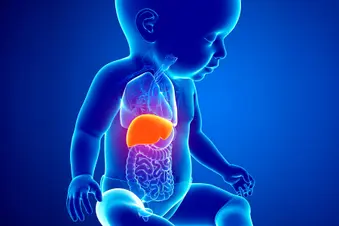
Progressive familial intrahepatic cholestasis (PFIC) is a rare genetic liver disease that affects the way bile moves out of the liver. Bile is a fluid the liver makes to help the body digest fats and absorb certain nutrients. When your child has PFIC, their bile can’t flow properly into their digestive tract, and it builds up inside the liver instead. Doctors call this cholestasis.
“Bile salts are toxic to the liver and so they cause progressive liver damage over time,” says Amy Taylor, MD, a pediatric gastroenterologist and transplant hepatologist at Cincinnati Children’s Hospital Medical Center. “This buildup affects not only liver health, but other systems in your child’s body as well.”
If your child has PFIC, understanding how the condition affects their health can help you recognize symptoms, work more closely with their care team, and make informed decisions about their treatment.

PFIC Effects on the Liver
The liver is the organ most directly affected by PFIC. When bile builds up inside the liver, it causes inflammation and injury to liver cells. At first, the damage may be mild. But over time, ongoing bile buildup can lead to scarring of the liver, known as fibrosis.
“As fibrosis worsens, it can progress to cirrhosis, which is severe liver scarring that interferes with the liver's ability to function properly,” says Taylor.
When your child’s liver damage becomes severe from their PFIC, their liver can’t work the way it needs to, and it affects these processes. Some children may even go into liver failure and may need a liver transplant.
“Many children with PFIC will eventually need a liver transplant because although current treatments can ease symptoms and slow liver damage, they don't cure the disease,” says Taylor.
A transplant replaces the damaged liver with a healthy donor liver and is the only treatment that can fully correct the liver problem caused by PFIC. While it's a major surgery that requires lifelong follow-up care and medication, Taylor says a successful transplant can be lifesaving and often greatly improves quality of life.
Constant, Severe Itching
One of the most common and life-disrupting symptoms of PFIC is intense itching, called pruritus.
Unlike an ordinary itch caused by dry skin or an insect bite, PFIC-related itching happens because substances that bile normally carries away are instead building up in the body. Many children scratch so much that they have:
- Bleeding or broken skin
- Scars
- Sleep problems
- Irritability
- Difficulty concentrating
- Emotional distress
“Itching is all-encompassing for these children,” says Taylor. “It affects their ability to sleep through the night, which in turn makes them cranky and moody the next day and can lead to long-term effects like difficulty learning because of chronic sleep deprivation.”
Itching can be one of the hardest parts of PFIC to manage. As you work closely with your PFIC care team to treat symptoms, you can also work on itch strategies such as:
- Keeping your child’s nails short
- Teaching them to rub instead of scratch
- Cool baths with bath oil added
- Using lotion you keep cool in the refrigerator to soothe skin
- Covering young children’s hands with mittens
PFIC Effects on Nutrition
Bile plays an important role in digestion. It helps your child’s body break down fats and absorb certain nutrients from food. When bile can’t reach the intestines normally, children with PFIC may have trouble absorbing fat and fat-soluble vitamins.
Fat-soluble vitamins include:
- Vitamin A: important for vision and immune function
- Vitamin D: helps build strong bones
- Vitamin E: supports nerve and muscle function
- Vitamin K: helps blood clot
When your child’s body isn’t absorbing these vitamins, it can cause a wide range of health problems such as:
- Nosebleeds and bleeding gums
- Trouble with coordination
- Trouble seeing in the dark
- Weakened bones (rickets) and teeth
- Internal bleeding and easy bruising
Your doctor will monitor your child’s levels and may prescribe supplements. You’ll also benefit from working with a registered dietitian who can help you monitor your child’s nutrition.
Growth Problems and Delayed Development
Growth problems happen for kids with PFIC for several reasons. They may not get enough calories and nutrients from their food. Chronic liver disease also increases their body's energy needs. Severe itching and poor sleep can also get in the way of normal growth and development.
“When you’re not breaking down and metabolizing fats properly, it’s difficult to gain weight and grow appropriately,” says Taylor.
As a result, some children may:
- Be shorter and smaller than expected for their age
- Go through puberty later than normal
- Have lower energy levels
Good nutrition is especially important for children with PFIC. Dietitians who specialize in liver disease can help you adopt a nutrition plan that gives your child enough calories, protein, and vitamins.
PFIC Effects on the Digestive System
In addition to the problems absorbing fat and fat-soluble vitamins, your child may have other digestive problems, such as:
- Diarrhea
- Fatty stools
- Poor appetite
- Trouble gaining weight
“Fatty stools can look oily, greasy or pale,” says Taylor. “This happens because the fat your child isn’t digesting like it normally would comes out in their poop,” says Taylor.
Some children with PFIC can get gallstones, which are hard deposits that form in the gallbladder, a small organ just beneath the liver that stores and concentrates bile. Because PFIC affects how bile is made and moves through the body, this increases your child’s chance of getting gallstones.
Gallstones do not always cause symptoms, but they may cause pain in the upper abdomen, nausea, vomiting, or fever. Your child's doctor can use ultrasound or other imaging tests to check for gallstones if they start having these symptoms.
PFIC Effects on Other Organs
Genes involved in PFIC can sometimes be active in other places in your child’s body than their liver. These genes are also sometimes in the intestines, pancreas, kidneys, and inner ear. For some children, that means they’ll have health problems other than those caused by liver disease.
For example, PFIC type 1 (also called FIC1 deficiency) is caused by changes in a gene called ATP8B1. Because this gene is active in several organs, children with this type of PFIC may have:
- Chronic diarrhea
- Inflammation of the pancreas (pancreatitis)
- Hearing problems
Some children may have kidney problems because the affected genes help transport substances in both the liver and kidneys. Others may have symptoms involving the pancreas or hearing.
Genetic testing is an important part of managing PFIC. When you and your doctor know the specific type of PFIC your child has, you can better prepare for possible health issues over time.
Circulation Problems
As PFIC gets worse, your child may have complications related to liver scarring that affect blood flow and circulation. They may get portal hypertension, which is a condition that increases blood pressure in the veins that carry blood to the liver.
Portal hypertension can cause an enlarged spleen, swollen veins in the esophagus, and fluid buildup in your child’s abdomen. If you notice that your child's stomach looks swollen or enlarged, talk to their doctor. This can sometimes be a sign that liver disease is getting worse.
The Emotional Impact of PFIC
Living with a chronic disease affects more than your child's physical health. They may also feel frustrated by constant itching, frequent doctor visits, medical procedures, and dietary restrictions. Sleep disruption can affect mood and behavior, even in very young children. Older children may feel different from their friends or worry about their future.
“Not knowing when it’s going to take a turn for the worse, how quickly it will progress, whether they’ll need a transplant — all of these worries create a chronic underlying stress related to the disease,” says Taylor.
Organizations such as Childhood Liver Disease Research Network (ChiLDReN) and Progressive Familial Intrahepatic Cholestasis Advocacy and Resource Network (PFIC Network) can connect you with resources and other families living with this condition for advice and support.
Show Sources
Photo Credit: Science Photo Library/Getty Images
SOURCES:
Amy Taylor, MD, pediatric gastroenterologist, transplant hepatologist, Cincinnati Children’s Hospital Medical Center.
Children’s Liver Disease Foundation: “Progressive Familial Intrahepatic Cholestasis,” "Pruritus."
Cleveland Clinic: “Cholestasis,” “Liver Fibrosis.”
Johns Hopkins Medicine: “Liver: Anatomy and Functions.”
British Liver Trust: “Progressive familial intrahepatic cholestasis (PFIC).”
Mayo Clinic: “Progressive familial intrahepatic cholestasis(PFIC): Treatments that can help,” “Gallstones.”
Children’s Network: “Progressive Familial Intrahepatic Cholestasis (PFIC).”
PFIC Network: “Types of PFIC.”
MedlinePlus: “Progressive Familial Intrahepatic Cholestasis,” “ATP8B1 gene.”


