Pruritus — the medical word for itching — is a key symptom of progressive familial intrahepatic cholestasis (PFIC). It’s also one of the hardest to treat.
If it gets bad enough, the itching may eventually lead to a liver transplant, says Saul Karpen, MD, PhD, a pediatric hepatologist at the VCU Children’s Hospital of Richmond, Virginia. “That’s actually been a No. 1 indication why we end up transplanting kids’ livers — because we can’t control the pruritus.”
Your child’s itching may cause day-to-day struggles for the whole family. It can turn nights into a cycle of scratching, crying, and no sleep for anyone. But whether you’re trying to soothe a baby who rubs their eyes and ears or a teenager who’s embarrassed by the constant urge to scratch, there’s a lot you can do at home to make the itch more bearable. The following strategies can help children of all ages, though how you apply them will vary.

Why PFIC Makes Kids So Itchy
In PFIC, bile acids build up in the blood instead of draining out of the body as they should. Researchers aren’t sure exactly how or why, but they believe that buildup sends signals to nerves in the skin, and those signals register as itch. PFIC isn’t one disease. It’s caused by changes to a number of different genes, and each type can respond differently.
Your child’s itchiness may outpace their other symptoms. A kid with mild jaundice can be miserably itchy, while another whose eyes and skin look more yellow may not feel it so intensely.
It can also look different depending on your child’s age. Infants can’t scratch in a targeted way, so they tend to rub at eyes and ears, often the first places to become raw or even bleed. The discomfort makes them irritable and disrupts their sleep. Older children often settle into a scratch-and-relief cycle. They, too, struggle with sleep, which can interfere with schoolwork and daily activities. By the teen years, chronic itch can affect mental health. Anxiety and depression are common among people who’ve been living with the sensation.
Because this itch isn’t caused by an allergic reaction, traditional antihistamine medications don’t offer much help. The good news is that newer medications are changing what’s possible.
“For the last three years, we’ve had an amazing therapeutic that can address the pruritus by reducing the amount of bile acids accumulating in the liver,” Karpen says. “It’s a pretty remarkable thing.”
These medicines, called IBAT inhibitors (short for ileal bile acid transporter inhibitors), don’t work for every child. In clinical trials, they eased the itch for somewhere between 55% and 75% of participants, and they worked best in children with certain subtypes of PFIC. Getting insurance to cover them can also be tricky.
At-Home Comfort Strategies
Sleep is often the first casualty of PFIC itching, as nights focus on soothing a child who can’t settle. With infants and toddlers, that means an exhausted parent up for hours at a time. With older kids and teens, it can mean missed school days, failing grades, and withdrawing from friends due to embarrassment or fatigue.
There’s also the stress of watching your child suffer and the isolation you feel when people who don’t understand tell you to just use anti-itch cream. It’s easy to see why PFIC caregivers say it affects their mental and physical health, their finances, and their relationships.
The strategies below won’t replace medical treatment or cure the underlying disease. But used alongside your child’s care team plan, they can take the edge off a hard symptom and give your family a little more rest.
Keep cool. Warm air and water can make your child itchier. Use lukewarm water for baths, and keep the room temperature cool. Cold compresses can also help, and some parents of kids with PFIC suggest storing moisturizer in the fridge so you can apply it cold. Another option: Look for moisturizers with 1% to 2% menthol, which has a cooling effect.
Protect the skin. As much as possible, you want to help your child avoid breaking the skin. You can do that in several ways:
- Keep fingernails trimmed short. With infants, you can put soft mittens on their hands.
- Cover exposed skin with loose, soft, breathable long sleeves and pants. Dress babies for bed with sleep mittens and footed pajamas.
- Steer clear of wool, acrylic, and polyester, which can irritate skin further. Cotton and other soft natural fibers tend to be gentler.
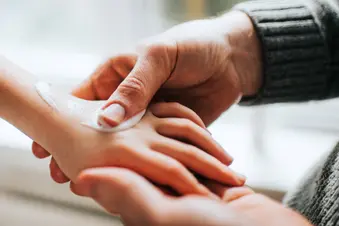
- Moisturize often with thick creams or ointments that contain emollients, which form a film on the skin's outer layer.
Antihistamines at bedtime. Families often use antihistamines like Benadryl at night, even though they don’t help much with the itch itself. “They’re not the mechanism that works, but you know what?” Karpen says. “Some kids get just enough relief to go to sleep.”
Speak with your child’s doctor about whether an antihistamine makes sense as part of your bedtime routine.
Use mind-body techniques. Because stress and itching feed each other, calming the mind can sometimes calm the skin, too. With little ones, distraction can help: Save a special toy for when you need it most, or ask big siblings to keep them occupied. Older kids might be able to lose themselves in brain teasers or crossword puzzles. If that doesn’t work, you might suggest gaming or watching a movie. (More screen time isn’t the usual parenting advice, but the deep distraction it provides may help.)
While most of the research has been conducted on more common skin conditions like eczema, some recommended coping techniques may transfer to PFIC itch. For instance, because scratching becomes such a habit, kids may not realize they’re doing it. You can work with them to come up with a signal you’ll make when you notice, which may be enough to interrupt the impulse.
Techniques like guided imagery and progressive muscle relaxation can help, too. Both are simple enough to start doing on your own.
The advocacy group PFIC Network has a five-part webinar series devoted to behavioral health and chronic itch, where you’ll find easy-to-implement, science-backed advice.
Find What Works for You
Just like with medications, no single comfort strategy works for every child, so expect some trial and error. And expect what works to change as your child grows. A cooling routine that soothes an infant may give way to distraction techniques your 10-year-old will actually try, while a teenager will probably respond better to having some control over their routine.
Keep track of what works and what doesn’t, and share that information with your child’s hepatologist. Above all, remember that these home comfort measures are meant to accompany medical care, not replace it.
Show Sources
Photo Credit: Moment/Getty Images
SOURCES:
Saul Karpen, MD, PhD, FAASLD, chief scientific officer, Stravitz-Sanyal Institute for Liver Disease and Metabolic Health, Virginia Commonwealth University; pediatric hepatologist, VCU Children’s Hospital, Richmond, Virginia.
Hepatology Communications: “Management and outcomes after liver transplantation for progressive familial intrahepatic cholestasis: A systematic review and meta-analysis.”
Biomolecules: “Itching for Answers: A Comprehensive Review of Cholestatic Pruritus Treatments.”
PFIC Network: “The Itch,” “Types of PFIC,” “Pruritus Resources.”
Dermatology and Therapy: “Psychodermatology of Chronic Pruritus: An Overview of the Link Between Itch and Distress.”
Current Hepatology Reports: “Newer Approaches to the Management of Pruritus in Cholestatic Liver Disease.”
Pediatric Reports: “Pediatric Cholestatic Diseases in the Era of Ileal Bile Acid Transporter (IBAT) Inhibitors.”
Orphanet Journal of Rare Diseases: “Impact of progressive familial intrahepatic cholestasis on caregivers: caregiver-reported outcomes from the multinational PICTURE study.”
Mayo Clinic: “Progressive familial intrahepatic cholestasis(PFIC): Treatments that can help.”
Children’s Liver Disease Foundation: “Pruritus.”
Clinical Therapeutics: “Effects of Stress on Itch.”