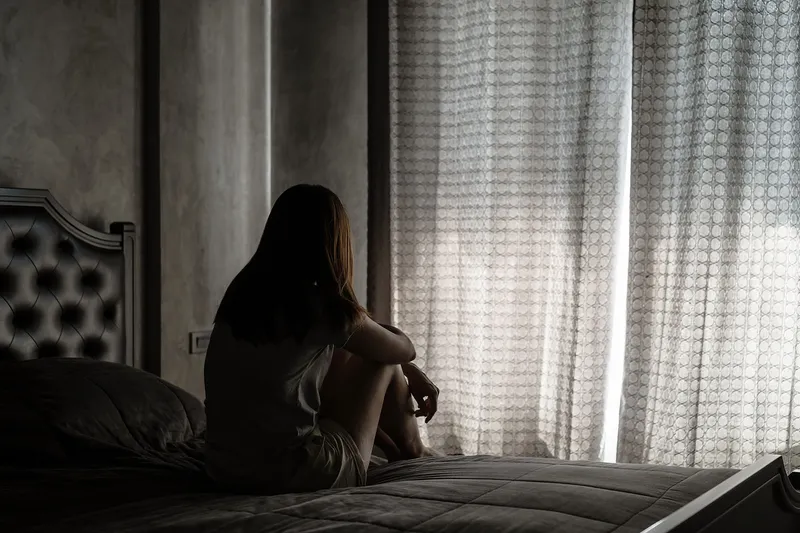

Catatonia is often dramatically portrayed as a condition that belongs in horror movies, presenting someone as completely motionless or immobile for shock value.
But it’s more than being “unresponsive.” Catatonia can become life-threatening if it’s not recognized and treated quickly.
The condition can affect movement and facial expression, along with basic tasks like drinking and eating. This is why untreated episodes can become dangerous so quickly. For many people, including me, catatonia is one of the most terrifying complications of a mood or psychotic disorder.
I’ve had two episodes, both following hospitalizations for severe manic episodes. It’s like after the mania was treated, my brain went straight to depression and then catatonia came along for the ride.
I couldn't move or respond the way that I wanted. It’s like my mind was telling my body to move, but it wouldn't listen. Sometimes, I could move, but not completely. For instance, I remember trying to get the mouse to move across the trackpad on my laptop on several occasions, but I couldn’t get it to work correctly.
My First Catatonia Episode
During the first episode, I’d become “stuck” in place. At first, I didn’t know what was going on. I remember standing in the kitchen and being unable to move. I panicked and called 911. An ambulance came. But when the EMTs arrived and started questioning me, I couldn't speak.
At this point, I had a feeling that I was experiencing catatonia. As a former therapist, I was familiar with the condition and had witnessed it a couple of times. But that didn’t matter. I couldn’t communicate this. Luckily, my family was able to tell the EMTs what was going on.
When I arrived at the emergency room, I remember the doctor asking me lots of questions, none of which I could answer. They eventually diagnosed me with catatonia and recommended admission. However, psychiatric beds were limited at the time. There were none available. Since I seemed to be improving and beds were unavailable, they discharged me. Eventually, the symptoms improved.
The Symptoms Returned Even Stronger
The next episode was more severe. It was after a lengthy hospitalization and severe manic episode. Again, just days after being discharged, depression set in, and then symptoms of catatonia began to appear.
But these symptoms were distinct from depression. I had problems with movement again. This made even simple tasks impossible. I couldn’t prepare meals on my own. I couldn’t even eat. I remember trying to eat a bowl of cereal. I’d try to lift the spoon to my mouth, but I couldn’t. The cereal would just fall all over the floor.
There were times I couldn't stand up even when I knew I needed to. One of the most difficult parts to talk about is that catatonia can make a person unable to get to the bathroom. I knew I had to go, but I remember feeling panic because I just couldn't move. This is something that’s rarely discussed. And I didn't come across it much in the scientific literature. It was an embarrassing and deeply vulnerable part of the experience, and it highlights why catatonia needs to be treated as the medical emergency that it is.
During this last episode, my family encouraged me to go to the emergency room. I didn’t think it was going to help as I wasn’t admitted the last time this happened. Maybe part of that was the depression talking. But I agreed to go.
Diagnosis and Treatment
I’d just been discharged from the hospital less than two weeks prior for mania, so they were familiar with my baseline. They used the Bush-Francis Catatonia Rating scale to diagnose and evaluate catatonia. Based on my score, they determined that I needed urgent hospital-level care, so I was admitted.
Benzodiazepines are the treatment of choice for catatonia. Within a week, my condition improved significantly. I was discharged in stable condition, and I continued the lorazepam short-term at home. The symptoms didn't return, but they floated the idea of trying electroconvulsive therapy (ECT) should symptoms persist or come back.
How This Changed My Perspective
This experience has helped me be more grateful for things I‘ve taken for granted in the past, like simply being able to walk or eat unassisted. After temporarily losing the ability to do those things, regaining them has changed the way I value my own body and its strength.
Photo Credit: iStock/Getty Images
Tell us what you think of this post


reactions