When it comes to sleep, can you have too much? A good night's sleep is essential for health, but too much of it can also carry risks. Oversleeping is linked to medical problems such as diabetes, heart disease, and cognitive decline, as well as a higher risk of death.
Depression and low socioeconomic status are also linked to sleeping too much, which may partly explain its link to poorer health. For example, when you have a lower socioeconomic status, you may have less access to health care, leading to undiagnosed conditions that can lead to excessive sleep.
How Much Sleep Is Too Much?
It depends. The amount of sleep you need changes throughout your life. It depends on your age, activity level, overall health, and lifestyle. During times of stress or illness, you may need more sleep. Experts recommend teens get 9-10 hours of sleep a night, adults under 65 get seven to nine hours, and those over 65 get seven to eight hours.
These numbers are general guidelines, and individual sleep needs can vary. Some people may feel well-rested after six hours of sleep, while others may need nine hours.
Why Do I Sleep Too Much?
Sleeping too much on a regular basis is a sign of an underlying issue.
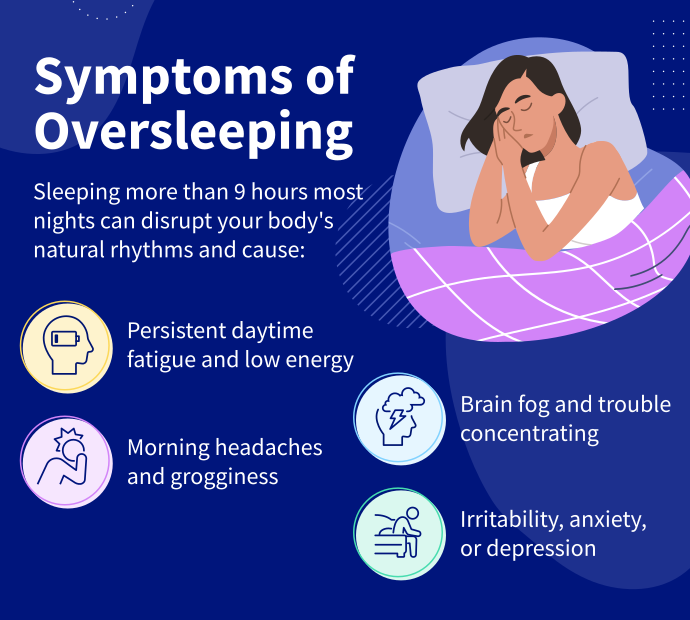
The most common causes are:
Untreated sleep apnea. This disorder causes you to awaken up to 30 times a night while you're trying to sleep. Sleep apnea is easy to diagnose and treat, so see your doctor if you have concerns.
Major depressive disorder (MDD). About 15% of people with this mood disorder report oversleeping. See your doctor if you think you may be depressed, as the right treatment can help prevent sleeping too much.
Other health conditions and factors linked to oversleeping include:
- Substance use disorder
- Chronic pain
- Hypothyroidism
- Some medications
Most experts think these health issues and oversleeping have a two-way (bidirectional) relationship. Depression may cause you to oversleep, but oversleeping may worsen your depression. Another example is chronic pain. It can cause you to sleep more, but it's often worsened by staying in bed for too long.
Get the Benefits of Sleep Without Oversleeping
If you average more than nine hours of sleep a night, and have persistent grogginess or other signs of sleeping too much, talk to your doctor. They can help find out why you oversleep.
If your oversleeping is caused by alcohol or prescription medications, cutting back or stopping those may help. But never stop a prescribed medicine unless your doctor agrees. If your oversleeping is a result of an underlying medical condition, treating it will likely lead to normal sleep habits.
Regardless of the reason you oversleep, good sleep practices are helpful. Experts recommend keeping the same bedtimes and wake times every day. Avoid caffeine and alcohol close to bedtime. Exercising regularly, and keeping your bedroom dark and cool, can also help you get the right amount of quality sleep.
How to Stop Oversleeping
Here are some tips to help get a healthy amount of sleep:
- Stick to a consistent wake-up time.
- Put your alarm clock far from your bed, like the other side of the room.
- Schedule enjoyable events in the mornings so you're motivated to wake up.
- Brush your teeth and wash your face as soon as you get out of bed.
- Make your bed right after you wake.
- Go for a walk or do other outdoor exercises in the morning.
- Have coffee in the morning, as long as your health allows it.
Takeaways
Sleep is essential for good health, but too much can be harmful. Sleeping more than nine hours most nights, for an adult, can be linked to diabetes, heart disease, and cognitive decline, and a higher risk of death. Lifestyle habits such as avoiding caffeine before bed and going to bed at the same time each night may help prevent oversleeping. See your doctor to rule out serious causes.
Oversleeping FAQs
How much sleep is best?
For your best health and well-being, experts recommend adults 24-64 get seven to nine hours of sleep a night, and those 65 and older get seven to eight hours.
What's the 3-3-3 rule for sleep?
It's a routine that promotes quality sleep. Have your last meal at least three hours before bedtime, avoid intense exercise the last three hours before bed, and don't consume caffeine after 3 p.m.
Is it healthy to sleep 12 hours a night?
No, not if it's consistent. Everyone can sleep more or less sometimes. But see your doctor if you sleep more than nine hours most nights.
What if I only sleep for three hours at a time?
This is a sign of fragmented sleep, which is sometimes linked to health issues like sleep apnea. Regularly sleeping less than six or seven hours a night can lead to many health issues, including lower sex drive, weight gain, heart issues, and a weakened immune system.