When you have benign prostatic hyperplasia (BPH), your prostate is larger than normal. It can cause problems such as a weak urine stream or a need to pee a lot throughout the day. Your doctor might suggest a prescription drug to treat your symptoms, but you might find that the side effects are too much to take. Or, you'd just rather not have to take medicine so often. Some men with BPH have found success with supplements. And there's at least some scientific research to back them up.
What Is the Issue With Supplements?
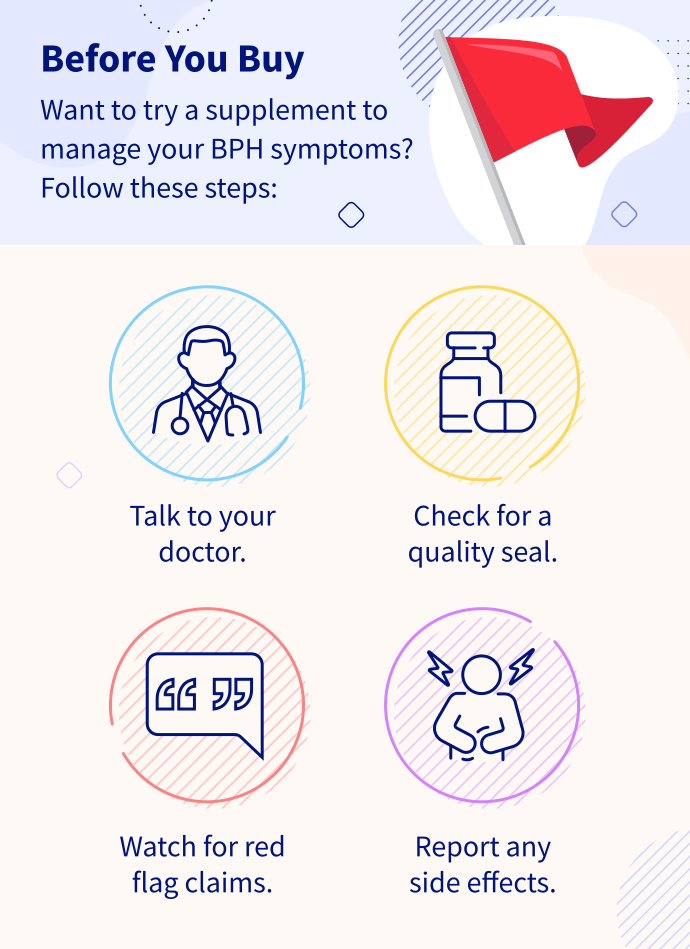
Supplements are meant to supplement your treatment plan, not replace it. In fact, you should always discuss with your doctor what supplements you are considering. They can tell you if there are any concerns about drug interactions or side effects or any other safety concerns.
Supplements aren't as closely regulated as medicines your doctor prescribes. The FDA regulates supplements, but it treats them like food, not medicine. This means that their makers don't have to prove their products are safe or effective before selling them. They must follow basic quality rules, but their labels can be wrong. They may show more or less of an ingredient than what is in the product, or the product may even have ingredients that are not shown on the label. So, the quality, safety, and effects of these products can vary.
In the sea of supplement options on the market, how do you find one that uses quality ingredients and is safe and effective? You need to look for seals from a group such as the United States Pharmacopeia (USP), ConsumerLab, or NSF. These seals suggest that the product was tested to make sure that it has the ingredients it lists and no other substances.
By law, supplements can't make claims to treat, cure, or prevent a disease. So, avoid products making big claims such as "miracle cure" on their packaging.
What Are the Most Common Supplements for BPH?
The best-studied, most commonly used supplements to treat BPH are:
- Beta-sitosterol
- Pygeum
- Rye grass
- Saw palmetto
Beta-sitosterol
This is a substance found in many plants. It doesn't affect the size of the prostate, but it may help your bladder empty and give you a stronger urine flow. It may improve other BPH symptoms as well.
Studies with Azuprostat and Harzol, two supplements that contain beta-sitosterol from South African stargrass, have shown particular promise.
Pygeum
This comes from the bark of the African plum tree. It seems to help some men with BPH wake up less at night to pee, go fewer times during the day, have a stronger urine stream, and empty their bladders better.
Rye pollen extract
This substance may improve a number of BPH symptoms, such as:
- Dribbling after you finish peeing
- Having to pee often throughout the day
- Having painful urination
- Having a weak urine stream
- Having an urgent need to pee
Some research shows that it may also shrink the prostate, give you a better flow, and help you empty your bladder.
Saw palmetto
This is a small tree that grows in North America. Some small studies have shown a benefit. But many large studies do not show that saw palmetto reduces the size of the prostate or eases urinary symptoms. Men may try it hoping to relieve common BPH symptoms such as:
- Having a hard time getting pee to start
- Having to go often throughout the day
- Having a weak stream
- Having an urgent need to urinate
It may also help with problems such as waking up at night to go to the bathroom and feeling like you still have to pee after you just went.
For men who've had success with saw palmetto, results were typically noticeable after four to six weeks.
What Supplements Show Promise for BPH?
In studies so far, other supplements show hopeful signs of helping. But there's less research on these than the more common options. These supplements include:
Pumpkin seeds. These and pumpkin seed oil extract seem to help with BPH symptoms and may shrink the size of the prostate. It may also be helpful when used along with other supplements such as saw palmetto.
Stinging nettle. This is a type of herb. Its root may help with urine flow and waking up a lot at night to pee. It's sometimes used along with other supplements to treat BPH symptoms.
Too Early to Say
Then there are the supplements where it's just too early to know whether they're useful. Early studies look good, but doctors need much more data on them.
Some of these include:
Takeaways
Some men with benign prostatic hyperplasia (BPH), or an enlarged prostate, try supplements to ease the symptoms. These supplements may include saw palmetto, pygeum, and rye pollen extract. Research on these and others is limited, and the results are mixed. Supplements aren't as tightly regulated as prescription drugs, so quality and safety can vary. Talk to your doctor before trying any of them because they can interact with other medicines or treatments.
FAQs: Supplements for BPH
Can I take BPH supplements alongside prescription prostate medications like tamsulosin (Flomax)?
There isn't enough research to definitively say that BPH supplements are safe to take with tamsulosin. Talk to your doctor before you try any supplement.
How long does it take for prostate supplements to start working?
With limited research, it's hard to say how long it takes for these supplements to take effect. Saw palmetto can take four to six weeks to show results. With others, it might take months. Check with your doctor for more specific information.
Do prostate supplements lower prostate-specific antigen (PSA) levels?
BPH supplements don't appear to have much effect on PSA levels. However, it's always important to keep your doctor up to date on all supplements you are taking. One case study found that biotin supplements — often taken for skin, nail, and hair health — can alter PSA test results.
Can diet or lifestyle changes work as well as supplements for BPH?
Your diet and lifestyle play a significant role in your prostate health. And research backs it up. Before reaching for a supplement, take a look at what changes you can make to what you eat or your physical activities. Are you a smoker? A heavy drinker? Overweight? Changes to these can have far greater effect on your BPH than a supplement can.