Bacterial pneumonia is an infection of your lungs caused by certain bacteria. The most common one is Streptococcus pneumoniae (pneumococcus),but other bacteria can cause it, too. If you’re young and healthy, these bacteria can live in your throat without causing any trouble. But if your body’s defenses (immune system) are weakened for some reason, the bacteria can go down into your lungs. When this happens, the air sacs in your lungs get infected and inflamed. They fill up with fluid, and that causes pneumonia.
You have a higher risk of getting bacterial pneumonia if you:
- Are aged 65 or older
- Have other conditions such as asthma, diabetes, or heart disease
- Are recovering from surgery
- Don’t eat right or get enough vitamins and minerals
- Have another condition that weakens your body’s defenses
- Smoke
- Drink too much alcohol
- Have viral pneumonia
People who have a weakened immune system also have an increased risk for bacterial pneumonia. These include those who recently had an organ transplant. People who are HIV positive or who have leukemia, lymphoma, or severe kidney disease also have a greater chance of getting the infection.
Symptoms
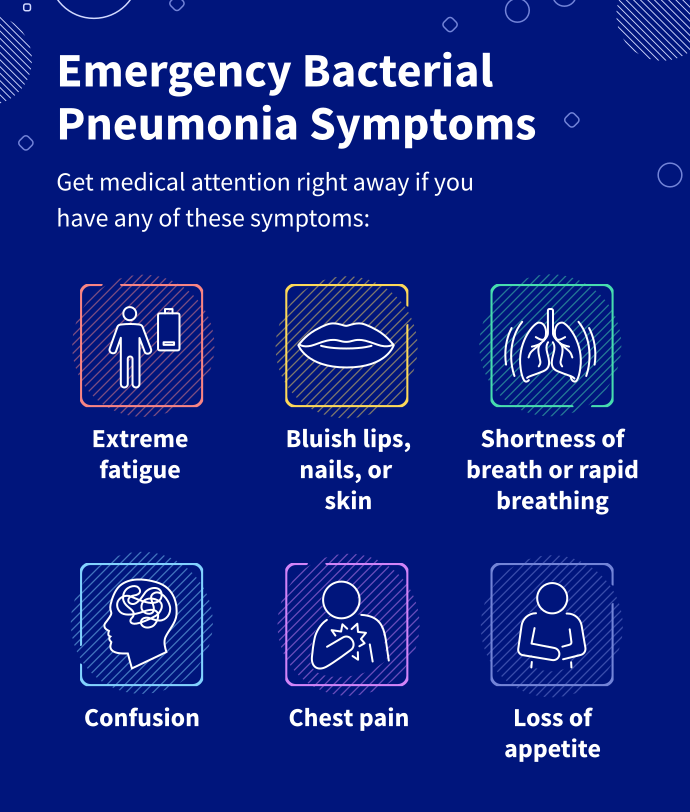
The symptoms can come on fast and furious, or they can creep up on you over a few days. Common symptoms are:
- High fever
- Coughing out greenish, yellow, or bloody mucus
- Chills that make you shake
- Feeling like you can’t catch your breath, especially when you move around a lot
- Feeling very tired
- Low appetite
- Sharp or stabbing chest pain, especially when you cough or take a deep breath
- Sweating a lot
- Fast breathing and heartbeat
- Lips and fingernails turning blue
- Confusion, especially if you’re older
Prevention
Vaccines are your best protection against bacterial pneumonia.
Pneumococcal vaccines are recommended for both children and adults, on schedules that depend on age and health risk.
Infants and young children
All children younger than 5 years should get a multidose series of a pneumococcal conjugate vaccine (PCV15 or PCV20) on this schedule:
- First dose at 2 months
- Second dose at 4 months
- Third dose at 6 months
- Booster at 12-15 months
Children who miss vaccination at these ages should still be vaccinated; the number of doses and the spacing depend on the child’s age when catch-up begins.
Older children
Healthy children aged 2-5 years who didn’t complete the series or never received the vaccine and kids aged 2-6 years who have certain underlying conditions and didn’t get the whole vaccine series should get one catch-up dose of PCV15 or PCV20. Children aged 6-18 years with at least one risk factor who have never received a conjugate vaccine should get a dose of PCV20 or a dose of PCV15 followed by PPSV23 at least eight weeks later.
Adults 50 years and older
As of October 2024, ACIP recommends that all adults 50 years and older who have never received a pneumococcal conjugate vaccine get a single dose. The options are:
- One dose of PCV20, or
- One dose of PCV21, or
- One dose of PCV15, followed by a dose of PPSV23 at least one year later
PCV20 or PCV21 may be given alone, without a planned PPSV23 follow-up for most people. If PCV15 is used, PPSV23 follows at least a year later or after eight weeks for people who are immunocompromised or who have a cochlear implant or cerebrospinal fluid leak.
Adults aged 19-49 at increased risk
Adults aged 19-49 years with at least one risk factor should receive a dose of PCV15, PCV20, or PCV21. If PCV15 is used, it should be followed by PPSV23 at least eight weeks later. Risk factors include chronic health conditions and conditions or treatments that weaken the immune system, such as long-term steroid use, chemotherapy, or radiation therapy.
If you or your child only received PPSV23, no additional pneumococcal vaccines are recommended until five years after the initial vaccination. Then, get PCV20 or PPSV23 to complete the vaccination series. If you’ve only gotten the PCV13 shot, wait one year and then get one dose of PCV20 or PCV21 to be fully vaccinated.
Talk with your doctor about which vaccine is right for you or your child and when to get it.
Besides getting shots, you can lower your risk of getting bacterial pneumonia by doing these things:
- Wash your hands regularly, especially after you go to the bathroom and before you eat.
- Eat right, with plenty of fruits and vegetables.
- Exercise.
- Get enough sleep.
- Quit smoking.
- Stay away from sick people, if possible.
Diagnosis
Your doctor might be able to tell if you have bacterial pneumonia just by examining you and asking questions about your symptoms and general health. They’ll probably listen to your lungs with a stethoscope, which will let them hear sounds that show there’s fluid in your lungs. But if they are not sure, you might have to get a chest X-ray.
Some people may need extra tests. These might include:
Treatment
Your doctor probably will prescribe antibiotics. It’s very important that you finish all of these. Otherwise, the bacteria may not all be killed, and you could get sick all over again. Your doctor might also suggest medication for pain and fever.
Other things you can do to help yourself get better:
- Get lots of rest.
- Drink plenty of fluids (they’ll loosen up the congestion in your lungs so you can cough it out).
- Use a humidifier, or take a warm bath.
- Don’t smoke.
- Stay home until your fever goes down and you aren’t coughing anything out.
Most people who are treated for bacterial pneumonia start feeling better in a few days, but it can take a few weeks before you feel 100% better. Make sure you keep your follow-up appointments so your doctor can check your lungs.
If the pneumonia is stubborn or severe, you might have to go to the hospital. If you go to the hospital you might get:
- Oxygen treatment
- IV fluids and medications
- Treatments to help loosen up the gunk in your lungs
Takeaways
Bacterial pneumonia is an infection in your lungs caused by a type of bacteria. If left untreated, pneumonia can cause more serious problems, including sepsis, respiratory failure, or lung abscesses. So, it’s important to see your doctor right away if you have concerning symptoms such as chest pain or shortness of breath. It’s recommended that all children under the age of 5 years be vaccinated for pneumonia. Adults should also consider the vaccine, especially those older than 50 years or who are immunocompromised.
Bacterial Pneumonia FAQs
How long does it take to fully recover from bacterial pneumonia?
Recovery time can vary depending on your overall health, age, and whether or not you have any other health conditions. If your case of pneumonia is particularly severe, it may take six to eight weeks before you feel better, and some people may have long-lingering symptoms such as shortness of breath.
Can you get bacterial pneumonia more than once?
Yes, you can get bacterial pneumonia more than once.
What are the potential complications of untreated bacterial pneumonia?
If you don’t get your case of pneumonia treated, you’re at greater risk for problems such as fluid around your lungs, respiratory failure, lung abscesses, sepsis, or organ failure.