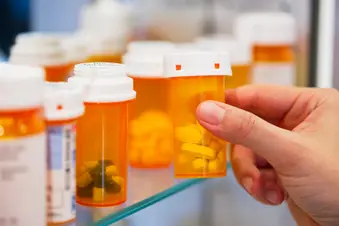
Medications and lifestyle changes can help you reach your blood pressure goals, but only 1 in 4 adults in the U.S. has their hypertension under control.
It can be a challenge to find the right medications, remember to take them regularly, monitor your blood pressure at home, and commit to all the new healthy habits that your doctor suggests.
But following your hypertension treatment plan for the long run is key.
“It’s so important to understand that hypertension is not associated with symptoms until it leads to heart disease, stroke, kidney disease, or dementia,” says Daniel W. Jones, MD, American Heart Association volunteer expert and dean and professor emeritus of the University of Mississippi School of Medicine in Jackson, Mississippi. “Hypertension is called ‘the silent killer’ because of this issue of no warning symptoms.”
Managing your blood pressure now can protect your health in the future.

What Is Uncontrolled Hypertension?
Hypertension happens when the heart tries to pump blood through tightened arteries. As a result, your heart has to work harder to pump blood.
- Normal blood pressure is lower than 120/80 millimeters of mercury (mm Hg).
- Elevated blood pressure is greater than 120/80.
- High blood pressure is 130/80 or above.
More than 56% of adults with high blood pressure have uncontrolled hypertension. Sometimes that’s because you don’t know you have high blood pressure or it's not being treated in the best way. But just under half of all adults who are aware that they have uncontrolled hypertension take blood pressure medication.
Why Hypertension Can Be a Challenge to Treat
Meeting your blood pressure goals usually involves four steps:
1. Taking blood pressure medications. There are different types of medications that can be used to control your blood pressure.
Some medications help relax blood vessels:
- Beta-blockers lower the heart rate and can relax vessels.
- ACE inhibitors and ARBs block a hormone (angiotensin) that causes arteries to narrow and increases water and sodium reabsorption in the kidneys.
- Calcium channel blockers stop calcium from getting into arteries to relax narrow vessels.
- Alpha-blockers relax the muscles in blood vessels so blood can flow through easier.
- Blood vessel dilators relax and widen the vessel walls.
Other drugs – diuretics – help your body get rid of sodium or water by peeing a lot. You might hear them called water pills.
And others block hormones – such as aldosterone – that cause more sodium and water to be retained.
This list of medications is very long, so it can take time – and trial and error – to find the types and dosages that are right for you.
2. Reviewing other medications and supplements that you take. Some may raise your blood pressure or keep blood pressure treatments from working well and need to be changed.
3. Regularly checking your blood pressure. “Hypertension is usually a chronic condition that accompanies people for most of their lives, so it’s important to develop a habit of monitoring blood pressure at home,” says Ian Del Conde Pozzi, MD, a cardiologist for Miami Cardiac & Vascular Institute, part of Baptist Health South Florida, in Pinecrest, Florida.
4. Making healthy changes. Lifestyle changes are a key part of a hypertension treatment plan. That includes:
- Trying to get to a healthy weight
- Being active at least four days a week
- Avoiding excess alcohol
- Quitting tobacco
- Reducing sodium and eating potassium-rich foods
- Following an eating plan like the DASH (Dietary Approaches to Stop Hypertension) diet that’s high in fruits and vegetables, whole grains, and lean protein, while low in saturated (unhealthy) fats
Committing to each of these steps can feel tough for a variety of reasons. For instance:
- If you don’t have any symptoms, treatment might not feel important.
- Your medications may be hard to afford.
- Your doctor or pharmacy may not be near your home.
- You might not trust doctors or the general health care system.
- You could have a hard time remembering when to take, or refill, your medications.
- You don’t like side effects that you get from your hypertension treatment.
Giving up old habits and trying to make healthier choices is also a common challenge.
“People with hypertension can avoid or reduce the need for medication with a healthy lifestyle,” Jones says. But “the ‘normal’ lifestyle for most of the modern world is unhealthy, including too little exercise, too many calories, and too much salt.”
How Your Hypertension Treatment Plan Protects Your Health
Even if you feel fine today, high blood pressure that’s not managed for a long time can increase the risk of serious health issues like:
- Stroke
- Heart attack
- Heart failure
- Aneurysm (when a blood vessel weakens, bulges, and can burst)
- Kidney damage
- Metabolic syndrome, which increases your cholesterol and blood sugar
- Eye problems, including vision loss
- Erectile dysfunction
- Trouble thinking clearly or learning new things
- Dementia
Strategies to Help You Stay on Track
To reach your blood pressure goals, try to:
Commit to every part of your treatment plan. For instance, your blood pressure medications may not work as well if you don’t also make healthy choices like cutting back on sodium and trying to be more active.
Go slowly. When it comes to making lifestyle changes, “gradual change works best for most people,” Jones says. For example, you may find it easier to reduce sodium in your diet if you cut back little by little.
Get into a routine. Schedule a specific time each day for tasks like taking medication or checking your blood pressure. “Consistency really pays off not only because your blood pressure will be better managed, but because it won’t feel like a burden,” Pozzi says.
Manage medication side effects. If you don’t like how your medicines make you feel, tell your doctor. “Ask them to switch you to a different type of pill. There are many, many options for blood pressure medications, so one is likely to work well for you,” says Alexander Chaitoff, MD, assistant professor of internal medicine at University of Michigan Medical School in Ann Arbor, Michigan.
Get organized. Different apps can help you log blood pressure readings, track prescriptions, and chart your activity levels. When it comes to taking your medication, “a simple pillbox that’s placed where you do other routine activities, such as brushing your teeth, will make it harder to forget and help build the habit,” Pozzi says.
Tell your doctor if you can’t afford your medication. They may be able to switch you to a cheaper drug or connect you to the drugmaker’s patient assistance program.
Ask for extra support. You don’t need to figure everything out on your own. Ask your doctor for handouts, resources, or programs that can help you stick to your treatment plan. For instance, “group support is helpful for many people, especially with increasing and maintaining healthy exercise habits,” Jones says.
Find ways to better manage your stress. Chronic stress can raise your blood pressure. To get a handle on it, practice setting boundaries for yourself and not taking on too much. Take time every day – even for a few minutes – to do something you enjoy. A mental health expert, like a therapist, can suggest more strategies to cope with stress.
Be honest with your doctor. They won’t know which parts of your treatment plan are working, and which need to be adjusted, unless you tell them.
“Hypertension is one of the best studied diseases out there — we have a full toolbox to help people with elevated blood pressure,” Chaitoff says. “You just need to be honest with us about what will and won’t work for you.”
Show Sources
Photo Credit: Tetra Images/Getty Images
SOURCES:
Daniel W. Jones, MD, MACP, FAHA, American Heart Association volunteer expert and past president; chair, writing committee for the association’s “Guideline for the Prevention, Detection, Evaluation and Management of High Blood Pressure in Adults”; dean and professor emeritus, the University of Mississippi School of Medicine, Jackson, Mississippi.
Ian Del Conde Pozzi, MD, cardiologist, Miami Cardiac & Vascular Institute, part of Baptist Health South Florida, Pinecrest, Florida.
Alexander Chaitoff, MD, assistant professor of internal medicine, University of Michigan Medical School; research scientist, Center for Clinical Management Research at the Veterans Affairs Ann Arbor Health System, Ann Arbor, Michigan.
Hypertension: “Reasons for Uncontrolled Blood Pressure Among U.S. Adults: Data from the U.S. National Health and Nutrition Examination Survey.”
BMC Public Health: “The global prevalence of uncontrolled hypertension: a systematic review and meta-analysis.”
American Heart Association: “High Blood Pressure That’s Hard to Treat,” “High Blood Pressure Among Black Adults,” “Types of Blood Pressure Medications,” “Managing High Blood Pressure Medications.”
Million Hearts: “Estimated Hypertension Prevalence, Treatment, and Control Among U.S. Adults.”
Internal and Emergency Medicine: “Hypertension, uncontrolled hypertension and resistant hypertension: prevalence, comorbidities and prescribed medications in 228,406 adults resident in urban areas. A population-based observational study.”
Johns Hopkins Medicine: “Resistant Hypertension,” “Why Don’t People Take Their Blood Pressure Medicine?”
Mayo Clinic: “High Blood Pressure (Hypertension,)” “10 ways to control high blood pressure without medication.”
Cleveland Clinic: “Aldosterone Antagonists,” “High Blood Pressure? What To Do When Your Medication Isn’t Enough.”
Progress in Cardiovascular Diseases: “Impact of therapeutic lifestyle changes in resistant hypertension.”
Rochester Regional Health: “Apps to Help Monitor for Heart Disease.”


