


 Reviews (169)
Overview: Eliquis is an anticoagulant (blood thinner) that is used to treat or prevent blood clots. The most common side effect of Eliquis in adults is bleeding. Bleeding can range from mild to severe. Contact your health care provider or get help right away if you have bleeding that does not stop, vomit or cough up blood, or pass bloody or black stool. Tell your health care providers about all medicines, supplements, and herbal products that you take. Eliquis is available as a tablet that you swallow or as a capsule or a tablet that can be mixed into liquid and swallowed.
Uses
What is Eliquis used for?
Eliquis (apixaban) is commonly used for the following conditions.
- To prevent strokes and blood clots in people who have atrial fibrillation, which is an abnormal heartbeat
- To prevent the formation of a deep vein thrombosis (also known as a DVT or blood clot in the veins) or pulmonary embolism (also known as a PE or blood clot in the lungs) after hip or knee replacement surgery
- To treat blood clots that can form in your veins or lungs and prevent them from happening again
Eliquis may also be used for other conditions as determined by your health care provider.
How does Eliquis work (mechanism of action)?
Eliquis is a blood thinner. It blocks substances in your blood from forming a blood clot.
How is Eliquis supplied (dosage forms)?
Brands and other names
- Eliquis
- Eliquis Sprinkle
Dosage forms and strengths
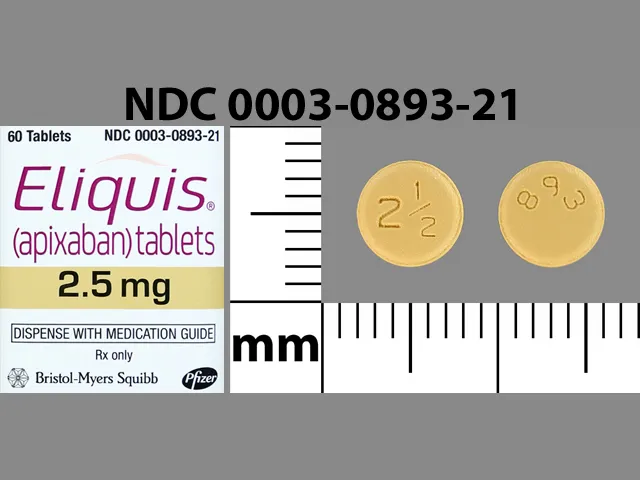
- 2.5 mg and 5 mg oral tablets
- 0.15 mg capsule for oral suspension
- 0.5 mg tablet for oral suspension
How should I store Eliquis?
Eliquis should be stored at room temperature, between 68 F and 77 F (20 C and 25 C). It can be exposed to temperatures between 59 F and 86 F (15 C and 30 C) for shorter periods of time, such as when transporting it. Store it in a place where children and pets cannot reach it.
Side Effects
What are the most common side effects of Eliquis?
The most common side effect of Eliquis in adults is bleeding. This can cause you to bruise easily, and it may take longer for bleeding to stop. It can also be serious (see below). In children, the most common side effects are headache, vomiting, and heavy menstrual bleeding. Tell your health care provider if you have any side effect that bothers you.
There may be other side effects of Eliquis that are not listed here. Contact your health care provider if you think you are having a side effect of a medicine. In the U.S., you can report side effects to the FDA at www.fda.gov/medwatch or by calling 800-FDA-1088 (800-332-1088). In Canada, you can report side effects to Health Canada at www.health.gc.ca/medeffect or by calling 866-234-2345.
What are the serious side effects of Eliquis?
While less common, the most serious side effects of Eliquis are described below, along with what to do if they happen.
Severe Allergic Reactions. Eliquis may cause allergic reactions, which can be serious. Stop taking Eliquis and get help right away if you have any of the following symptoms of a serious allergic reaction.
- Breathing problems or wheezing
- Racing heart
- Fever or general ill feeling
- Swollen lymph nodes
- Swelling of the face, lips, mouth, tongue, or throat
- Trouble swallowing or throat tightness
- Itching or skin rash
- Bumps on the skin called hives that can be red, pink, white, or brown depending on your skin tone
- Nausea or vomiting
- Dizziness, feeling lightheaded, or fainting
- Stomach cramps
- Joint pain
Serious Bleeding. Eliquis can cause serious bleeding. In rare cases, this can lead to death. Some people with serious bleeding may need a blood transfusion or surgery. Contact your health care provider right away if you fall or are injured, because you may need to be checked for bleeding, including internal bleeding. This is especially important if you hit your head, because head injuries can be very severe while taking blood thinners. Call your health care provider or go to the emergency room right away if you have any of the following signs of severe bleeding while taking Eliquis.
- Any bleeding that lasts a long time, will not stop, or is severe
- Bleeding from the gums
- Frequent or severe nosebleeds
- Abnormal vaginal bleeding or heavy menstrual periods
- Pink, red, or brown urine (pee)
- Blood in your stools (this may look red or black and tarry)
- Vomit with blood that looks like coffee grounds
- Headaches or feeling dizzy
- Coughing up blood or blood clots
Warnings & Precautions
Who should not use Eliquis?
Allergies to Ingredients. People who are allergic to any of the following should not take Eliquis.
- Apixaban
- Eliquis
- Any of the ingredients in the specific product dispensed
Your pharmacist can tell you all of the ingredients in Eliquis.
Current Abnormal Bleeding. Since Eliquis can cause serious bleeding, people who are currently having bleeding problems should avoid taking Eliquis. Tell your health care provider if you are having any new or unusual bleeding.
What should I know about Eliquis before using it?
Do not take Eliquis unless it has been prescribed to you by a health care provider. Take it as prescribed.
Do not share Eliquis with other people, even if they have the same condition as you. It may harm them.
Keep Eliquis out of the reach of children.
Do not stop taking Eliquis without talking to your health care provider. Your health care provider will decide how long you should take Eliquis. Always refill your prescription before you run out of medicine so that you do not run out or miss any doses. Stopping Eliquis can increase your risk for a blood clot or stroke.
Always tell all of your health care providers, including your dentist, that you are taking Eliquis. This is especially important before any procedures or surgeries, because you may need to stop or pause taking Eliquis beforehand. Your health care providers should talk to the health care provider who prescribed Eliquis before they tell you to stop taking it, even temporarily. You may have to take a different medicine to protect you from clotting while you are not taking Eliquis.
If you are taking Eliquis to prevent blood clots after hip or knee surgery, make sure you fill your prescription early and have your medicine available so that you do not miss doses when you are discharged from the hospital.
If you cannot swallow Eliquis tablets whole, reach out to your pharmacist or other health care provider. They can help you find other ways to take your medicine. If you are using Eliquis capsules or tablets for oral suspension for a child, read and follow the instructions that come with the medicine to be sure you know how to prepare and give each dose.
If you take Eliquis and have a spinal puncture or medicine injected into your spinal or epidural area, you may be at risk for a spinal or epidural blood clot (hematoma). This can cause you to become permanently paralyzed. The risk is higher if you have had an epidural, if you take certain medicines called non-steroidal anti-inflammatory drugs (NSAIDs), if you have multiple repeated or troublesome spinal or epidural punctures, or if you have a history of spine problems or surgeries. Your health care provider will decide if you should receive spinal puncture or epidural injections and will watch for symptoms of problems. If you take Eliquis and have one of these procedures, let your health care provider know right away if you have back pain, tingling, numbness, or weakness in your legs or feet, or lose control of your bladder or bowels.
If your child is taking Eliquis, be sure to keep all appointments with their health care provider. The dose of Eliquis in children is based on body weight, so it may need to be adusted as your child grows. Do not change the dose on your own.
If your child throws up or spits up after taking a dose of Eliquis and it is within 30 minutes of when the dose was given, repeat the dose. If it has been more than 30 minutes since the dose was given, do not repeat the dose, and just give the next dose at the usual scheduled time. If your child repeatedly spits up or throws up after taking Eliquis, contact your health care provider.
What should I tell my health care provider before using Eliquis?
Tell your health care provider about all of your health conditions and any prescription or over-the-counter (OTC) medicines, vitamins/minerals, herbal products, and other supplements you are using. This will help them know if Eliquis is right for you.
In particular, make sure that you discuss any of the following.
Current and Past Health Conditions. Tell your health care provider if you have any of the following.
- Kidney problems
- Liver problems
- Bleeding problems
- Antiphospholipid syndrome, which is a disorder that causes abnormal clotting
- Artificial (prosthetic) heart valve
Other Medicines and Supplements. Eliquis may interact with other medicines and supplements. Before taking Eliquis, tell your health care provider about any prescription or over-the-counter (OTC) medicines, vitamins/minerals, herbal products, and other supplements you are using. See the Interactions section for more details.
Pregnancy. It is not known if or how Eliquis could affect pregnancy or harm a fetus. Taking Eliquis while pregnant may increase the risk of bleeding. Tell your health care provider if you are pregnant or plan to become pregnant. Talk to your health care provider about your risk for severe uterine bleeding if you take Eliquis. If you take Eliquis while pregnant, tell your health care provider right away if you have any new or unusual bleeding.
Breastfeeding. Do not breastfeed while you are taking Eliquis. It is not known if Eliquis passes into breast milk. Tell your health care provider if you are breastfeeding or plan to breastfeed. Your health care provider will let you know if you should stop breastfeeding or stop Eliquis.
How can I get more information about Eliquis?
For more information about Eliquis, you can visit the drugmaker’s website at www.eliquis.com or call them at 855-354-7847.
Interactions
Does Eliquis interact with foods or drinks?
There are no known interactions between Eliquis and foods or drinks.
It is unknown if drinking alcohol will affect Eliquis, but both Eliquis and alcohol can increase your risk of bleeding. It is best to limit the amount of alcohol you drink.
Does Eliquis interact with other medicines (drug interactions)?
Always tell your health care provider about any prescription or over-the-counter (OTC) medicines, vitamins/minerals, herbal products, and other supplements you are using.
In particular, make sure that you discuss if you are using any of the following before taking Eliquis.
- A medicine used to treat a fungal infection, such as itraconazole or ketoconazole
- Carbamazepine (Tegretol, Carbatrol, and others), which is a medicine commonly used to treat seizures or nerve pain
- Phenytoin (Dilantin, Phenytek, and others), which is a medicine to control seizures
- St. John’s wort, which is a supplement that may be used for depression
- A selective serotonin reuptake inhibitor (SSRI), such as fluoxetine, paroxetine, or sertraline, which is a medicine commonly used for anxiety and depression
- A serotonin and norepinephrine reuptake inhibitor (SNRI), such as duloxetine or venlafaxine, which is a medicine commonly used for anxiety and depression
- A nonsteroidal anti-inflammatory drug (NSAID), such as ibuprofen, naproxen, and others, which are contained in many prescription and OTC products for pain, swelling, and fever
- Any other blood thinner, which is a medicine used to treat or prevent blood clots, such as warfarin (Coumadin or Jantoven) or medicines that contain heparin
- Aspirin, which is in many prescription and OTC products, including those for pain, swelling, and fever
- An antiplatelet medicine, such as clopidogrel (Plavix), ticagrelor (Brilinta), aspirin/dipyridamole, or cilostazol, which is a medicine used to prevent blood clots
- Ritonavir, which is medicine commonly used to treat HIV/AIDS and COVID-19
- Rifampin, which is a medicine commonly used to treat an infection called tuberculosis
Some other medicines may alter the blood levels of Eliquis. Tell your health care provider about all medicines that you take or have recently taken.
This may not be a complete list of medicines that can interact with Eliquis. Always check with your health care provider.
Overdose/Missed Dose
What should I do if I accidentally use too much Eliquis?
If you or someone else has used too much Eliquis, contact your health care provider, go to the nearest hospital emergency room, call 911, or contact a Poison Control center at 800-222-1222.
What should I do if I miss a dose of Eliquis?
If you miss a dose of Eliquis, take it as soon as possible on the same day, then continue to take it twice daily as prescribed. Do not take more than one dose at a time or double up on doses to make up for a missed dose.
Images
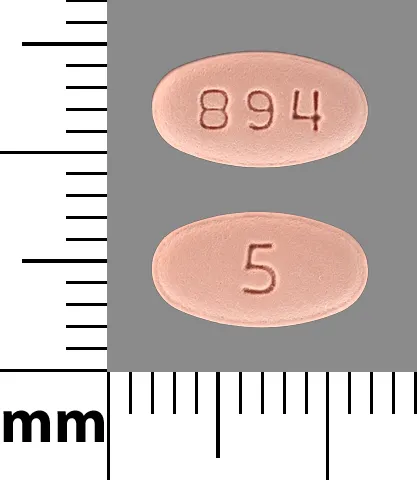
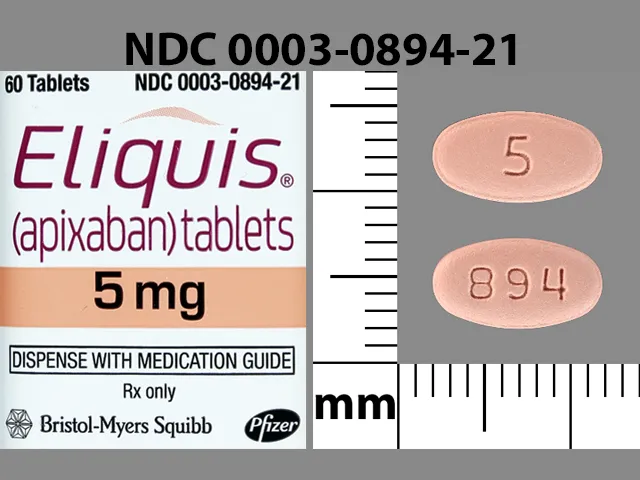
Eliquis
GENERIC: Apixaban
Add WebMD as a Preferred Source to see more of our trusted content across Google Search, AI Overviews, and AI Mode
Are you currently using Eliquis (Apixaban)?
This survey is being conducted by the WebMD marketing sciences department.