Your poop offers clues about your health. But how can you describe your bowel movements (BMs) to your doctor without bringing in a sample?
You and your doctor can use something called the Bristol Stool Scale or Bristol Stool Chart. It uses pictures and brief descriptions to give you a way to talk about the shapes and types of poop, which doctors call stools.
What Is the Bristol Stool Scale?
The Bristol Stool Chart is also known as the Meyers scale. By using it to get a good description of your poop, your doctor can estimate the time it takes for food to pass through your body and leave as waste. The shape and form of your poop may also offer clues about some digestive problems.
The chart is based on research from two doctors, Stephen Lewis and Ken Heaton, at Bristol Royal Infirmary in the U.K. In one key study, published in 1997, they had 66 adult volunteers keep diaries about how their poop looked and how often they went.
Participants also swallowed marker pellets to help researchers track digestion times and had their poops weighed. To get samples under a variety of conditions, the participants were given medication to change stool consistency and digestion times.
The chart is now widely used by doctors, especially those who treat people with digestive problems.
What Are the Types of Stool?
To talk about your poop, your doctor might show you a chart like this:
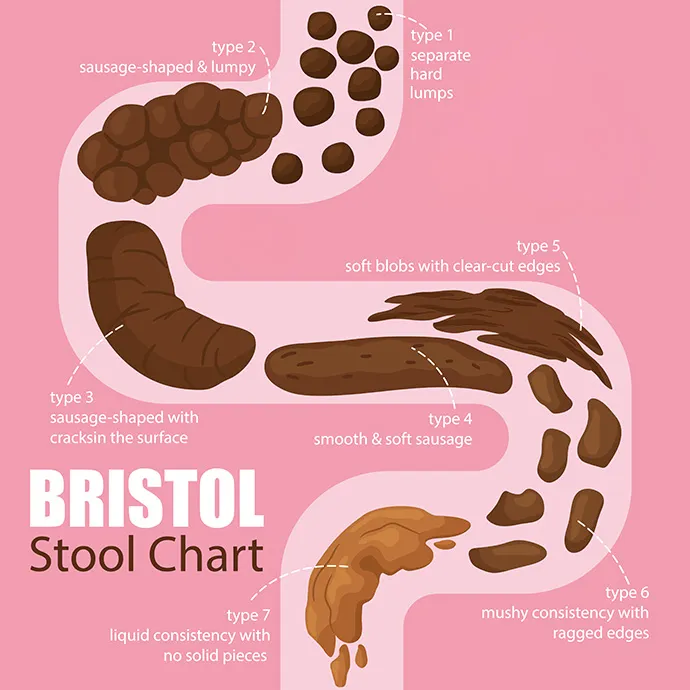
Type 1 stool
If you have these hard, separate pellets of poop that are hard to pass, it's a sign of severe constipation. That means your poop is taking a long time to get through your gut. When that happens, more of the water that would otherwise be part of your poop is absorbed by your colon, leaving drier, smaller stools. The most common causes are getting too little fluid and fiber in your diet. Medications, stress, and illness can also play roles.
Type 2 stool
These hard, lumpy poops are a little bigger, but still signal constipation. They often result from a lack of fluid and fiber. In addition to changing your diet, you might try more exercise to move things along.
Type 3 stool
A sausage-shaped poop with cracks on the surface is considered normal on the Bristol stool scale.
Type 4 stool
A thinner, more snake-like poop that's smooth and soft is also considered normal under Bristol criteria.
Type 5 stool
If you're having soft blobs of poop with clear edges, you're tending toward diarrhea. But you might be surprised to learn that the problem could be eating too little fiber, as fiber helps firm up your poop.
Type 6 stool
If you're passing fluffy, mushy pieces of poop with ragged edges, that's diarrhea. It's a sign that your food is making a rapid trip through your gut, giving your colon too little time to absorb fluid and form firmer stools. You could have a viral infection (such as norovirus infection), food poisoning, or some other digestive issue. Stress can also play a role.
Type 7 stool
Watery stools with no solid pieces are symptoms of severe diarrhea. Most diarrhea lasts a day or two and then goes away on its own. But if you have this kind of poop or type 6 stool often, talk to your doctor. Chronic diarrhea can be a symptom of conditions that cause irritation or swelling of the bowels, including irritable bowel syndrome (IBS), Crohn's disease, and ulcerative colitis.
What Are the Signs of Healthy Bowel Movements?
While everybody poops, not everyone poops the same way. With that said, here are some signs that your bowel habits and the poop you pass are normal.
You're regular. If you poop every morning after your first cup of coffee, that's normal for you. If you poop every two or three days, that can be normal as well. Pay attention if your pattern suddenly changes without an obvious explanation (such as traveling, which often leads to constipation, partly because of changes in your diet and routines).
Your stools are well formed. If you mostly see stools that look like type 3 or type 4 on the Bristol Stool Chart, that's ideal. These stools are easy to pass and suggest your lifestyle and bowel habits are in healthy territory.
Your poop is brown. While the food you eat can sometimes harmlessly change the color of your poop, most healthy poop is plain brown. But poop can also be:
- Black. This happens from taking iron supplements or eating licorice, but it can also be a sign of bleeding in your gut.
- Yellow or light-colored. This can be a sign of infection or swelling in your gallbladder, liver, or pancreas — unless you are looking at poop from a breastfed baby, which is normally yellow.
- Green. This can come from eating leafy green vegetables or be a sign of infection.
- Red. If you haven't eaten beets or other red foods, call your doctor, as this signals bleeding somewhere in your gut.
Your poop smells normal. Keep in mind that normal-smelling poop smells bad to most people. That's fine. But if your poop smells worse than usual or weird in some way, pay attention. A foul smell might mean unwanted bacteria in your gut that could mess with your digestion. If it lingers, check in with your doctor.
Your poop sinks. Poop that floats instead of sinking in the toilet bowl can be a sign of some health problems, such as gassiness, a stomach bug, or poor absorption of nutrients. It's not usually a big cause for concern, but let your doctor know about it if you're having other symptoms, such as unintended weight loss.
What does unhealthy stool look like?
There's no simple answer to this. Your stool can change from day to day, depending on many factors, including what you eat and drink and how much you move. In general, if you rarely see stools considered normal by the Bristol scale (types 3 or 4) or you notice any lasting change that worries you, it's worth mentioning it to your doctor. If you see blood, it's especially important to find the cause. Hemorrhoids are a common cause, but bleeding sometimes means a more serious problem, such as colorectal cancer.
How to Improve Bowel Health
If you are not seeing those ideal Bristol type 3 or type 4 poops or you have frequent constipation, loose stools, or both, there are things you can try to improve your bowel health. These fall into two categories: lifestyle adjustments and better bathroom habits.
Lifestyle adjustments
Whether your issue is chronic constipation, diarrhea, or irregular bowel movements, these changes might help:
Regular eating habits. Sending your gut predictable amounts of food at predictable times each day can help your bowels stay on a regular schedule as well.
Eating more fiber. Be sure to get both: soluble fiber and insoluble fiber. Soluble fiber dissolves in water and creates a gel in your gut. It is found in oatmeal, peas, beans, apples, citrus fruits, carrots, barley, and psyllium supplements. Insoluble fiber increases stool bulk and helps it move through your system. It is found in whole-grain flour, wheat bran, nuts, beans, and vegetables.
Drinking plenty of fluids. Fluid works with fiber to form healthy stools.
Avoiding irritating foods. Caffeine, alcohol, and spicy foods can trigger the digestive tract, especially if you're prone to diarrhea. Some people, including many with IBS, are sensitive to a longer list of foods and may need to experiment to find out which ones cause an upset stomach.
Getting more exercise. When you move, you help the contents of your bowels move, too. Exercising at the same time each day can help keep your bowel movements regular.
Reducing stress. Stress and lack of sleep can affect your gut function, leading to constipation or diarrhea.
Managing medications. Some medications, including opioids and antidepressants, can cause constipation. Others such as antibiotics, antacids, and magnesium can cause diarrhea. Talk to your doctor about your options for managing such side effects if these are medications you need to take. Also, let your doctor know if you routinely depend on laxatives to help you poop because overuse can make the problem worse.
Better bathroom habits
If you've been having trouble pooping regularly and comfortably, you can try:
Changing your toilet posture. It can help to lean forward, rest your forearms on your thighs, lift your heels, or place your feet on a low stool (some are sold just for this purpose, but you can use anything that works for you). Some people find it helpful to lean forward and grasp their ankles.
Heeding the urge. If you need to poop, get to a bathroom, and do it. Holding it in can lead to constipation.
Bowel retraining. If you consult a doctor, they may recommend a program to break toilet habits, such as sitting on the toilet for a long time and straining when you have constipation. You might be advised to sit on the toilet at the same time each day and to limit your visit to 10-15 minutes. You might also work with a physical therapist to learn techniques for moving your bowels more effectively, with less strain.
When to Call a Doctor About Diarrhea
Diarrhea that lasts a few days usually goes away on its own. But you should contact your doctor if you also have:
- Fever
- Severe stomach pain
- Vomiting
- Blood or mucus in your stool
- Weight loss
- Signs of dehydration, such as dark pee, headache, or dizziness, or if an infant or toddler isn't producing tears or has fewer wet diapers than usual
When to Go to the Doctor About Constipation
If you have chronic constipation — a lot of bowel movements of Bristol type 1 or 2, along with other symptoms such as discomfort when you poop and the feeling that you can't empty your bowels — it's always a good idea to talk to your doctor. It's especially important if you:
- Have a new issue with constipation
- See blood in your poop
- Lose weight without trying
- Have severe pain when you poop
- Have constipation for more than 3 weeks
- Often feel like stool is stuck in your rectum — which could be a symptom of a type of constipation related to issues with your pelvic floor muscles
Takeaways
You can learn a lot by looking at your poop and by talking to your doctor when things don't look right. The Bristol Stool Chart can help you and your doctor talk about what your poop looks like most of the time and find solutions for issues such as diarrhea and constipation. When there is a problem, a healthy lifestyle and changes in your pooping habits can often help you get back on track.
FAQs
Can you pass a combination of different Bristol stool types in a single bowel movement?
Yes, this is possible. For example, sometimes your gut works too slowly. Because the first part of your poop stays in your body for too long, it loses water and becomes dry and hard. But the newer waste moving behind it travels at a normal speed, and as it becomes poop, it stays soft. When you finally go to the bathroom, you pass both the hard, older poop and the soft, newer poop at the same time.
Does the Bristol Stool Chart apply to floating stools? What does it mean if there is buoyancy?
Yes, the Bristol Stool Chart can still be used for floating stools. The chart is meant to check the shape and texture of your poop. Floating poop can happen due to eating something that leaves extra gas inside the poop. Other causes include poor nutrient absorption or a gut infection.
Can a medication alter my Bristol stool score without there being a problem with my gut?
Yes, medications can change your score on the Bristol Stool Chart, even if there is nothing wrong with your gut. Many drugs change how fast food moves through your gut or how much water your body absorbs, which can make your stool softer or harder.