What Is Phenylketonuria?
Phenylketonuria (PKU) is a rare disease you inherit from your parents. It affects the way your body handles an amino acid called phenylalanine (Phe for short).
Phe is one of many amino acids that join together to form proteins. It’s in lots of common foods, but it’s highest in protein-packed foods like meat, eggs, fish, and milk. You can also find it in the artificial sweetener aspartame.
Babies born with PKU have a deficiency of the enzyme needed to break Phe down. This means it builds up in the blood and starts to harm a child’s growing brain. There’s no cure, but a low-protein diet and medical treatments can help you stay healthy.
What Causes It?
PKU happens when there's a problem with a gene that tells the body to create the enzyme phenylalanine hydroxylase (PAH). That enzyme is what breaks down Phe. Without the gene providing the proper instructions, phenylalanine doesn’t break down and, instead, builds up.
To have PKU, you need two copies of the gene — one from each parent. People who have only one faulty gene are called carriers. They don’t have symptoms but can pass the gene on to their children. If a carrier has a child with another carrier, the chance that child will have PKU goes up.
Symptoms
PKU can come with mild symptoms or more serious ones.
The most severe form of the disorder is called classic PKU. It happens when you have little or none of the enzyme that helps process Phe and there is too much Phe in your blood. Symptoms of untreated classic PKU include:
- Learning difficulties
- Delayed mental and physical development
- Seizures
- Emotional problems
- Memory loss
- Heart defects
- A skin rash called eczema
- A musty odor in breath, skin, or urine
- Reduced attention span
In milder forms of PKU, your Phe levels are lower and there’s less chance of serious harm to the brain. Some people have very slight elevations of phenylalanine that might not cause problems or need treatment.
If you’re a mom-to-be with the disorder, it’s important to keep your Phe levels in a safe range (2 to 6 mg/dL, which is the same as 120 to 360 µmol/L). Otherwise, you may have a higher risk of complications, including losing your pregnancy. High levels of Phe in the womb can also cause your child to have:
- Low birth weight
- Slowed growth
- Behavior problems
- Heart trouble
Getting a Diagnosis
Many countries, including the U.S., test newborns for PKU. It's done through a simple blood test that happens a day or two after they're born. A health care worker at the hospital usually takes the blood through a prick in your baby’s heel. It’s put on a special paper and sent to a lab. Your baby’s doctor will share the results with you.
Questions for Your Doctor
PKU is very serious, so it’s important to learn everything you can. You can start the conversation with questions like:
- What causes PKU?
- What should my diet look like?
- Do I have to follow this diet for life?
- What happens if I go off the diet or skip a couple of days?
- How will I get all the protein and nutrients I need?
- Are there treatments besides the PKU meal plan?
- How often should I have my Phe levels checked? Can I check them at home?
- Does PKU make it more likely I’ll feel anxious or depressed?
- Does PKU cause other health problems?
- Can I have children if I have PKU? Can I breastfeed?
- Will I need to see a specialist?
- Should my family members be screened?
Meet the Care Team
Finding Expert Care
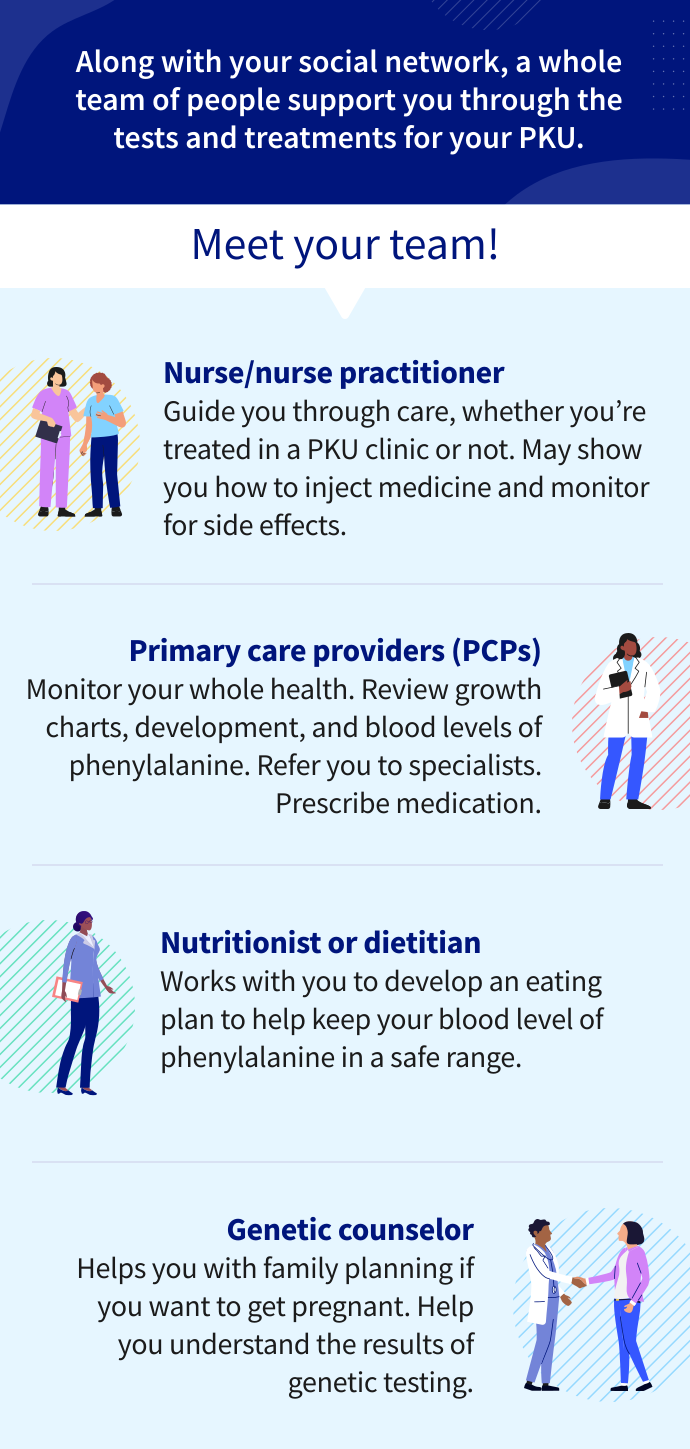
You’ll need expert care for PKU throughout your life. PKU clinics have teams of doctors, nurses, and specialists with expertise in the disease. Clinics may also specialize in metabolic diseases and digestive disorders, like PKU. Some clinics focus on treating children. They can also help connect you with medical geneticists, metabolic nutritionists, counselors, social workers, and pediatricians to manage your or your child’s care.
"It's a patient population that requires a lot of attention," says Jerry Vockley, MD, PhD, a medical geneticist and the director of the Center for Rare Disease Therapy at the University of Pittsburgh Medical Center. "In our clinic, for example, we have a dedicated metabolic nurse who works with the PKU patients. We have three metabolic dietitians, any one of whom can see patients with PKU."
The National Organization for Rare Disorders (NORD) has a database of Rare Disease Centers of Excellence in different states and cities. These institutions have expert doctors and researchers striving to find new treatments and potential cures for rare diseases like PKU.
Treatment
The main way to treat PKU is with a low-protein diet.
Infant formula
Babies with PKU start on a Phe-free infant formula right away. They may be able to have some breast milk, too. When your baby’s old enough, they may follow the same meal plan as older kids and adults. But diets for some kids are stricter than for others. A dietitian who specializes in PKU will choose the right meal plan for your child.
Diet
In general, the PKU diet:
- Avoids all high-protein foods, including meat, eggs, cheese, milk, nuts, beans, and soy
- Doesn't allow anything sweetened with aspartame
- Limits some veggies like artichokes, asparagus, avocado, broccoli, corn, kale, and potatoes
- Carefully measures portions of grains, cereals, and pasta
- Includes a special formula (also called a medical food) that you have every day. It provides the Phe-free protein, vitamins, and minerals that you need for good health. This formula is a key part of treating PKU.
You should stay on the PKU diet for life. If you go off the diet, you may have some memory loss, trouble concentrating, or you might feel anxious or depressed. If you stick with or go back on the diet, your mind will be sharper and you’ll feel better.
Medications
Two medicines are approved to treat PKU:
Sapropterin (Kuvan) is a pill that helps process Phe. It’s more likely to work if you have a mild form of PKU. You have to stay on your meal plan, too. But you might be able to eat more types of food. This medication can be given to adults, children, and infants older than 1 month.
Pegvaliase (Palynziq) is given as a shot to people with PKU who are age 12 and older. It may help lower your Phe levels. It’s expensive, and it can have serious side effects. It’s usually tried only if you can’t control your levels with your diet.
Your care team can help determine the best way to manage PKU. You’ll need to follow a special diet and monitor how much phenylalanine is in your blood. Some PKU patients use medications. If you discontinue treatment or stop following a special diet, it can lead to problems with your physical and mental health.
Complications
Sometimes the steps you take to manage PKU can have long-term effects on your health, too. These complications may affect your quality of life, so it’s important to maintain treatment and keep your care team informed of any new symptoms.
Diet and medications can keep your phenylalanine levels low. If you abandon your diet or medicine, your Phe levels may rise and cause complications. You may struggle to process information and manage your day-to-day responsibilities. High Phe levels can also affect your mood, leading to anxiety and depression. As you get older, you may have neurological complications, such as hand tremors. You may also need emergency medical services more often, Vockley says.
If you're an adult or adolescent with PKU who follows a low-protein diet, it can have long-term effects on your bone health, even if you take vitamin D and calcium supplements.
Children with PKU need special care as soon as they are born. Untreated children with PKU can have complications like intellectual and developmental disabilities that interfere with learning and affect their behavior.
If you’re pregnant and have PKU, stopping your diet or treatment can put your baby at higher risk for serious complications. Your baby can be exposed to high Phe levels in the uterus, causing low birth weight, slowed growth, a very small head, heart disorders, behavioral problems, seizures, and eczema. Pregnant people with PKU may have a greater risk of losing their pregnancy.
Living With PKU
The PKU diet cuts out many of the foods most people eat. This can make life tough for both kids and adults. If your child has the disorder, you may worry they’ll miss out on birthday parties and trips, or that they'll fall off the diet because of pressure from their friends. If you have PKU, you might be concerned that it could affect your job or social life.
But don’t worry. There are lots of things you can do to ease the way for you and your child.
For parents: Talk to your child’s teachers, principal, and school nurse as soon as possible. Explain what PKU is. Let them know that your child has special food needs and that they must drink a low-protein formula during the day. Give them a list of foods your child can eat. This can vary a lot from child to child. Offer to bring treats your child can eat for birthdays and other school functions. Also tell them that PKU might affect how well your child does in school. Bring up Section 504 of the Rehabilitation Act of 1973 and individualized education programs (IEPs). These ensure that kids with special needs get the help they need.
For other grownups: These days, there’s nothing odd about being on a special diet. People follow plans that are vegan, gluten-free, keto, paleo, and other things. It’s not likely your PKU plan will stand out or attract much notice. Many restaurants now cater to people on special diets, too. There also are lots of products that you can swap out for high-Phe ones. This includes dairy foods made from rice, coconut, and oat milks. There are low-protein pastas, breads, and baking mixes, too.
What to Expect
The medical food you need can cost $10,000 or more a year. Some states give food and formula free of charge to people with PKU. These programs may have age or cost limits, though. Learn the laws in your state. Also, find out if your insurance covers PKU food and supplies.The National PKU Alliance lists companies that produce PKU-friendly medical foods. The companies may help you secure insurance coverage for their products.
You need to check the Phe levels in your blood often — usually every two weeks to one month after the age of 12. This shows if your treatment is working. It also lowers the chance of brain, mood, and social problems. You usually check an infant’s levels once or twice a week by taking the blood sample from a tiny prick in the heel. In older kids and adults, you take the blood from a fingertip. You may put the drop of blood on a card and mail it to a lab. If your level is off, your treatment team will work with you to bring it into a safe range.
From time to time, you or your child might get bored with their meal plan and want to eat what everyone else does. This is normal, and it shouldn’t make you feel anxious or guilty.
How Your Condition Might Change Over Time
It can take a while for complications to occur if you suddenly stop following your diet or treatment plan.
"You wouldn't notice an acute problem. It's not like a diabetic who skips their insulin and gets sick," Vockley says. But over time, symptoms can start to show up. “Those individuals do usually have some neurologic effects that they may not even recognize as they get older because their onset is so slow,” Vockley explains. For example, you can have hand tremors that gradually get worse, making it harder to manage daily life and maintain your independence.
The better you manage PKU throughout your life, the fewer chronic symptoms you’ll have as you get older, Vockley says.
Where to Find Support
Many people with PKU turn to close friends and family for support. But it can also help to talk to other people with the disease because they know what you’re going through. Some studies have shown that people in support groups know more about their disease and are more likely to stick with treatment.
Your doctor can refer you to a face-to-face or telemedicine support group. You can also find supportive communities online.
Caring for Your Emotional Health
Having PKU can be emotionally challenging. It can be stressful and frustrating to have to maintain low Phe levels. You will likely need to eat a low-protein diet, which involves a lot of planning. You could feel like you’re missing out on being able to enjoy certain foods.
If your Phe levels rise, it can also cause mental health challenges. Adults with PKU may be more likely to experience depression, anxiety, mood swings, and exhaustion compared to those without PKU.
It's important to have sources of support for your emotional and mental health. Professional counseling and other mental health services can help you manage difficult emotions of PKU. Getting support can help you stick to your eating plan and treatment recommended by your doctor.
Connecting with other PKU patients through support groups may help you cope with your frustrations and feel less alone. The National PKU Alliance offers virtual peer support groups for adults with PKU. You can also contribute to research efforts, which may lead to new treatments, through the patient registry.
The National Organization for Rare Disorders (NORD) lists organizations for PKU patients, including groups focused on cooking for PKU. Keeping your phenylalanine levels low will help you maintain your mental health for the long term.
Information for Caregivers
If you're a caregiver for someone with PKU, there are organizations that can help support you. You may want help finding a PKU specialist near your home, attending conferences to learn more about the disease, or access to support groups for caregivers.
Here are some options:
- The National Organization for Rare Disorders (NORD) Respite Program has grants for caregivers. Caregivers can use the financial assistance to cover the costs of attending medical conferences or events, or to take a little break from caring for someone with PKU.
- NORD also offers a rare disease education support program for patients, their families, and caregivers. The program includes medical conferences, support groups, and caregiving workshops.
- The National PKU Alliance holds events in different regions where people with PKU and their families and caregivers can come together to build friendships and learn from experts about the latest PKU research.
- The National Institutes of Health connects caregivers to helpful organizations and resources for addressing caregiver challenges, and finding mental health support.
Takeaways
Phenylketonuria (PKU) is a rare inherited disease that affects how your body processes phenylalanine, an amino acid and building block for protein. It's important to maintain low levels of phenylalanine (Phe), an amino acid that your body struggles to break down when you have PKU. Throughout your life, you'll need to eat a low-protein diet, along with a special nutrient-rich formula that has a safe form of protein. Two medicines are approved to treat PKU and may let you eat more types of food. If you stop treatment or don't follow a low-protein diet, it can have serious effects on your mental and physical health and your baby's health if you are pregnant.
FAQs
Is phenylketonuria inherited?
Yes, PKU is a rare genetic disease that you're born with. It's caused by a change in the PAH gene. You need to inherit a changed PAH gene from both parents to have PKU.
How is PKU diagnosed?
PKU is usually diagnosed during routine screening tests for babies born in hospitals. Results of the test — a heel prick to get a blood sample — are usually available within weeks of testing.
Is there a cure for PKU?
PKU has no cure. Clinical trials for new PKU therapies are underway, and researchers are working toward discovering potential cures. Gene therapy, including gene editing to repair the PAH gene, is being studied.
What are the best ways to manage PKU?
PKU can usually be managed by following a low-protein diet throughout your life and, in some cases, using therapies and medications.
Can babies born with PKU lead healthy lives?
Yes. If your child follows a special low-protein eating plan and maintains safe Phe levels throughout their life, the disease can have minimal impacts on their health. Some children with PKU struggle with learning, language development, memory, and executive function.
What are the common symptoms of PKU?
If PKU goes untreated, it can cause developmental delays starting when children are around 6 months to 1 year old. Signs of PKU can include severe intellectual disability, hyperactivity and other behavior problems, delayed social skills, seizures or tremors, a small head, eczema, and lighter skin, hair, and eye color.
How does PKU change over time?
It's important for PKU patients to maintain a treatment plan throughout their life. If you stop eating a low-protein diet or taking medication, it can lead to high Phe levels. This can cause complications, such as mental health and neurological challenges.