Food choices become an important part of daily life when your child has PKU. PKU is a rare genetic condition that prevents their body from breaking down phenylalanine (Phe), an amino acid that’s in many high-protein foods. When Phe builds up in their blood, it can damage the brain and nervous system. Managing your child’s diet can help them stay healthy and grow normally. It’s best to work with a metabolic dietitian to learn how to feed your child, but it’s also good to learn some of the foods that you should be limiting or avoiding in your child’s diet.
Milk and Other Dairy Products
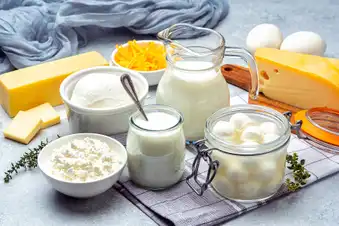
Dairy products such as cow’s milk, cheese, yogurt, and ice cream are high in protein and phenylalanine. Ask your dietitian if certain substitutes (almond, rice coconut, soy, or other vegan options) might work instead, although many of these options have high levels of Phe as well. In general, you want any alternate dairy option to have 1g or less of protein per serving.
Eggs
Like other animal-based foods, eggs have a lot of protein in them. Most people with PKU need to avoid them altogether. Don’t forget this includes anything cooked with egg as an ingredient, such as cakes, pasta, or mayonnaise.
Red Meat
Meat such as beef, pork, lamb, and veal are some of the highest-protein foods. Typically doctors advise skipping these foods completely in a PKU meal plan.
Poultry
Although they’re “healthier” in a typical diet, lean meats like chicken and turkey are not automatically healthier choices for someone with PKU. Grilled chicken, turkey sandwiches, chicken nuggets, and deli turkey all have enough Phe that they are usually excluded from a PKU diet.
Seafood
Fish is one of the heart-healthiest foods, but it can cause problems in kids with PKU. Tuna, salmon, shrimp, crab, and other seafood products can quickly increase Phe in your child’s system.
Soy
Being vegetarian doesn’t automatically solve the PKU diet puzzle. Even though soy and soy products like tofu, tempeh, and edamame are plant-based, they’re also rich sources of protein. Some even have as much as animal products and need to be limited or skipped.
Nuts
Peanut butter is a common go-to for lunches and snacks for many children, but nuts and nut butters don’t work for children with PKU. This includes peanuts, almonds, cashews, pistachios, walnuts, and products made from them. Be sure to check ingredient labels for nuts hidden in foods like granola bars, trail mixes, and baked goods.
Beans, Lentils, and Peas
Black beans, kidney beans, chickpeas, lentils, and split peas are fiber-filled and healthy for many people, but their plant protein makes them a tricky choice for someone with PKU. Check with your dietitian and limit these foods as needed.
Aspartame
This artificial sweetener isn’t a protein, but it breaks down into phenylalanine during digestion. Many foods that have aspartame such as diet sodas, sugar-free gum, flavored drink mixes, and sugar-free desserts will include a warning for people with PKU on the label. Be sure to always check, especially in unexpected places such as vitamins and “sweetened” medications such as cough drops.
Foods With Added Protein
Some cereals, snack bars, smoothies, and sports drinks add protein as a selling point. A label that says "with protein" should be a warning sign that the product contains too much Phe.
Show Sources
Photo Credit: E+/Getty Images
SOURCES:
National PKU Alliance: “PKU 101: Power through knowledge.”
UMass Memorial Health: “PKU and Your Diet.”
Tulane University School of Medicine: “Foods for the PKU Diet.”
Cleveland Clinic: “Foods To Eat and Avoid on a Phenylketonuria (PKU) Diet.”
Mayo Clinic: “Phenylketonuria (PKU).”


