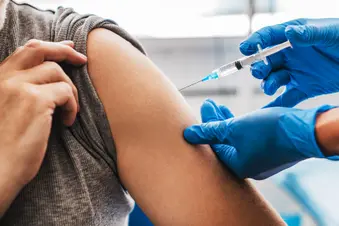
When it comes to protecting your teen or adult from meningitis, the best thing you can do is make sure your child gets vaccinated. A meningitis vaccine can safely and effectively help prevent this serious illness, which can cause long-term health problems and even death.
Meningitis is the inflammation of the tissues called meninges that surround your brain and spinal cord. The disease has various causes, including viruses, bacteria, fungi, and parasites. But teens and young adults often have a higher risk of catching bacterial meningitis, which can be life-threatening.
Different vaccines for bacterial meningitis are available, so it’s a good idea to learn which one may be best for your child. Here’s what you need to know about how the vaccines work, what the different types are, and what side effects they could cause.
How Do Vaccines for Bacterial Meningitis Work?
Vaccines for bacterial meningitis teach your child’s immune system to recognize and target germs that can lead to the illness. The vaccines use killed (inactivated) bacteria that prompt the immune system to make long-lasting proteins (antibodies) that spot the germs. So if your teen or young adult eventually comes in contact with the bacteria, their body’s defenses are ready to fight them off.
Many types of bacteria can cause bacterial meningitis. The type that mainly affects teens and young adults is called Neisseria meningitidis. These bacteria can cause meningitis outbreaks in places like college dorms, boarding schools, and military barracks. So most children get a vaccine that protects against infections by N. meningitidis. It’s called a meningococcal vaccine.
It’s called that because N. meningitidis can cause an infection called meningococcal disease, which in turn can lead to bacterial meningitis. So protection against meningococcal disease also helps protect your teen or your adult from getting bacterial meningitis.
What Are the Different Types of Vaccines for Bacterial Meningitis?
Three types of meningococcal vaccines are available to help prevent bacterial meningitis:
Meningococcal conjugate vaccine (MenACWY)
Experts recommend this vaccine for children between 11 and 12 years old, with a booster dose given at age 16 years old.
- If your child gets their first dose when they’re 13 to 15, they should get a booster dose when they're 16 to 18.
- If your child gets their first dose when they’re 16 or older, they won’t need a booster dose.
The short name for the vaccine is MenACWY because A, C, W, and Y are strains of Neisseria meningitidis that the vaccine protects against.
Meningococcal B vaccine (MenB)
Experts recommend this vaccine for people 10 years and older who have a high risk of infections caused by the B strain of Neisseria meningitidis. Your teen or young adult is considered at high risk if they have conditions like:
- Sickle cell disease
- A damaged or removed spleen
- A rare immune condition called complement component deficiency
Also, any teen or young adult age 16 to 23 can get the MenB vaccine for short-term protection against a MenB outbreak. You might also hear it called the serogroup B meningococcal vaccine.
You can get the MenACWY and MenB vaccines at the same time.
Meningococcal ABCWY (MenABCWY)
This vaccine for people 10 or older combines the protection that your child would get from the other two vaccines – MenACWY and MenB – in one shot. So, instead of receiving two shots, your child can get this one if their doctor offers it. You might also hear it called a pentavalent vaccine.
Other types of vaccines for bacterial meningitis
Various types of bacteria can cause meningitis, and other vaccines can protect against some of them. These include the pneumococcal and Haemophilus influenzae type b (HiB) vaccines.
It’s not common, but some teens or young adults may need such vaccines if they have health conditions that raise their risk or pneumococcal or HiB infections. Typically, your child’s doctor tells you if it’s important for your child to get other bacterial meningitis vaccines along with the meningococcal vaccine.
What Side Effects Can a Bacterial Meningitis Vaccine Cause?
The meningococcal vaccine usually doesn’t cause serious side effects. Your teen or young adult might notice a change in skin color and swelling where they got the shot. They also might have some muscle pain, a slight fever, tiredness, or a headache. Side effects like these tend to be mild and go away in a few days.
Teens and young adults can take over-the-counter medicine like acetaminophen or ibuprofen to ease pain or a fever. They can also place a cool, damp cloth or a heating pad on their arm to help relieve any soreness from the shot.
Call the doctor for any symptoms of an allergic reaction, like an itchy rash, swelling of the face, or a change in facial color such as reddening.
Should You Ever Put Off or Avoid Getting a Bacterial Meningitis Vaccine?
The doctor might recommend waiting a little while if your teen or young adult has a serious illness that they need time to manage or recover from. But if your child has a common cold or another minor illness, they can still get a meningococcal vaccine for bacterial meningitis.
If your child has had a serious allergic reaction in the past, or if they had any allergic reaction to an earlier dose of the meningitis vaccine, let the doctor know before getting a dose of the vaccine.
Do Colleges Require a Bacterial Meningitis Vaccination?
The rules vary from college to college. But lots of universities ask for proof that a teen or young adult got the MenACWY vaccine within five years before starting college.
Some colleges offer to vaccinate or boost incoming students at on-campus health centers or clinics before the first day of class. Some also let you request medical, religious, or personal-belief exemptions from getting vaccinated.
If your teen or young adult plans to go to college, there are a few ways to find out if the college requires proof of a meningococcal vaccine. You can contact the university or check its website for immunization requirements. Or you could use a program that tracks college vaccination requirements, like the one offered by the American Society for Meningitis Prevention.
Regardless of a college’s vaccination policy, just keep in mind that it’s in your teen’s or young adult’s best interest to get a bacterial meningitis vaccine. That way, they can focus on school and worry a lot less about catching this serious, potentially life-threatening illness.
Show Sources
Photo Credit: iStock/Getty Images
SOURCES:
Cleveland Clinic: "Bacterial Meningitis."
Mayo Clinic: "Meningitis."
Nemours KidsHealth: "Meningococcal Vaccines for Kids & Teens."
HealthyChildren.org: "Meningococcal Disease in Preteens, Teens & Young Adults."
American Society for Meningitis Prevention: "Meningococcal Meningitis Vaccination Requirements & Recommendations Tracker."
University of California, Los Angeles: "Immunization Requirement: Information on Exemptions."
Wake Forest University: "Updated Vaccine Requirements for Incoming First-Year and Transfer Students Who Are New to North Carolina Colleges or Universities."
Greensboro College: "Immunizations and Vaccinations."


