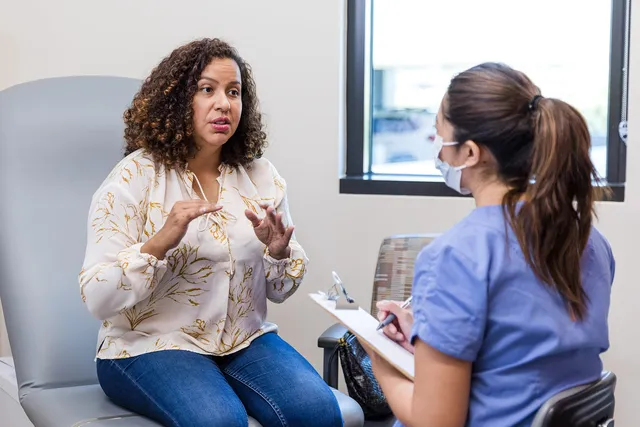
A breast cancer diagnosis can be overwhelming. Knowing how to communicate with your care team is one of the most important parts of managing your health. Talking openly with your cancer care team — from doctors and nurses to social workers and mental health professionals — can help you get the best treatment, manage side effects, and feel more in control.
Research shows that people living with breast cancer benefit from more support and clearer information from their health care teams. This leads to better understanding and managing their risk of cancer returning. One survey looked at how women recently diagnosed with early-stage breast cancer talk with their doctors about recurrence (the risk of cancer coming back). Researchers found that about 30% of people who took part in the study never talked about recurrence with a doctor or family member. But those who did tended to better understand the things that raised their chances of having cancer again and felt more knowledgeable overall.
Who Is Part of Your Breast Cancer Care Team?
Knowing who’s on your cancer care team and each person’s role will make it easier to know who to talk to. Here are the people who could be part of your team:
Medical doctors
The medical doctors on your team can include oncologists who diagnose and treat cancer, surgeons who remove tumors, and radiation oncologists who use radiation therapy. You may also see other specialists who manage side effects or related health problems, such as cardiologists for heart issues.
Nurses
Nurses also play an essential role; they track your health, help manage treatment, and offer emotional support. Depending on their training, some nurses can prescribe medications, give anesthesia, or focus on cancer-specific care.
Other professionals
Your team may also include other professionals who care for your physical, emotional, and practical needs. For example, social workers can provide emotional support and connect you to community resources, while dietitians guide you through nutrition during treatment. You might also meet patient navigators who help you understand your care plan and coordinate appointments, as well as mental health professionals such as psychologists who address the emotional impacts of cancer.
How to Best Talk to Your Cancer Care Team About Treatment
Good communication with your cancer care team helps you get better care and feel more in control. While you rely on doctors, nurses, and other health care professionals for easy-to-understand, helpful information, it’s also your responsibility to be candid with them. Everyone’s goal is to make sure you get the best possible care.
Decide how much detail you want from your care team about your treatment journey, and when. You may want to know everything up front about your diagnosis, treatment options, and what to expect along the way. On the other hand, small amounts of information at a time could allow you to better process what’s happening.
Although you’ll have regular appointments with your cancer doctors, you may also have questions between appointments. Ask who you should contact with important questions or emergencies and how to reach them. You may receive an email address or a link to a patient portal, or your doctor may direct you to a nurse or social worker.
What to Share With Your Cancer Care Team
The more your care team knows about you, the better they can tailor your treatment and support your overall health. Here are some things you can share:
Treatment side effects
Breast cancer treatment can cause a range of side effects, including pain, nausea, fatigue, loss of appetite, insomnia, and more. Talk to your cancer care team about any side effects you’re having, and ask them what to keep track of throughout your treatment journey. They’ll want to know:
- The type of symptom you’re having
- What time you have the symptom, and how long it lasts
- How strong the symptom is
- Where in your body you feel it
- What makes it better or worse
- How it impacts your day-to-day life
Lifestyle and medical conditions
Your doctors and nurses want to know about all aspects of your life, not just your treatment. Be honest about your habits and daily routines, even topics that might feel uncomfortable, such as smoking, drinking, or drug use. Let your team know about your work, family, hobbies, and any cultural or spiritual practices that are important to you. Share your complete health history, including past or current medical problems and medications, since even things that seem unrelated, such as a past heart attack, can affect your cancer care.
Mental health concerns
A breast cancer diagnosis can take a major emotional toll. You may feel anxious, scared, or depressed after learning you have cancer. The stress of treatment and fear about the future can also trigger fatigue, trouble falling or staying asleep (insomnia), or mood swings. For some, it can bring up memories of past trauma or worsen existing mental health conditions.
Breast cancer treatments can also affect your mood. Chemotherapy may cause fatigue, nausea, and even depression or anxiety. Hormonal therapy and early menopause brought on by treatment can lead to mood swings or sadness, while radiation and immunotherapy can sometimes cause thyroid problems that lower energy and mood.
Pay attention to and share with your breast cancer care team signs of insomnia, loss of interest in activities, appetite changes, or using alcohol or drugs to cope. Everyone’s experience is different, but understanding how breast cancer and its treatments can impact mental health can make it easier to seek the right kind of care and emotional support. Getting mental health support through therapy, counseling, or support groups can help improve your overall quality of life.
Financial questions
Although it can be an uncomfortable conversation, it’s important to talk openly to your doctor about the cost of your cancer care. Try to find out how much your medications and treatments will cost before you start. Ask your cancer care team questions such as:
- How much will my treatment cost overall?
- What will my copays be for visits or treatments?
- Does my insurance cover everything, or does it need to approve the plan first?
- Are payment plans or financial assistance programs available?
- Can I get a less expensive version of my medication, and will the cost be ongoing or one time?
Your doctor may not have all the answers, but they can connect you with a social worker, pharmacist, or hospital financial specialist who can help.
Questions to Ask About Breast Cancer Treatment
Having open conversations with your cancer care team will help you make informed choices about your treatment. Write down your questions, be sure to take notes (or record the conversation with permission), and let the doctors or nurses know when something they’ve said isn’t clear. It may also be helpful to take a friend or relative with you for support, to listen, and to help you remember what your doctor said. If no one can be with you physically at the appointment, ask if they can dial in by phone or video call.
Here are some questions to consider asking your doctor about breast cancer treatment:
Choosing a treatment plan
- What is your experience level in treating HR+/HER2- early breast cancer?
- Is a second opinion necessary, and if so, how do I get one?
- If I take the time to get a second opinion, will that hinder my treatment and its impact?
- What options do I have when it comes to treatment?
- Which treatment do you suggest and why?
- Are there any clinical trials available, and should I consider participating in one?
- What is the goal of treatment?
- When will I start treatment?
- How long will treatment last?
- What can I expect during treatment?
- How should I prepare for treatment?
- How will treatment impact my day-to-day life?
- What is the likelihood of breast cancer returning after treatment?
- What are my other options if the treatment doesn’t work or the cancer returns?
During and after treatment
- What are the signs to look for to know if treatment is working?
- What side effects should I expect and how can I manage them?
- What should I know about food and exercise during and after treatment?
- What symptoms and side effects should I be aware of and report to you?
- Which follow-up tests will I need after treatment, and for how long?
- What are the signs that the cancer has returned?
One final thing to remember: doctors are just one type of health care professional who can offer information. Nurses and social workers are also knowledgeable about the cancer treatment journey.
Show Sources
Photo Credit: Maskot/Getty Images
SOURCES:
American Cancer Society: “Questions to Ask Your Doctor About Breast Cancer,” “Who Is the Cancer Care Team?”
Breastcancer.org: “How Breast Cancer Can Affect Mental Health.”
National Institutes of Health. PEC Innovation: “Communication with physicians and family about breast Cancer recurrence.”
CancerCare: “Communicating With Your Health Care Team.”
Temple Health Fox Chase Cancer Center: “Managing Other Health Problems When You Have Cancer.”
Canadian Cancer Society: “Working with your healthcare team.”