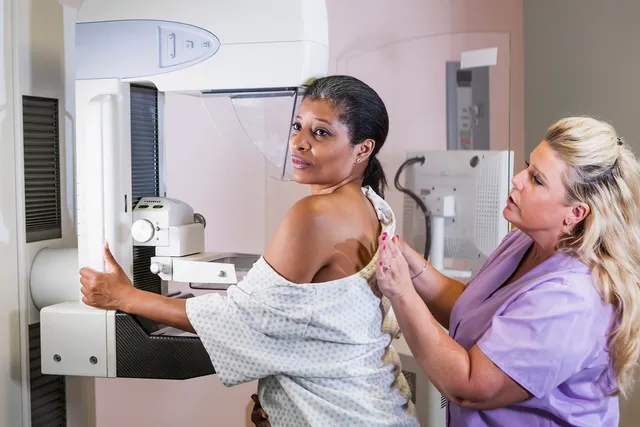
When Pamela Burnett had her first mammogram at the age of 40, she expected a quick, routine appointment. Instead, doctors called her back again and again — every few months for nearly a year — before they finally diagnosed her with breast cancer.
That long, confusing journey would change everything for Burnett. Today, more than two decades later, people across Florida know her as “Miss Pam,” a cancer survivor who turned her pain into purpose. Through her nonprofit, The Beautiful Gate, and its MASS program, she travels around the state in a mobile 3D mammography unit, bringing lifesaving screenings to women who might otherwise go without.
“Our target is African American women, uninsured, and underinsured. People ask why, and I tell them, because we’re the ones dying.”
Burnett’s mission and personal cancer journey reflect a bigger truth in breast cancer care: Black women and other women of color are more likely to face gaps in screening, care, and treatment, which leads to worse outcomes.
The American Cancer Society finds that Black, American Indian, and Native Alaskan women are less likely than white women to get breast cancer, yet more often to die from the disease. Many times, these groups, plus Hispanic women and Latinas, learn about their cancer when it’s already at an advanced stage.
Barriers to Equal Care
For women of color, getting care is about more than finding the right doctors. It’s about overcoming hurdles that make timely breast cancer care more difficult.
Inequities can begin long before treatment starts, with genetic testing. This testing looks for gene changes, for example, in the BRCA1 and BRCA2 genes, that pass down through families and raise your odds of breast cancer. Doctors also use the results to tailor cancer prevention plans and help guide treatment. However, research shows that doctors are far less likely to refer Black women for genetic testing compared to White women.
These gaps in testing affect more than one person, says Coral Omene, MD, PhD, medical oncologist and Program Director, Breast Cancer Disparities Research at Rutgers Cancer Institute and RWJBarnabas Health in New Jersey. “If you have that gene and it’s passed down, and the family doesn’t know, you end up with generations of women dying from the same disease because they didn’t know it was in their gene pool.”
Besides genetic testing, women of color are also less likely to benefit from tumor genomic testing (also called tumor profiling), which analyzes the genes inside cancer cells to understand what changes may be making it grow and which treatments are likely to work best.
Breast cancer testing and treatment can cost thousands of dollars, a price that’s out of reach for many. Omene calls this “financial toxicity,” the side effects of cancer care that hit people with the fewest resources the hardest. “These treatments are expensive,” she says. “You have a patient from a poor neighborhood who has made her way to a major cancer center. We talk about all of this treatment we’re going to give, but that same woman can’t even afford to come weekly for treatment.”
Omene notes that many of her patients are underinsured or rely on plans that don’t cover the full cost of therapy or follow-up imaging. Some face bankruptcy after treatment; others stop therapy early to save money. Data shows that people of color in the U.S. are more likely to lack health coverage, sometimes at rates over two and a half times higher.
In her outreach work, many of the women that Burnett meets are also uninsured or think they are. They may not realize that the Affordable Care Act, also called Obamacare, is health insurance and covers breast cancer screening.
Closing the Gap Through Better Access
One of the most significant ways to improve access to breast cancer treatment for everyone is through clinical trials. These studies look at whether a new method for finding, preventing, or treating a disease works well and is safe. Black women make up only about 2% of participants in clinical trials for FDA-approved breast cancer treatments, and Hispanic women and Latinas even less. Including more women of color in breast cancer clinical trials can help researchers develop better treatments and improve outcomes for everyone.
One example of this is a study published in 2024 that looked at nerve damage (neuropathy) in Black women from two common chemotherapy drugs used for early-stage breast cancer, docetaxel and paclitaxel. The findings revealed that the type of chemotherapy used impacted nerve health. Black women who received weekly paclitaxel were more likely to have nerve issues and needed lower doses compared to those who got docetaxel every three weeks.
This suggests that using the docetaxel schedule makes it easier for Black women to finish lifesaving treatment without lowering the dose and with less nerve pain. The study is important because it helps doctors understand how different treatments affect Black women and advances equity in breast cancer care. “The only way we could have known that is because this trial was designed specifically for Black women,” Omene says.
As the program director for Breast Cancer Disparities Research at Rutgers Cancer Institute and RWJBarnabas Health, Omene is passionate about encouraging women of color to ask about and participate in clinical trials. “They could potentially be on therapies that may become the new gold standard. I talk about not only doing this for themselves, but also for their communities.”
Disparities in treatment often stem from structural racism and a lack of trust in the medical system among people of color. Policies addressing inequality, such as improved insurance coverage and cultural competency among health care providers, as well as diversity in the health care workforce, are essential for building trust and improving access.
In Florida, Burnett is breaking down barriers by meeting women where they are — taking breast cancer screenings to rural areas in the mobile mammography unit, finding transportation for women undergoing cancer treatment, and creating culturally sensitive education spaces. Before doctors address her breast cancer support groups, Burnett asks them, “Please don’t wear your white coat. Come regular.” She’s found that when doctors leave behind their formal attire, women feel more comfortable opening up and asking questions.
Burnett also wants doctors and policymakers to recognize that all women living with breast cancer, regardless of race or ethnicity, deserve the same chance to survive and thrive. “Our lives matter.”
Show Sources
Photo Credit: iStock/Getty Images
SOURCES:
Pamela Burnett, breast cancer survivor and founder, The Beautiful Gate Inc., Deltona, Florida.
Coral Omene, MD, PhD, medical oncologist and program director, Breast Cancer Disparities Research, Rutgers Cancer Institute and RWJBarnabas Health, New Jersey.
Breast Cancer Research Foundation: “Understanding Breast Cancer Racial Disparities,” “What Hispanic Women and Latinas Need to Know About Breast Cancer.”
WashU Medicine: “African American breast cancer patients less likely to receive genetic counseling, testing.”
Breastcancer.org: “Genomic Tests for Breast Cancer,” “Special Report: Increasing Racial Diversity in Breast Cancer Clinical Trials.”
KFF: “Key Facts about the Uninsured Population.”
Stanford Medicine: “About Clinical Trials.”
Contemporary Clinical Trials: “Inclusion and Diversity in Clinical Trials: Actionable Steps to Drive Lasting Change.”