During the first six months of your baby’s life, they’ll need to drink breast milk or baby formula. Around 6 months of age, you may decide to start supplementing your baby’s diet with solid foods. Most babies’ digestive systems aren’t ready to process anything but milk or formula before 4 months of age, at the very earliest.
For years, many new parents started their babies out on solid foods by adding rice cereal to their baby’s bottle. But this is dangerous, and there are many reasons why parents should avoid this method.
Solid Foods for Babies
Around 6 months of age, your baby’s digestive system can start to handle certain supplementary foods.
Solid foods serve as a supplement to breast milk or formula. Signs that your baby is ready to start eating them include when they:
- Have some control over their head and neck
- Can sit up by themselves or with support
- Show interest in your food when you eat
- Can grab at objects or bring things closer to their mouth
Is Rice Cereal Safe to Put in a Baby’s Bottle?
Your baby’s first foods should be simple foods with no added salt or sugar. For this reason, many new parents turn to cereals such as rice, oatmeal, or barley.
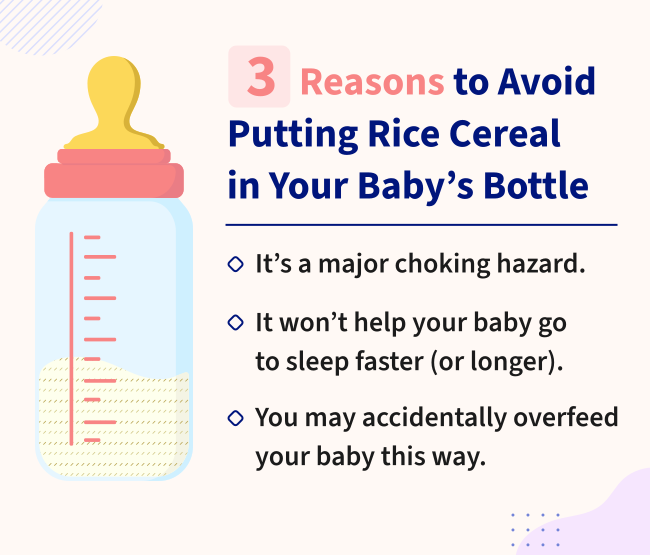
It was once thought that adding rice cereal to a baby’s bottle at night would help them sleep longer without waking up to feed during the night. Studies now show that there’s no reason to believe this is true. Babies usually can’t sleep more than five hours at a time at this stage. They also naturally wake up to feed, whether or not they’re full.
Not only does adding rice cereal to a baby’s bottle not keep them asleep, but it can also raise their risk of choking.
Arsenic in Rice Cereal
Another risk linked to putting rice cereal in a baby’s bottle is that rice has higher levels of arsenic than other cereals and grains do. Arsenic is a naturally occurring substance in soil, water, and air.
Arsenic is a cancer-causing substance linked to many conditions after lifelong or high-level exposure. Even low levels, such as those found in rice cereals for babies, can affect their development. Because parents usually feed their babies infant rice cereal for only a short period, the risk of arsenic poisoning in the baby is lower.
The FDA limit for arsenic in baby rice cereal is 100 parts per billion (ppb) or 100 micrograms per kilogram (μg/kg). FDA testing found that the majority of infant rice cereals either meet or come close to the FDA’s limit.
If you plan to feed your baby rice cereal, make sure you:
- Avoid putting it in their bottle (instead, feed it to them directly)
- Don’t feed your baby rice cereal every day
- Include other foods in their meal, along with rice cereal
- Check your specific cereal brand for levels of inorganic arsenic
Always reach out to your child’s pediatrician if you have questions or concerns.
How to Feed Your Baby Cereal
No matter what, you should never put rice cereal directly into your baby’s bottle. Instead, you can feed cereal to your child with a small baby spoon.
To do so, mix one tablespoon of single-ingredient, iron-fortified cereal with four tablespoons of baby formula or breast milk. Once your baby is sitting upright, offer them about a teaspoon of the cereal. This kind of feeding takes practice, so it might get messy. As your baby learns to swallow and manage the cereal, you can increase the thickness over time.
If your baby enjoys the food, try giving them a little more. If they aren’t interested or they don’t like it, don’t force it. You can try it again in a few days.
Other Supplementary Baby Foods
It’s important not to introduce solid foods, such as cereal or others, to your baby before they’re ready. Introducing cereal to your baby too early is linked to obesity later in their life.
When introducing a new food to your baby, wait a few days to see if they develop symptoms of allergies or diarrhea before introducing another new food. Doctors recommend giving your baby foods with potential allergens when you start giving them supplemental foods. It’s a myth that waiting to introduce foods such as peanuts, fish, or eggs can prevent food allergies.
By the time your baby is 6-8 months old, they can eat:
- Dairy, such as cheese or yogurt (without added sugar)
- Fruits
- Protein sources, such as tofu, beans and lentils, and meat
- Vegetables
- Whole grains
Give them only one kind of fruit or vegetable at a time. Wait five days after introducing each food to check for a reaction.
Takeaways
It’s dangerous to add rice cereal to your baby’s bottle. If your baby is ready for some solids and you plan to try rice cereal, feed it to them carefully with a baby spoon instead of putting it in their bottle. Always reach out to your baby’s pediatrician if you have any questions, including when to start your baby with solids and what kind of food is appropriate for them.
Rice Cereal for Baby FAQs
Here are some commonly asked questions about rice cereal for babies.
Does adding rice cereal to a bottle help babies sleep through the night?
No. This is a myth.
Can rice cereal in a bottle cause rapid weight gain or childhood obesity?
Rice cereal itself doesn’t cause rapid weight gain or childhood obesity. But introducing cereal to your baby too early is linked to obesity later in life.
Is oatmeal cereal safer than rice cereal for babies?
In general, yes, oatmeal is safer than rice cereal. The American Academy of Pediatrics (AAP) recommends oatmeal over rice cereal. Oatmeal is also gluten-free, so it’s safe for babies and children with gluten intolerance or allergy.
Are commercial gel thickeners safer than rice cereal for infant reflux?
Giving babies with infant reflux thickeners can help lower the number of reflux episodes they have. But not all babies need this. What’s best for your baby depends on their health. Guidelines from the National Institute for Health and Care Excellence (NICE) suggest using thickened formula only for babies who have signs of distress or many episodes of reflux.
Ask your pediatrician what’s best for your baby and any other questions you have.