Every mother’s breastfeeding journey is unique. There may be many reasons why you choose to discontinue breastfeeding. Once you decide weaning will be best for you and your baby, you can try several methods for drying up your breast milk supply. There is no set timeline for the lactation suppression process. Instead, how quickly your milk dries up depends on several factors, including the age of your baby and your average milk supply. Breast milk can take days, weeks, or months to dry up.
It is recommended that you gradually wean your breastfed baby. However, there are many factors that can lead a mother to wish to dry up their breast milk. Always consult your doctor before attempting to dry up your breast milk supply.
Methods for Drying Up Breast Milk
TWhen you stop breastfeeding, your body will gradually stop producing milk. The lack of stimulation tells your body to stop lactating. You can help the process of drying up your milk supply by following these steps:
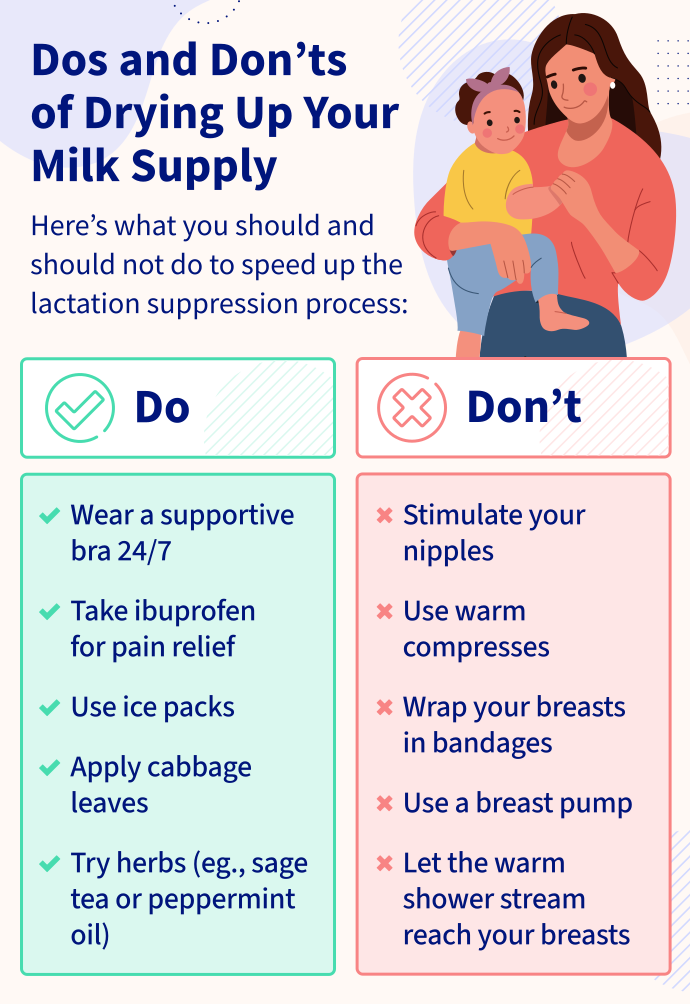
- Wear a well-fitting, supportive bra -- like a sports bra -- day and night.
- Use ice packs to manage inflammation.
- Take ibuprofen to manage your pain and swelling.
What else can you do to dry up milk supply?
There are some other methods that mothers have used to speed the process of drying up your breast milk, some better researched than others. Be sure to talk to your doctor before trying any of these methods.
Take birth control. Taking estrogen as a part of a combined birth control pill can help stop lactation. Most mothers see a drop in milk production after taking one pill a day for one week. Birth control should only be taken under the close supervision of your doctor.
Take Sudafed. Pseudoephedrine, or Sudafed, is a common over-the-counter decongestant. Research shows the Sudafed causes a noticeable decrease in milk production. Like birth control, Sudafed should only be used to suppress lactation under the supervision of a doctor. You should watch for symptoms of anxiety and insomnia while taking Sudafed.
Use vitamin B6. Research shows that — in women who have not yet started producing breast milk — vitamin B6 can limit lactation. Always consult with your physician before trying to reduce or prevent your milk production.
Use herbs. Research suggests that there are a few herbs that may help reduce your milk supply. To utilize herbs for lactation suppression:
- Drink sage tea made with 1 to 3 grams of dried sage leaves.
- Apply jasmine flowers to your breasts.
- Take chasteberry orally.
- Eat parsley.
- Use peppermint oil topically only if you’ve completely stopped breastfeeding — it can be toxic to your baby.
Again, always consult your doctor before using herbs orally or topically. Carefully watch your baby for any change in behavior.
Apply cabbage. Some old wives tales stand the test of time. While cabbage may help soothe swollen, painful breasts as you stop breastfeeding, there's little evidence that cabbage has an effect on milk production.To apply cabbages:
- Wash leaves of green cabbage and chill in the refrigerator.
- Place leaves under the bra and over each breast.
- Change the leaves every few hours.
What to Avoid When Drying Up Your Milk Supply
In addition to things you can do to dry up your milk supply, there are also some things you should avoid doing to help speed up the process.
DON'T pump or express your breast milk. Doing so sends a message to your body to produce more milk. However, if your breasts become engorged and uncomfortable, your doctor may suggest that you hand express a small amount, enough to relieve the pressure.
AVOID direct heat. Don't apply warm compresses to your breasts, and keep them away from direct contact with the warm water stream from the shower.
DON'T bind your breasts. Binding your breasts or wrapping them tightly with bandages to stop your milk production can increase your risk of mastitis, an infection of your breast.
AVOID nipple stimulation. Touching or rubbing your nipples or unnecessary friction from your clothing can trigger milk flow.
Breast Engorgement Home Remedies
When you are trying to dry up your breast milk supply, your breasts may become swollen and hard. This is called breast engorgement and can be very painful. Approaches to manage breast engorgement depend on whether you are actively breastfeeding or trying to stop producing milk.
For those going through lactation suppression, the good news is that the things you are doing at home to dry up your milk supply are the same things you can do to ease the pain and swelling of engorged breasts. They include:
- Cold compresses
- OTC pain relievers
- Cabbage leaf compresses
- Wearing supportive, well-fitting bra around the clock
When to Seek Help
When you are trying to dry up your breast milk supply, it is normal to experience discomfort. However, if you are experiencing pain or other concerning symptoms, it is time to call your doctor or lactation specialist. You may be more at risk for engorgement, infection, or blocked ducts if you stop breastfeeding suddenly. To help reduce uncomfortable symptoms, hand express sparingly.
You should reach out to a medical professional if you experience:
A blocked duct. Blocked ducts are a common issue for women who are breastfeeding or weaning. When experiencing a blocked duct, you may feel pain, warmth in the breast, or a low-grade fever. Blocked ducts can be treated with a gentle massage or applying heat and cold to the affected area.
Breast infection. Mastitis is an infection in the breast. It is often the result of a blocked duct that has become inflamed. Symptoms include:
- Redness
- Swelling
- Fever and flu-like symptoms
Your doctor may treat this condition with antibiotics. Seek medical attention if you are experience blocked ducts, pain, or flu-like symptoms.
Takeaways
If you're ready to stop breastfeeding, there are a few things you can do to help dry up your milk supply. From tight-fitting bras, herbal teas, and cabbage leaf compresses to birth control pills and Sudafed, ask your doctor what might work best for you.There's no set timeline — it can take days or weeks. Call your doctor right away if you notice pain, redness, or fever, since these can be signs of a blocked duct or infection.
Drying Up Your Milk Supply FAQs
Are there any prescription medications used to dry up your milk supply?
Prescription medicines for drying up milk supply fell out of favor in the 1990s when the commonly prescribed drug bromocriptine was removed due to its link to strokes and heart attacks. Currently, there are no drugs approved by the FDA for stopping breast milk production. However, one medication, cabergoline, has been studied and sometimes prescribed off-label by doctors to inhibit lactation. Talk to your doctor about the best options for you.
How long does it take for breast milk to completely dry up?
It can take a few weeks or even months for your milk to completely dry up. This can depend on your milk production and if you are taking steps to speed up the process. Typically, the discomfort lasts for the first week but should taper off after than.
Will binding my breasts help my milk dry up faster?
No, binding your breasts should not be used to help dry up your milk. It can cause your milk ducts to clog and get infected (mastitis). Instead, opt for a well-fitting, supportive bra like a sports bra that can be worn day and night.
Is it normal to experience mood swings or depression while drying up milk?
Yes, it's normal to have mood swings or feel depressed when you stop breastfeeding. In fact, there is a name for it: Post-weaning depression. This is usually a short-term issue and improves as your hormone levels stabilize. If these symptoms last longer than two weeks, you should talk to your doctor.
Can I still dry up my breast milk if I have hyperlactation (an oversupply)?
Yes, you can still dry up your breast milk even if you have hyperlaction. However, it may take longer to do so. By taking it slowly, you can avoid issues like breast engorgement and mastitis.