
What Causes Cramps but No Period?
Cramps are contractions or spasms that happen on their own and without warning in your belly (abdominal) area. Lots of women get pelvic pain and cramping, but it's not always because of period. Cysts, constipation, pregnancy, and even cancer can make it feel like your period is about to start.
Here are some common reasons for getting cramps without your period:
Irritable bowel disease (IBD)
What it is. IBD is long-term (chronic) swelling and irritation in different parts of your digestive tract. It happens when something goes wrong in your immune system. It isn't the same as irritable bowel syndrome (IBS). There are two types of IBD: Crohn's disease and ulcerative colitis. Crohn's can affect any part of your digestive tract (including your mouth), while ulcerative colitis involves only the large intestine (colon).
What the cramps feel like. It depends on the type of IBD you have. With Crohn's, you’ll feel cramps and pain in the right lower or middle parts of your belly. They can be mild to severe. If you have ulcerative colitis, the cramps will be on the lower left side of your stomach.
Other symptoms. Symptoms depend on the specific type of IBD. They include:
- Severe changes in bowel movements (diarrhea, constipation)
- Urgent need to have a bowel movement
- Feeling that your bowels aren't fully empty after you go
- Blood in your poop
- Weight loss
- Fever
- Fatigue
Ovulation
What it is. If you haven't gone through menopause and still have your ovaries, you might get cramps mid-month, about 10-14 days before your period. This happens when your ovaries release an egg to ready your body for a possible pregnancy. The harmless twinge of discomfort is called "mittelschmerz," which means middle pain.
What the cramps feel like. You'll notice pain on one side of your lower belly. It lasts a few minutes to a few hours. It can be sharp and sudden, or you might just have a dull cramp. The side of the pain depends on which ovary releases the egg. It may switch sides every month or strike the same place each time.
Other symptoms. You may also have vaginal discharge or mucus, enlarged or tender breasts, stomach bloating, and mood changes.
Ruptured ovarian cyst
What it is. A cyst is a sac of fluid. Sometimes, they form on your ovaries. One type is called a follicular cyst, which breaks open to release an egg and later dissolves in your body. If this doesn't happen, a different cyst can form. Most are harmless. But if one grows large, it could burst.
What the cramps feel like. A ruptured cyst doesn't always cause pain. If it does, you might have sudden, sharp cramps on either side of your lower stomach below the belly button. The location depends on which ovary had the cyst.
Other symptoms. You may also have some spotting. Before the cyst ruptures, you may feel pain or pressure in your lower belly, thighs, or lower back.
Pregnancy cramps
What it is. These happen when your growing baby attaches to the lining of your womb or uterus. This is called "implantation pain," and it's a sign of pregnancy progress.
What the cramps feel like. You might feel a few slight cramps about four weeks into your pregnancy — around the time when you'd get your period. If you aren't sure whether you're pregnant, taking a test is a good idea.
Other symptoms. There are none. If you're pregnant, you might start to feel queasy around the fifth or sixth week.
Ectopic pregnancy
What it is. This is when a baby grows somewhere other than your womb. Most often, it happens in one of your two fallopian tubes. It's life-threatening for the mother and can't result in a live birth.
What the cramps feel like. You may have mild cramps followed by sudden, sharp, stabbing pains on one side of your lower belly. The pain can get so severe that you also feel it in your shoulder and lower back.
Other symptoms. Before the cramps, you may have had typical pregnancy signs, such as nausea and sore breasts. But not all women with an ectopic pregnancy have those. You might not even know you're pregnant.
Miscarriage
What it is. It's the loss of an unborn baby before the 20th week of pregnancy.
What the cramps feel like. They might start like period pains and then get more severe.
Other symptoms. You may have vaginal bleeding or spotting. Some pregnant women have these symptoms but don't miscarry. But if you’re expecting and either happens, always call your doctor.
Endometriosis
What it is. This is a long-term (chronic) condition in which tissue similar to your womb's lining attaches to other organs and begins to grow. It usually affects your ovaries, fallopian tubes, and pelvic tissue but can also happen in other parts of your body.
What the cramps feel like.They seem like regular period cramps, but they can happen any time of the month. You may also have cramps and pain in your lower back and stomach below your belly button.
Other symptoms. Sex that involves deep penetration may be painful. Some women have painful bowel movements. Endometriosis can make it hard to get pregnant.
Pelvic inflammatory disease (PID)
What it is. It's a bacterial infection usually spread by sex. It affects the parts that help you conceive and grow a baby. This includes your fallopian tubes, womb, ovaries, vagina, and cervix.
What the cramps feel like. You'll have pain on both sides of your lower belly and lower back. It can happen any time of the month.
Other symptoms. PID causes abnormal vaginal discharge and, sometimes, spotting. You might have pain or burning during sex or when you pee. Your periods might be heavier or longer. You might run a fever or have nausea and vomiting. You'll need to get the disease treated by a doctor.
Pelvic-floor muscle dysfunction
What it is. Severe spasms happen in the muscles that support your bladder, womb, vagina, and rectum. It can happen after you have trauma with vaginal childbirth or after an injury, such as a car accident.
What the cramps feel like. They're severe, such as sudden cramps in your lower belly. You may also have ongoing pain in your groin and back.
Other symptoms. You might have pain during your periods or sex, a burning feeling in the vagina, and problems pushing out stools. You may have a burning feeling when you pee or feel like you need to pee all the time. If you have these symptoms, see a doctor for a urine test to rule out a bladder infection.
Interstitial cystitis
What it is. This long-term condition affects your bladder. Some doctors call it "painful bladder syndrome."
What the cramps feel like. You'll feel these cramps in your lower stomach (pelvic) area and genitals, along with pain and tenderness. They'll worsen as your bladder gets full and when it's almost time for your period.
Other symptoms.You'll feel like you have to pee a lot, and it'll be urgent. Sex might also hurt.
Irritable bowel syndrome
What it is. This disorder causes stomach pain and bloating with diarrhea, constipation, or both.
What the cramps feel like. They're sudden, and you feel them in your belly. They might go away after you poop. Your specific pain will depend on whether you have constipation or diarrhea. You might go back and forth between the two or have only one type. Symptoms usually get worse during your period.
Other symptoms. You might feel pressure like you tried to go but couldn't fully empty your bowels. You might feel sick to your stomach, have gas, or spot mucus in your poop.
Appendicitis
What it is. Irritation and swelling of a small pouch (appendix) on the end of your large intestine.
What the cramps feel like. You may first notice pain around your belly button. Then, it worsens and moves to your stomach's right lower side. Cramps get bad fast, and they may wake you up. It could hurt if you cough, sneeze, or move.
Other symptoms. About half of people with appendicitis also have a fever, feel sick in their stomach, or throw up. Medical treatment is a must. A burst appendix can be life-threatening.
Ovarian cancer
What it is. This type of cancer starts in the ovaries, the organs that make your eggs.
What the cramps feel like. The pain is often vague and may feel like gas or constipation. But the hurting and pressure in your lower belly won't go away.
Other symptoms. Your belly may swell so much that you find it hard to button your pants. You might get full quickly when you eat and notice a strong, frequent need to pee. See a doctor if you have these symptoms for more than two weeks.
Cramps but No Periods: Other Reasons
Other causes for cramps without a period include:
Intrauterine device (IUD) cramps
It's normal to have cramping after getting an IUD implant to prevent pregnancy. You can ease such cramps with a heating pad or by taking acetaminophen or ibuprofen. Call your doctor if pain worsens.
Menopause cramps
As you reach perimenopause, a boost in estrogen after ovulation can trigger your body to release prostaglandins. These chemicals cause your uterus to contract, resulting in cramps.
Depo shot cramps
One lesser-reported side effect of getting the birth control injection Depo-Provera is stomach pain or cramps.
Cramps but No Periods: Diagnosis
Always call a doctor if you have cramps that won't go away, whether or not you have your period. (Get medical help right away if you have sudden, severe belly pain that continues to get worse.)
Your doctor will want to know if your pain is sudden or ongoing. The more details you can give, the faster they may be able to diagnose and treat you. You'll be asked questions about your symptoms and your periods.
If your doctor thinks your cramps are related to your uterus or ovaries, they may order tests such as:
- Pelvic exam
- Ultrasound
- Laparoscopy, a type of exploratory surgery to look at the structures inside your pelvic area, including your uterus, cervix, ovaries, and fallopian tubes
Your doctor may refer you to someone who specializes in stomach or intestinal disorders or a urologist if they suspect that cramps are caused by any of those areas.
How to Stop Abdominal Cramps
Treatment depends on the root cause of your cramps but may improve without treatment. In the meantime, you can:
- Drink clear fluids and avoid alcohol, tea, and coffee
- Avoid rich, fatty, or spicy foods
- Get plenty of rest
- Use a hot water bottle on your abdomen
- Take pain relief medicines with your doctor's permission
What Cramping Means at Different Ages
In your teens and 20s, cramping can be a normal period symptom that happens with hormonal changes. However, other possible causes of cramping include pelvic infections, ectopic pregnancy, miscarriage, fibroids, or other growths in the pelvis. If you or your child are experiencing irregular, ongoing, or severe pain, talk to your gynecologist right away.
As you enter your 30s and 40s, cramping may actually worsen with the changing hormone levels that come with perimenopause. This is also when you're more likely to develop gynecological conditions that could cause cramping, such as uterine fibroids, endometriosis, and adenomyosis.
By your 50s, most women will have gone through menopause. You may still experience cramping. At this stage of life, cramping could be caused by gastrointestinal infections or chronic constipation. If you have endometriosis or uterine fibroids, these conditions could also be the cause. In more serious cases, cramping could be a symptom of uterine or ovarian cancers, so follow up with your doctor if the pain does not go away.
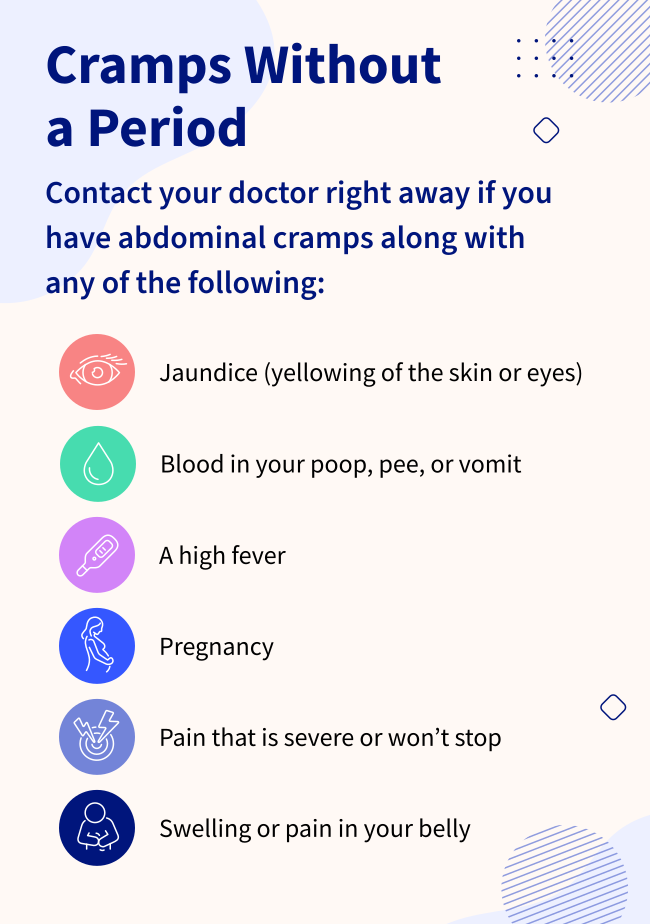
When Should You See a Doctor or Gynecologist for Pelvic Cramps?
Consult your health care provider right away if you have pelvic cramps after an injury, you're pregnant, or if the cramps won't go away. Other signs you should see your doctor include:
- Jaundice (yellowing of your eyes and skin)
- Swelling in your belly
- Vomiting that won't stop
- Blood in your pee, poop, or vomit
- Fever
- Ongoing pain elsewhere in your body
Takeaways
Cramps without a period can happen due to a range of conditions, including inflammatory bowel disease, ovulation, and ruptured ovarian cysts. Diagnosis typically involves sharing your medical history and a thorough physical exam. You may need imaging tests such as ultrasounds, laparoscopy, or other procedures to find out the cause of the cramps. Talk to your doctor about severe cramps; some causes can be serious and need treatment right away.
FAQs About Cramps Without Periods
Can a hormonal IUD or birth control pill cause cramps with no bleeding?
Yes. Sometimes birth control can cause more cramping as your body adjusts to the birth control.
How can I tell the difference between gas cramps and period cramps?
Gas cramps feel like sharper, stabbing pains in your lower abdomen. Period cramps are more of a dull, throbbing pain that people often feel in their lower backs.
I have a negative pregnancy test, but I'm still cramping and my period is late. What does this mean?
Your period may be late because of stress, intense exercise, hormonal changes caused by your birth control, conditions like polycystic ovary syndrome (PCOS), or hormonal changes from nursing. Home pregnancy tests are more accurate later, so there's a chance you may have taken the test too early. You may want to wait a few days and test again if your period is still late.
Why do I get cramps every month, but I haven't had a period in years (since I'm postmenopausal)?
If you have gone through menopause and are still experiencing monthly cramps, there could be a few causes, including endometriosis, gastrointestinal conditions, or ovarian or uterine cancer. If you're having consistent pain, get checked by a doctor.

 Related Links

