
Do you feel nauseated or dizzy or get headaches around the time of your period? You’re not alone. Many people who have periods experience something similar and often call it “period flu.” But it isn’t really the flu (influenza), and you can’t spread it to others.
These flu-like feelings are similar to or overlap with a group of symptoms that doctors call dysmenorrhea (painful periods) or premenstrual syndrome (PMS). Doctors don’t clearly understand what causes these symptoms, but hormonal changes during this time may have a role to play.
Symptoms of Period Flu
Period flu is not an official medical diagnosis. There’s no specific set of symptoms, as PMS symptoms may vary from person to person. The feelings of tiredness and pain linked to period flu may kick in just before you start your period each month. Or these symptoms may begin after you ovulate, or around 10-16 days before the start of your period, depending on your menstrual cycle.
The pain may range from mild to severe, but it usually goes away in one to three days.
Other “period flu” symptoms may include:
- Nausea
- Diarrhea or constipation
- Dizziness
- Vomiting
- Fatigue
- Headache
- Cramps
- Bloating
- Backache
- Pain or pressure in your belly
If the symptoms are serious enough, they may affect your quality of life. So, talk with your doctor if you’re concerned.
What Causes Period Flu?
Experts believe that changes in the levels of certain chemicals in your body during or before your period are linked to premenstrual symptoms.
Prostaglandins are molecules that act as chemical messengers in your body, much like hormones. If you’re feeling feverish, it usually means your body is fighting off a viral, bacterial, or fungal infection. Your immune system activates antibodies and other chemicals such as prostaglandin to destroy the virus or bacteria. When this happens, your body temperature goes up.
Your body also produces prostaglandins in the lining of your uterus when your period starts. These molecules bind with receptors in the hypothalamus, the part of the brain that controls your body’s temperature. This causes the low-grade fever.
Prostaglandins also cause strong muscle contractions in the uterus that lead to pain, discomfort, nausea, and diarrhea among some women. If the contractions are too strong, they may press against surrounding blood vessels and cut off some of the oxygen supply. This leads to the cramping that you may feel.
Estrogen levels also dip or change rapidly around this time. This can cause fatigue, cramps, and mood swings.
Ovulation can also increase your core body temperature (basal body temperature) for a couple of days.
More research is needed to completely understand all of the causes for these symptoms.
What Can I Do to Manage Period Flu Symptoms?
There are a few things you can do to manage the flu-like symptoms. You can:
Take pain relievers. Nonsteroidal anti-inflammatory drugs (NSAIDs), such as ibuprofen, are a class of over-the-counter (OTC) drugs that can ease pain during your period. They’re also designed to cut down prostaglandin production. Take them as soon as you start bleeding or whenever you begin to have cramps. If you can’t take NSAIDs, try an OTC acetaminophen product.
Use birth control pills. Hormonal birth control can also help ease pain and thin your uterine lining to lower prostaglandin production. This also reduces muscle contraction. If your symptoms are very bad, you may take NSAIDs and birth control pills together. Before you do, check with your doctor to make sure that’s right for you.
Take antidiarrheal medications. OTC drugs may clear up diarrhea or nausea.
Try heat therapy. Place a heating pad or hot water bottle on your belly, back, thighs, or wherever you feel pain or aches.
Get a massage. This can improve blood flow and give you some relief.
Exercise. Working out before and during your period has been known to reduce period symptoms, especially pain and cramps.
Don’t smoke. Quitting smoking can ease PMS symptoms — and it’s better for your health overall.
Stay hydrated. Limit how often you drink beverages with caffeine or alcohol, as these may trigger period flu symptoms.
Get good sleep. Take it easy, and try to rest when you can.
Home Remedies to Treat Period Flu Symptoms
To help ease period flu symptoms, try the following home treatments:
Eat an anti-inflammatory diet. Get plenty of fruits and vegetables, nuts and seeds, and lean meats to help lower inflammation in your body and ease PMS symptoms.
Take NSAIDs. If you have cramps, a fever, or body aches, try NSAIDs such as ibuprofen.
Add heat. Feeling crampy? Hold a hot water bottle or warm compress to your stomach.
Conserve your energy. Get at least seven hours of sleep, and take the rest you need to keep your stress levels low.
Try gentle exercise. Go on walks, try yoga, or take an easy bike ride. Regular exercise can help you reduce PMS symptoms.
Don’t smoke. Smoking can make PMS symptoms worse. Talk with your doctor if you need help quitting smoking.
When Should I See a Doctor?
If you regularly have flu-like symptoms around the time of your period and it’s affecting your quality of life, check in with your OB/GYN (a doctor who specializes in women’s health) or your regular doctor. They may run some tests to rule out other medical issues that may be causing these symptoms.
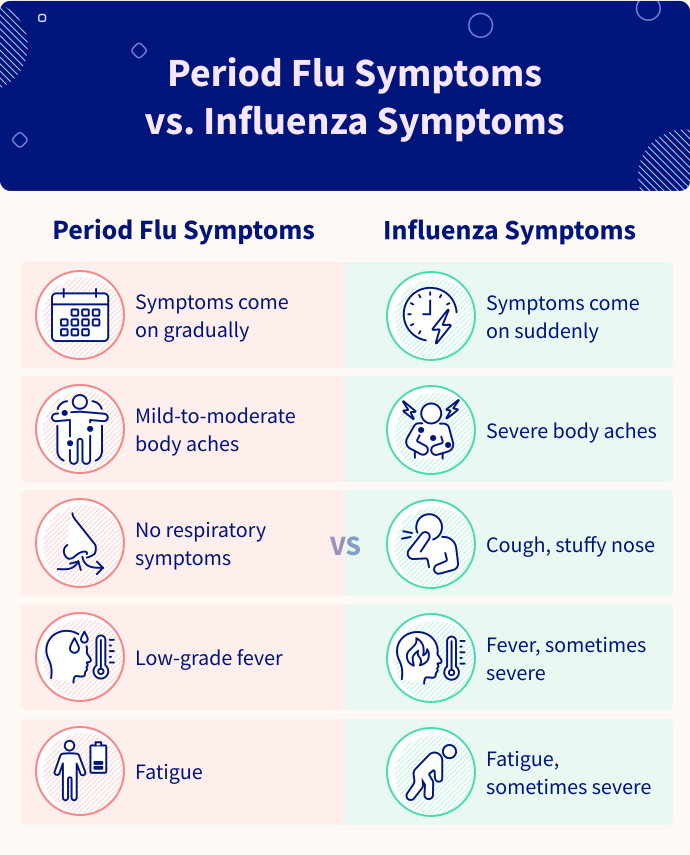
If you have other symptoms such as coughing, a runny nose, or a sore throat, get tested for COVID-19 and the seasonal flu. Your doctor will tell you the best treatments for these. They are contagious, and you will need to take steps to limit the spread.
If you use a tampon during your period, you may be at risk for a condition called toxic shock syndrome, especially if you leave it in for long periods. This is potentially a life-threatening illness. It’s a bacterial infection that causes flu-like symptoms, along with a fever that spikes over 102 F and a rash that looks like a sunburn or red dots on your skin. If you notice this, get help right away or head to the nearest hospital.
Other Period Problems
You may have many problems during your menstrual cycle. Most of them are common. They include:
Blood loss and clots. Small blood clots are common. But if you need to change your pad or tampon less than every two hours – or have quarter-size or larger clots – let your doctor know.
Cramping. Cramps can start before your first day of period and last throughout the bleeding process. If they are mild, like someone’s giving your ovaries a squeeze, it’s normal. If you are doubled over in pain, check with your doctor.
Moodiness. You can’t avoid mood swings that come with your period, thanks to hormones. Your mood can change as they rise and fall. Getting enough sleep, staying active, and avoiding caffeine and unhealthy foods can help you manage this.
Cycle issues. The average menstrual cycle is 28 days, and anything between 21 and 35 is normal. If your cycle changes, it could be due to stress, illness, weight fluctuations, and diet. Your cycle also depends on ovulation. Ovulation is when your ovaries release an egg, which is usually about halfway through your cycle.
Skipping a period. A missed period doesn’t necessarily mean you’re pregnant. Stress, sickness, or heavy exercise can affect your period sometimes.
Nausea. Nausea is a normal part of your period. Prostaglandin can cause vomiting, diarrhea, and headaches.
Takeaways
Hormonal changes before and during your period may make you feel like you’re getting sick — what some people call “period flu.” For most people, symptoms improve within three days, but don’t be afraid to talk with your doctor if your period symptoms feel unmanageable. They may recommend starting birth control or screening you for other conditions. If you have cold symptoms that feel more severe than usual or start very suddenly, talk with your doctor about treatment options. In some cases, you may have COVID-19 or influenza.
Period Flu FAQs
Does “period flu” affect your immune system?
It’s not yet known how PMS or your menstrual cycle affects your immune system. More research needs to be done to confirm these effects.
Can you get period flu symptoms during ovulation?
It’s unlikely, but possible. Usually, you’ll get period flu symptoms a few days before your period starts, not during ovulation.
Is a true high fever part of the period flu?
No. If you have a particularly high fever before or during your period, contact your doctor. You may have a pelvic infection or other illness, like the flu.
Can period flu symptoms worsen during perimenopause?
Yes. Your symptoms may get worse as your hormone levels fluctuate.

 Related Links

