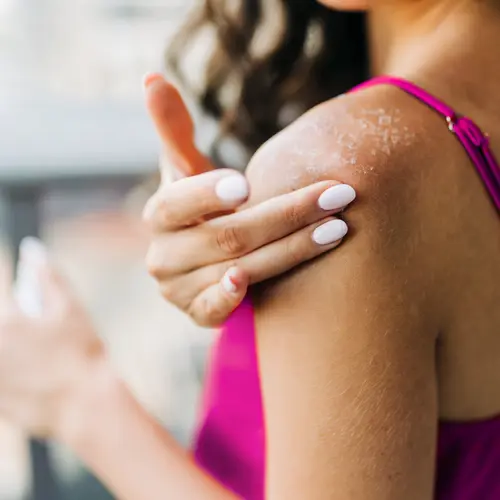
It’s natural to feel social anxiety at times. You may feel it more often if you have eczema, especially during a flare. Anxiety can also trigger an eczema flare. If you become so anxious, self-conscious, or embarrassed that it starts to affect you every day, it may be time to get some extra care for your mental health.
Having atopic dermatitis (the most common type of eczema) raises your risk of mental health conditions such as depression and anxiety by up to threefold. With social anxiety, you may:
- Feel afraid of being closely watched or judged by others
- Avoid people you care about
- Stay away from activities you used to enjoy
- Try extra hard to hide your skin symptoms
What’s more, living with that fear and stress can trigger eczema flares or make skin symptoms worse.
If you’re going through this cycle, check in with your dermatologist or your primary doctor about it. They may connect you with a mental health professional — such as a psychiatrist, psychologist, or therapist — who can find out if you have a serious, ongoing type of social anxiety and provide treatment if needed.
“Treating both the skin condition and the emotional impact often leads to better overall health and quality of life,” says Mohammad Jafferany, MD, a professor of psychodermatology, psychiatry, and behavioral sciences at Central Michigan University’s College of Medicine. “The best outcomes often come when we care for the whole person, not just the [skin] disease,” he says.
Knowing the connection between eczema and mental health and recognizing the signs of social anxiety can help you find some simple ways to get relief.
How Do Eczema and Social Anxiety Drive Each Other?
The skin and the mind are closely connected, says Jafferany, who specializes in diagnosing and treating both skin and mental health conditions. Even though social anxiety doesn’t cause eczema, stress from it “activates the body’s immune system, increasing inflammation that can make the skin itchier, red, and more irritated,” he says.
This usually results in a vicious cycle. “The visible rash can lead to feeling anxious or embarrassed, and in turn the emotional stress can trigger another flare,” Jafferany says.
The more noticeable your skin symptoms are, the more self-conscious you may feel around others. Patients who have eczema on their faces or on their hands “tend to have the most significant anxiety with other people noticing their symptoms,” says Elizabeth A. Kiracofe, MD, a board-certified dermatologist and founder of Airia Comprehensive Dermatology in Chicago.
Not knowing when an eczema flare might happen can also add to stress and anxiety. “The unpredictability of eczema is so huge,” Kiracofe says. “That’s one of the most significant burdens, even when you’re doing well,” she says. And that’s why managing stress is a key part of eczema care.
What Might Social Anxiety Look Like With Eczema?
Symptoms of social anxiety can vary from person to person. If you have eczema, here are some clues that you might also have social anxiety:
- You avoid social gatherings, dating, swimming, sports, or other activities where affected skin may be more visible.
- You may worry about having an eczema flare right before a social event.
- You wear long-sleeve shirts or pants to cover affected skin even in warm weather.
- You put on a lot of makeup to try to hide eczema on your face.
- You worry that people will stare at you or will think eczema is contagious.
- You prefer to interact online rather than in person to feel less judged about how you look
- You avoid having your photo taken.
If you notice that such habits are getting in the way of your job, schoolwork, relationships, or daily life, you may want to look into seeing a doctor for a mental health checkup.
What Are the Risks of Social Anxiety?
Without treatment, social anxiety poses some short- and long-term risks.
Some short-term risks may include:
- Loneliness
- Low self-esteem
- Poor sleep
- Avoiding work, school, or social activities
- Cycle of anxiety and flare-ups
Long-term effects of social anxiety can affect:
- Your relationships
- How you perform at work or in school
- Your overall quality of life
- Your risk of developing depression, substance abuse, and chronic stress
“The good news is that social anxiety is highly treatable. With the right combination of therapy, stress-management techniques, and, when appropriate, medication, most people experience significant improvement in anxiety,” Jaffernay says.
What Types of Mental Health Care Can Help?
Your doctor may suggest a few treatments for your mental health.
Cognitive Behavioral Therapy (CBT). This is a type of talk therapy. With CBT, a mental health professional teaches you to spot and change negative thoughts about yourself. You may slowly become more comfortable with your skin in social situations.
Acceptance and Commitment Therapy (ACT). This is another type of talk therapy that may be helpful, Jafferany says. ACT aims to help you better understand your thoughts and emotions, helping you make changes that align with your values.
Medications. Some people also benefit from taking prescription medicine for anxiety, Jafferany says. “By improving confidence and reducing stress, these treatments can help break the cycle in which anxiety worsens eczema and eczema increases anxiety,” he says.
Choosing a specialist
In the U. S., psychodermatologists (who treat both skin and mental health conditions) can be hard to find. When you’re choosing a mental health professional, look for a licensed psychologist or psychiatrist or a licensed clinical social worker who is experienced in treating anxiety or providing CBT, Jafferany says. Seeing a counselor or a therapist who works with people who have chronic illnesses can also be very helpful, he says.
One of the most important thing to look for in a specialist is someone with experience in helping people who have long-term health conditions manage emotional side effects. “Ideally, the mental health professional should be willing to work closely with your dermatologist or primary care provider so that both your skin and your emotional well-being are treated together,” Jafferany says.
There are more effective treatments than ever to help manage eczema. “Right now in my practice, there aren’t many patients that we can’t get significantly better. My goal is that their skin is not driving their life,” Kiracofe says.
Can Relaxation Techniques Help?
Stress-busting techniques can be a helpful part of managing both social anxiety and eczema, Jafferany says.
“Practices such as deep breathing, mindfulness meditation, progressive muscle relaxation, yoga, and regular physical activity can lower stress levels and help people feel calmer in social situations,” he says. It also helps to get quality sleep each night and take short breaks for rest during the day.
Relaxation techniques cannot, however, replace medical treatments or therapy, Jafferany says. They’re meant to work along with traditional treatments by easing stress, which can trigger eczema flares.
How Else Can You Ease Anxiety and Stay Social?
If eczema often makes you feel anxious, you might try to convince yourself or even your doctor that everything’s OK and your flare-ups don’t bother you that much, Kiracofe says. But hiding your true feelings won’t help for long.
There are ways to help yourself take charge of social anxiety. Here are some simple tips:
- Wear comfortable clothing that helps you feel confident.
- Keep your skin well-moisturized.
- Avoid things that you know have triggered eczema flare-ups in the past.
- Ask your dermatologist to make an action plan for how you’ll manage (or try to prevent) a flare.
- If someone asks about your skin, briefly say something like: “I have eczema. It’s a skin condition that I see my doctor for, but don’t worry: It’s not contagious.”
- If you choose to try masking your eczema symptoms with beauty products, use things that are gentle on skin, such as tinted sunscreen or pigment drops in a safe moisturizer. Keep in mind that using makeup to conceal redness could worsen a flare.
“Stay connected with friends and family, continue doing activities you enjoy, and seek support if feelings of embarrassment or anxiety become overwhelming,” Jafferany says. “Just as importantly, try not to let eczema define you,” he says.