How and when do you stop taking prednisone, a steroid to treat inflammation? Even if you have side effects from the medication, don’t stop cold turkey or cut back the dose on your own if you’ve been on it for more than a few weeks. You could go into steroid withdrawal, which can have severe symptoms.
In long-term use for autoimmune conditions such as rheumatoid arthritis, tapering prednisone too quickly can trigger a disease flare, causing underlying symptoms to return, in addition to steroid withdrawal symptoms.
It’s safer to taper off prednisone (slowly lower the dose). Your doctor will help you with it. Tapering helps avoid withdrawal and stops your inflammation from coming back.
As you lower the dose, you may notice subtle symptoms. Let your doctor know if you do. They’ll watch you carefully and adjust your prednisone taper dose if needed.
What Are Prednisone Withdrawal Symptoms?
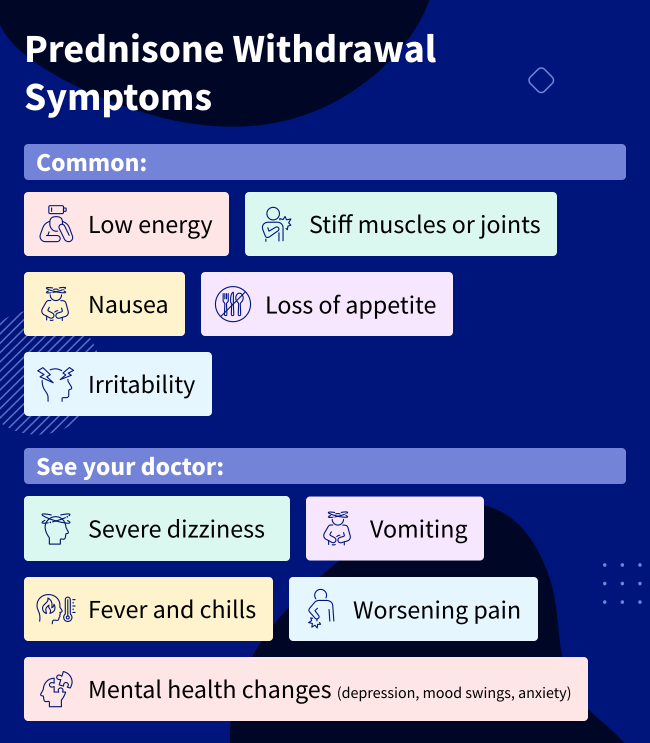
Prednisone withdrawal may cause symptoms such as:
- Severe fatigue
- Joint pain
- Fever
- Stiff or tender muscles
- Body aches
- Lightheaded feeling
- No appetite
- Labored breathing
- Vomiting
- Weight loss
- Headaches
- Adrenal crisis (a rare, possibly fatal reaction to a lack of steroid hormone in your body)
Withdrawal could also lead to serious psychological symptoms such as depression, anxiety, mood swings, mania, or delirium.
What Causes Prednisone Withdrawal Symptoms?
Your adrenal glands make a hormone called cortisol. Your body needs cortisol to function. Prednisone mimics cortisol.
When you take prednisone for more than a few weeks, your adrenal glands make way less cortisol. If you stop prednisone or taper it off too quickly, your body won’t have enough time to restart its production of the cortisol it needs. This causes withdrawal symptoms.
Why Taper Steroids?
When you taper off prednisone, your adrenal glands have time to catch up and make normal levels of cortisol. This could take weeks or even months, depending on how long you took the medication or how high your dose was.
Even a tapered dose of prednisone helps avoid inflammation, which is why you took the steroid in the first place. The doctor will give you a schedule to gradually lower your dose. Follow it carefully. They’ll let you know when it’s safe to stop prednisone altogether.
How Long Will Prednisone Withdrawal Symptoms Last?
How long your prednisone withdrawal symptoms last will depend on factors such as:
- How long you’ve been taking it
- How much you were taking
- How quickly you taper your prednisone
Typically, you may feel some mild symptoms for about a week or two as you taper off prednisone. Don’t take any over-the-counter (OTC) pain medicine or prescription drugs without asking your doctor first. But if you’ve been taking prednisone for a while, you may feel the effects of withdrawal for weeks longer. Psychological withdrawal symptoms, in particular, can last for two to eight weeks.
The doctor may give you blood tests to check your cortisol levels as you taper off prednisone. You may need to taper off more slowly or go back to your regular dose if you have severe symptoms.
How to Manage Withdrawal Symptoms
The safest way to manage withdrawal symptoms is to work with your doctor on a taper schedule that is right for you. That schedule will be based on your current dosage and how long you’ve been taking prednisone. Depending on your symptoms, your doctor may want to adjust your tapering schedule. They may want to check your cortisol levels using blood tests. And they may recommend pain or anti-nausea medications to help ease the withdrawal symptoms.
If you take prednisone to help you manage a chronic autoimmune condition such as rheumatoid arthritis, your doctor will also want to keep an eye out for flares of your underlying disease.
There are some things you can do on your own to help ease prednisone withdrawal symptoms. These steps include:
Rest up. Getting a good night’s sleep helps you keep your energy throughout the day and lowers stress levels.
Manage stress. Cortisol is your body’s primary stress-response hormone, so find stress relievers that work for you — be it yoga, meditation, or therapy — to help your body recover and ease your mind.
Focus on healthy eating. Your body needs fuel to get better, so be mindful about what you put in it. If you have nausea or just generally have little to no appetite, do what you can to get the nutrients you need. Try smaller meals throughout the day, or give protein shakes a try.
Hydrate. Staying hydrated can ease fatigue and keep blood pressure levels steady. Doctors also suggest that you avoid alcohol and caffeine.
Ease into physical activity. If you feel up to it, a slow walk or some stretches may help your aches and pain. Muscles and joints stiffen up if you don’t move them for too long. Gentle yoga or warm-water pool exercise may help, too. Your doctor can prescribe physical therapy to treat pain and teach you safe ways to move your body.
Can You Speed Up the Process?
Wondering if you can get off steroids faster? Maybe. If you’ve only taken prednisone for three weeks or less, you might not have to taper. The doctor will let you know. If you’ve been on steroids for more than a year, it may take two months to taper off.
Don’t try to speed up the taper on your own. Your adrenal glands need time to increase their cortisol production.
Can Tapering Cause a Flare?
Your symptoms may be a return of inflammation, not withdrawal. Tapering too quickly can cause a flare to happen.
If your disease flares, you may need to go back to a higher steroid dose for a short time to get the inflammation under control.
Takeaways
Stopping prednisone too fast can cause withdrawal symptoms such as fatigue, joint pain, and fever. That’s because your adrenal glands make less of their own steroid while you’re taking it, so they need time to catch back up. Your doctor can help you slowly lower your prednisone dose, which protects you from withdrawal and keeps your inflammation in check. Mild symptoms can last a week or two. Talk to your doctor right away if your symptoms get worse.
Prednisone Withdrawal Symptoms FAQs
Will I lose weight after I finish tapering off prednisone?
Yes, you will likely shed the extra pounds that you gained during your prednisone treatment. But it may take longer to lose the weight than it did to gain it.
Can I drink alcohol while tapering off prednisone?
You should skip alcohol when tapering off prednisone because it can cause fluctuations in your blood pressure and cause anxiety.
What dietary changes can help ease symptoms during a prednisone taper?
A healthy, balanced diet can help you fight prednisone withdrawal symptoms such as fatigue, muscle weakness, and inflammation.
Why does a prednisone taper cause anxiety and sleep disruptions?
Prednisone replaces cortisol, which is a hormone that controls your stress levels. While tapering prednisone, your body has less cortisol in its system, making your body more in danger of getting stressors, which can disrupt sleep. Find ways to manage your stress while doing a prednisone taper.