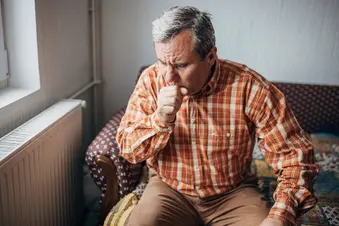
Pneumococcal disease is an infection caused by the bacteria called Streptococcus pneumoniae, or simply pneumococcus. The pneumococcus bacteria can infect different parts of your body. The germ causes two main pneumococcal diseases:
- Noninvasive. These are milder infections that stay in one place and don't spread to major organs or your bloodstream.
- Invasive. More serious infections are called invasive pneumococcal disease (IPD). The bacteria infect your blood and major organs — parts of your body that don’t typically harbor bacteria, like your brain or lungs. IPD causes death in about 10 people out of 100.
Pneumococcal disease is the leading cause of serious illness in the world. Learn about the conditions caused by pneumococcal disease, who’s at risk, and how to prevent life-threatening complications.
How Do You Spread Pneumococcal Disease?
Pneumococcal disease spreads in tiny respiratory droplets of liquid from a cough or sneeze. The droplets can travel through the air from a person who has the infection or carries the bacteria.
The bacteria typically lives in your nose and throat, even when you’re not sick. It’s called “carriage,” and that’s why people who have the bacteria are called carriers.
But the pneumococcus bacteria can spread very quickly to other people. If you touch infected mucus or saliva, you can also become infected. Pneumococcal bacteria can spread and you can get sick through:
- Coughing or sneezing, and you breathe in the droplets in the air
- Close contact with someone who is ill, handling mucus or saliva
- Touching infected mucus or saliva on it and you then touch your eyes, nose, or mouth.
Once pneumococcus enters your body, the first three days are usually symptom free. It’s called the incubation period, the bacteria makes copies of itself to infect your body and others. Around day four, pneumococcus bacteria can infect other people through your mucus or saliva.
Because carriers don’t get symptoms, it’s unclear how long pneumococcus stays infectious. About 20 to 40 children are carriers out of 100. But only 5 to 10 adults carry the bacteria out of 100.
What Conditions Can Pneumococcal Disease Cause?
Here are some common mild pneumococcal conditions.
Some pneumococcal infections can be more serious. These pneumococcal disease conditions can invade different parts of your body. The infection is often called invasive pneumococcal disease (IPD).
Pneumococcal Disease Risk Factors
While anyone can get pneumococcal disease, some people have a higher risk. You may have a higher risk for pneumococcal disease can if you:
- Are younger or attend childcare
- Are older or live in a long-term care facility
- Had a prior infection with the flu or pneumonia
- Recently were hospitalized
- Live in an areas with higher antibiotic resistance levels
- Have heart, lung, kidney, or liver disease, diabetes, or sickle cell disease
- Have a weakened immune system, like from HIV or cancer
- Have a cochlear implant
- Are an Alaskan native, African American, or Native American
- Have a substance abuse disorder, alcohol abuse disorder, or smoke
- Had your spleen removed
Symptoms of Serious Pneumococcal Disease
Your pneumococcal disease symptoms can depend on which body part is infected. For the first three days after the bacteria enters your body, you may not notice any symptoms.
When symptoms show up, the signs often look like other bacterial infections. Here’s a closer look at symptoms for each condition.
Younger children and older adults can have different symptoms. For example, older adults can have more serious symptoms, confusion, and a low fever.
Babies may also vomit, eat or drink less, seem fussy, have a higher-pitched cry, or their soft spot (fontanel) may bulge.
Symptoms can vary for osteomylitis because of the cause or how quickly the infection develops.
Septic arthritis is a serious, life-threatening IPD.
Diagnosing Pneumococcal Disease
Your doctor can run tests to diagnose pneumococcal disease. It’s a bacteria, so your doctor can run special tests like:
Blood culture. This test can grow any bacteria in your blood. The lab uses a special dye called Gram stain to turn the bacteria blue. Under the microscope, pneumococcus looks like oval pairs or chains with pointed ends.
Antigen test. An antigen test can find pneumococcus protein in your blood.
Molecular testing. The test looks for pneumococcus DNA in your blood.
For the blood culture, your doctor usually takes more than one sample, usually two. And they’ll take blood samples from different places on your body. That’s because they need to:
- Check for many different bacteria types, including pneumococcus
- Make sure they don’t accidentally get bacteria from your skin into the blood sample
- Test how well various antibiotics work to kill the bacteria, also called antibiotic resistance
In some cases, your doctor may do the culture on a sample of your:
- Lung fluid, also known as pleural fluid
- Fluid from a joint, called synovial fluid
- Cerebral spinal fluid (CSF), the fluid around your brain and spinal cord
- Fluid from your belly (ascites)
Antibiotic resistance testing. The lab checks to see which antibiotics best work to kill the bacteria growing in your body. This helps your doctor choose the best treatment.
How to diagnose pneumococcal disease
Depending on your pneumococcal disease condition, your doctor can run tests such as:
Pneumonia. You’ll likely get blood tests to check for infection and other important health markers. Your doctor also does an exam to listen to your breathing and will order an imaging test like an X-ray of your chest. They may also test for pneumococcal bacteria by taking a:
- Sputum sample, mucus you cough up
- Swab from your nose or mouth
- Urine test that quickly checks for pneumococcus protein (antigen)
Meningitis. Your doctor may order a blood or CSF culture to:
- Count any white or red blood cells
- Measure glucose and protein levels
- Identify any pneumococcus bacteria in your spinal fluid or blood
Bacteremia. Your doctor will order various blood cultures and blood tests.
Osteomyelitis. Your doctor will ask about your medical history and do a physical exam. Often osteomyelitis comes from bacteremia. So you’ll also get a culture and tests to check your health.
If needed, your doctor may order other tests and imaging scans of the affected area such as:
- X-rays
- MRI
- CT scan
- Bone scan
- Bone aspiration or biopsy that takes a small piece of bone to confirm your diagnosis
Septic arthritis. Your doctor may culture your synovial fluid, the fluid from your affected joint, to test the fluid:
- Color
- Thickness
- Cause of the infection, like pneumococcus bacteria
You may also get blood tests to look for signs of infection and imaging tests like X-rays. Imaging tests can show joint damage or loosened artificial joints.
Treating Pneumococcal Disease
You can treat pneumococcal disease with the right antibiotics. But some types of pneumococcus (strains) don’t respond to these medications, making treatment harder.
Doctors often start treatment for serious infections with a broad-spectrum antibiotic, a medicine that kills many types of bacteria. After antibiotic resistance testing comes back, your doctor can choose a targeted antibiotic to kill the bacteria in your body.
Pneumococcal Disease Complications
Pneumococcal disease can lead to many complications because the bacteria causes a range of conditions from mild to life-threatening.
Pneumococcus can cause infections with or without pneumonia and lead to arthritis, meningitis, and endocarditis. But learning about how pneumococcal disease can progress can help you prevent future complications.
If your immune system is weakened, you have a higher risk for complications like:
- Soft tissue infections
- Cellulitis, usually from pneumonia
Preventing Pneumococcal Disease
Thankfully, there are preventive steps you can take. The best way to prevent pneumococcal disease is vaccination.
Vaccine
There are two types of vaccines to help prevent infection:
- Pneumococcal conjugate vaccines (PCV) 15, 20, and 21. These vaccines use protein linked to a bacteria sugar to train your immune system. The number stands for the number of pneumococcal strains (types) the vaccine protects against.
- Pneumococcal polysaccharide vaccine (PPSV) 23. The vaccine can protect against 23 types of pneumococcus bacteria.
Which one you’ll get depends on your age and health risks. Experts suggest vaccines for:
- PCV 15 or 20 for anyone 5 or younger
- PCV15, 20, or 21 for anyone 50 and older who hasn’t been vaccinated
- PVC 20, 21, or PPSV23 for anyone 65 or older
- One PVC15 dose followed by a PPSV23 shot if you have a long-term illness or weakened immune system
You may not be able to get the pneumococcal vaccine if you’ve had an allergic reaction to a pneumococcal vaccine or the DTaP (diphtheria toxoid) vaccine. Always talk with your doctor to decide what’s best for your health.
Preventive home measures
Here are some tips to lower your pneumococcal disease risk at home.
Hand hygiene. Wash your hands or use hand sanitizer often, especially before you touch your mouth, nose, or eyes. Also wash up after touching handrails, doorknobs, coughing, or sneezing. Wash your hands for at least 20 seconds with soap or use hand sanitizer with at least 70% alcohol.
Cover your coughs and sneezes. Use a tissue or cloth to cover your mouth and nose when you sneeze or cough, then wash your hands afterward.
Avoid sharing germs. If you have symptoms of pneumococcal disease, stay home from work or school and away from crowded places. If you must go out, mask up.
Keep a clean home. Clean and disinfect surfaces that you touch often, like furniture, toys, and shared items. Use a mixture of bleach and water. Let it sit for 15 to 30 minutes, then rinse with water and let it dry. For metal surfaces, use 70% alcohol to disinfect.
Manage health conditions. Good blood pressure and blood sugar control can help you stay healthy. And that can help your immune system fight infection. Try to keep up with doctor’s visits, take your medications, and speak up about new symptoms.
Where to get the vaccine
The pneumococcal vaccine is the best way to prevent pneumococcal disease. And you can get it anytime of the year, not just flu season. The vaccine is part of your child’s regular vaccinations and you can talk with your doctor about what's best for your child.
To get the pneumococcal vaccine for yourself, you can:
- Ask your doctor about it
- Check out your local pharmacy
- Find a health center with federal funding (U.S. Department of Health and Human Services website)
- Your local health department
Show Sources
Photo Credit: E+/Getty Images
SOURCES:
Centre for Health Protection: “Pneumococcal Infection.”
National Foundation for Infectious Diseases: “Pneumococcal Disease.”
CDC: “Pneumococcal Disease Symptoms and Complications,” “Pneumococcal Disease: Causes and How It Spreads,” “Chapter 17: Pneumococcal Disease.”
Cleveland Clinic: “Pneumococcal Disease,” “Bacteremia,” “Ear Infection (Otitis Media),” “Sinus Infection (Sinusitis).”
Mayo Clinic: “Pneumonia,” “Septic arthritis.”
Johns Hopkins Medicine: “Bacterial Meningitis,” “Osteomyelitis.”
Arthritis Foundation: “Septic Arthritis.”
American Lung Association: “Learn About Acute Bronchitis,” “Pneumonia Treatment and Recovery.”
American Academy of Ophthalmology: “Conjunctivitis: What Is Pink Eye?”
Future Microbiology: “Staphylococcus aureus Nasal Carriage and its Contributing Factors.”
Nationwide Children’s: “Meningitis.”
Yale Medicine: “Otitis Media (middle ear infection).”
University of Rochester Medical Center: “Blood Culture.”
Merk Manual: “Gram Stain (Streptococcus pneumoniae).”
UpToDate: “Overview of community-acquired pneumonia in adults,” “Streptococcus pneumoniae: Microbiology and pathogenesis of infection,” “Invasive pneumococcal (Streptococcus pneumoniae) infections and bacteremia in adults.”
Meningitis Research Foundation: “Pneumococcal Meningitis."
European Centre for Disease Prevention and Control: “Disease information about pneumococcal disease.”


