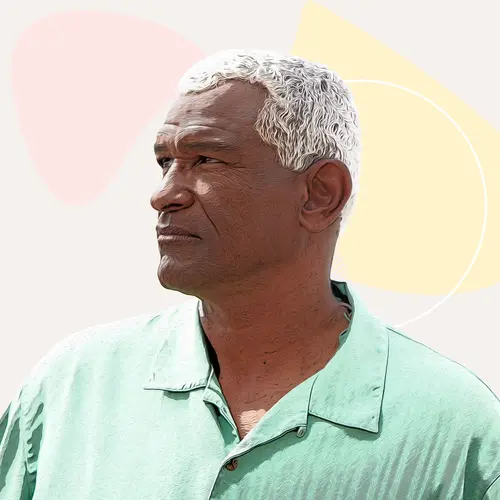
By Donna Coleman, as told to K.J. Bannan
I am no stranger to cancer. I was diagnosed with Stage III estrogen receptor-positive breast cancer in July 2020. It was treated and I was found to have no evidence of cancer anymore. So my diagnosis of small-cell lung cancer came out of nowhere.
I was 52 at the time. My sister had come up for the weekend to see me in Wilmington, North Carolina, where I live. We were scheduled to go to some of the Wilmington St. Patrick's Day festivals. I woke up that first morning and my neck hurt and I couldn't turn my head. I told my sister, but I figured I would ignore it and it would go away. Then my sister got a call that her son had locked himself out of the house, so she had to go home. She would be gone for at least three or four hours, so I figured I might as well get it checked out. I went to the ER and was shocked at what they found. I ended up telling my nephew that he may have saved my life by losing his key.
Getting Diagnosed and Treated
At the hospital, they did an X-ray of the area and found that my clavicle was broken. The X-ray also showed a spot on my lung, so they ordered a CT scan to get a better look. They thought it might be cancer, so they told me to follow up with my oncologist. When I spoke to my doctor, she said that it could be stage IV breast cancer, so they would have to do a biopsy. I went in for my follow-up after the biopsy and the doctor said, 'Well, the good news is this isn't breast cancer. The not-so-good news is that this is small-cell carcinoma – the most aggressive lung cancer. We're going to tackle it as hard as we can.'
I had just had my last low-dose scan for breast cancer a few months earlier when they told me that I was still NED (no evidence of disease) and that my scans would be every year rather than every six months. I was a little in shock to hear, 'Congratulations, you made it,' and then two months later, 'You have small-cell lung cancer.' I had even recently gone back to work at a subprime lender as an assistant manager and a loan officer. I couldn't understand how I could have two months of being cancer-free and feeling good and then this happened.
My SCLC was limited stage, so the doctor did four cycles of platinum-based chemotherapy and radiation. Since my lung collapsed when they did the lung biopsy, I ended up staying in the hospital at the seven-day mark when my white blood cells started to drop and my body wasn't responding well. They diagnosed me with an infection that almost turned into sepsis. I had an infection in the port. They treated it, and I started feeling better. But I was so sick that I realized that I had to stop working again. I ended up retiring from my position at the lender.
The treatment was rough. There were some days where I was so tired that I could barely get around. Even going to the grocery store was so out of reach. I also had two instances where I had blood clots in my lungs and would get so dizzy standing up that I was afraid I would fall.
My Days Now
I finished all my treatments in 2024. My doctor doesn't call it remission. She just says that I am stable. I do have a spot on the back of my brain, but it's not big enough to do anything with, so they are just waiting and seeing if it grows. My father had lung cancer, and my 62-year-old cousin who never smoked died of the disease, so it scares me. I know what can happen.
In the meantime, I get regular scans and try to go about my business. There are definitely challenges living with SCLC. I am tired a lot. The fatigue really gets to me. Today, for instance, I had to work up to getting out of the house and driving 30 minutes away to buy my husband a birthday present. I did it, but it was rough.
On bad days when I am stuck in bed because of the fatigue, I still try and do what I can. I talk on the phone. I watch shows. I try to be a support for other people who are going through cancer. And even if I am in bed, I try to get out of bed and sit on the couch for an hour when my husband comes home. I recently started cooking, too. Sometimes, I have to do a little bit and sit down and then get up again and sit down. It doesn't matter how long something takes to get done. It's the trying that matters.
Looking to the Future
It can be really easy to just stop living when you have cancer. But for me, I saw the silver lining. It taught me how precious life is. The first time I realized it was when I tried sushi. I swore I'd never eat raw fish, but I decided that we only have one life to live. I tried it and I liked it. Now, I have stopped putting the things off that I wanted to do. I don't know if cancer will come back, so now, I just do it – whether it's trying new food or going out to lunch with my cousin.
I also started seeing a therapist. She's helped me a lot. She told me to set small goals for myself. In the beginning, it could have been walking to the stop sign and back or around the backyard. That's why I would suggest that anyone going through this disease like me who is struggling should get a journal and set goals for yourself. They don't have to be big. Just think about and write down what you can do today. Set small goals for tomorrow. If you can't achieve them, don't beat yourself up. Just add them to the list again and keep trying.
I'm looking forward to enjoying more of my life. For example, I've always wanted to raise chickens myself. I grew up on a farm where my parents had chickens and goats, but I never had the time to focus on animals as an adult. Now that my kids are grown, I went ahead and ordered some chickens to keep in the yard. They are arriving in April, and I'm excited to take care of them. Maybe someday I'll expand my little mini farm and add a mini horse or mini donkey.
I also focus on the fact that researchers are working tirelessly on finding more treatments. I won't ever give up hope.