Lori Plung of Pittsburgh has lived with Crohn's disease for most of her life – more than 40 years. She's had half a dozen surgeries to have parts of her small intestine removed and has learned what changes in her body to expect after each operation. But it was after the fifth surgery that she went through a change she wasn't ready for.
"I knew my body. I had been through this so many times before, and this time felt different," Plung says.
She noticed that no matter what she ate or drank, her body wasn't holding onto enough fluids or nutrients. She had constant diarrhea, which led to dehydration.
Doctors diagnosed Plung with short bowel syndrome, also called short gut syndrome. It's a condition that most commonly happens when surgeons remove part of your small intestine. The small intestine is a long, curved organ that connects your stomach to your large intestine (colon). While digestion begins in the stomach, most of the digestive process happens in the small intestine. The small intestine is also responsible for absorbing nutrients from the food you eat.
When doctors remove a large portion of your small intestine, it can cause trouble with absorbing enough water, vitamins, and other nutrients. This raises your odds of forming short bowel syndrome (SBS). The more of your small intestine that doctors remove, such as during surgery for Crohn's disease or cancer treatment, the higher your chance of the condition.
Plung, who is also a patient advocate for people living with inflammatory bowel disease (IBD), recalls hearing the term "short gut" during earlier surgeries, but she says no one fully explained what that could mean for her long-term health or daily life. "You hear 'short gut,' but what does that really mean? You don't really appreciate it until it happens to you."
While her diagnosis was clear, Plung felt dismissed during the first months of living with SBS. "My whole life had been turned upside down. I was trying to accept a new normal, which was very difficult." She recounts clinic visits where doctors brushed off her concerns with comments implying she should simply "get used to it."
Usually, you have around 20 feet of small bowel, but if your doctor has removed a large portion of your colon (around 15 feet), they should check for short bowel syndrome. After her surgeries, Plung had just over 2 feet of intestine remaining, which means she needs IV nutrition and hydration support (known as total parenteral nutrition, or TPN) to keep her body functioning the right way.
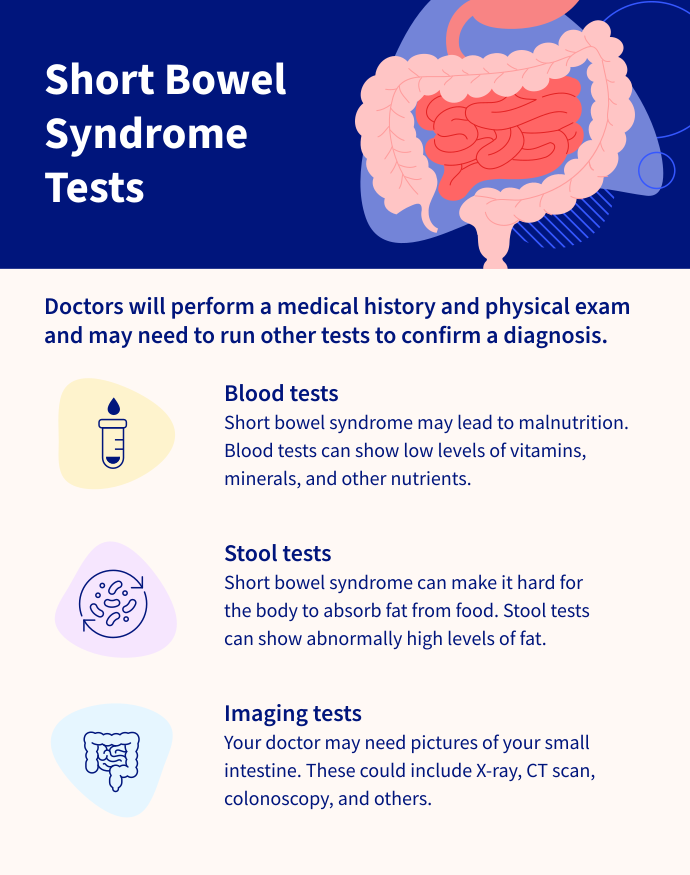
You may also notice symptoms such as persistent diarrhea, cramping, bloating, extreme tiredness, and weight loss. There's no specific test to check for SBS. But your medical history, a physical exam, and other tests can help your doctor make a diagnosis and rule out other health conditions. Doctors can confuse short bowel syndrome with other conditions, including food allergies and celiac disease. They may request blood tests to check your protein levels, anemia status, and electrolytes; stool tests to see if you're absorbing enough fat; imaging tests like an MRI or a CT scan; and tests for a lack of nutrients such as potassium and vitamins.
Plung advises people who may have SBS to see a specialist experienced in the condition. Access to doctors who specialize in intestinal failure and SBS can shape both your diagnosis and patient experience. She also stresses that patients often need to keep speaking up until someone really listens to them. "It's really about staying on top of it and advocating for yourself," she says.
She encourages people having small bowel surgery to ask questions before and after the operation. What does having less bowel really mean for daily life? How will doctors and other experts support your nutrition, hydration, and mental health? Who coordinates care long-term?
People living with SBS benefit from coordinated, multidisciplinary care that treats the illness as a long-term condition, not a short-term health problem. "It's a team sport. Your health care team might be the coaches of the team – they know everything going on. But you're the captain of the team; you're living it every day."
Plung now sees an IBD specialist who also directs a nutrition support program, and she works with a dietitian who's an expert in treating people with SBS. Talking to a therapist has also helped her learn to accept her diagnosis and reframe her thinking – although she may dislike having to hook into her TPN, she's also thankful that it helps keep her going.