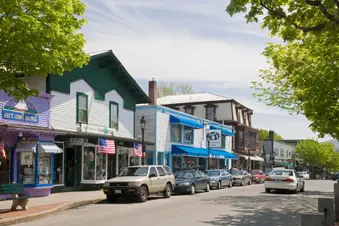
From her front porch, Jamie Kodra looks out over the beautiful Northern Utah mountains. The sounds — and smells — of nearby farms fill the morning air as she gets her two children ready for school. Although she loves the simplicity of her small-town lifestyle, it comes with a big compromise. "It's a quaint town and it's growing," she says. "But it doesn't have the medical care near us that I need."
Kodra is among the almost 43 million Americans who live in rural areas or small towns known as "health care deserts" that don't have enough medical services. Today, these areas across the U.S. have less access to quality health care than in the past. But there are new ways to find the care you need.
Understanding the Challenge
Although people living in small towns and rural areas tend to have similar access to primary care or family medicine as urban dwellers, there's a lack of urgent care facilities, specialty care providers, and hospitals. Health care policy researcher Kendal Orgera, MPH, MPP, studied the impact of health care barriers in rural areas, providing detailed reports to policymakers. She found that in 2023, more than 60% of Health Professional Shortage Areas (HPSAs) for primary medical, dental, and mental health care were in rural areas.
Lack of health care professionals, coupled with hospital closings, have made accessing health care across rural America challenging. Since 2010, more than 150 rural hospitals in 33 states have either closed or converted to a non-acute-care hospital type. One-third of remaining rural hospitals are at risk of closure.
With these two major factors in mind, Jacob C. Warren, PhD, MBA, director of the Center for Rural Health at the University of North Dakota School of Medicine and Health Sciences, points to three major challenges residents face when it comes to receiving health care in small towns and rural areas: availability, accessibility, and acceptability. These "three A's" add up, making it harder for rural residents to receive medical care in a timely manner.
"Rural residents often have to travel long distances to receive health care, making it more difficult not only to have a new condition diagnosed, but also to receive any necessary long-term treatment monitoring," he says. "As more rural hospitals close — or sometimes close services to maintain their bottom line — this problem becomes even more pronounced."
Kodra, who gets ongoing treatment for bipolar disorder and other conditions, understands this dynamic all too well. Managing her health often requires daily commutes and added expense. "Sometimes I have to travel far from my hometown to find a specialist experienced with my complex condition," she says. "It can be months — even years — before getting an appointment. By the time you get help, your condition can get worse and impact your life severely."
Although Kodra makes it a priority to get the care she needs, for many people, preventable conditions may go undiscovered and chronic or persistent conditions may go unmanaged. "Rural residents often receive care much later in the course of their condition, making treatment more challenging and outcomes less promising," Warren says. "This makes further receipt of timely, quality care even more difficult."
Finding Health Care Solutions
Even with these obstacles, health resources are available — if you know where to look. The use of technology, innovative care delivery, and federal funding have created new resources for care. Understanding your options and how to best utilize them can go a long way to finding solutions for your health care needs.
Hospitals, clinics, and centers
Besides moving to a larger city that offers more health care choices, there are many resources that you can access for care if you live in a small town or rural area. Knowing where to go for specific types of care is the first step. Some health care facilities that are usually available in less populated areas include:
- Critical access hospitals (CAHs), which are special hospitals that operate more than 35 miles from any other hospital and operate an emergency room 24 hours a day. They have 25 or fewer acute care beds for short-term, active treatment for patients recovering from surgery, serious illness, or injury.
- Rural health clinics (RHCs), which provide outpatient services, basic laboratory services, and "first response" services to common life-threatening injuries and acute illnesses
- Federally qualified health centers (FQHCs), which are often called community health centers and provide services on a sliding scale. Federal funding allows these centers to offer quality health care, regardless of your ability to pay.
You can find out more about these types of health care resources in your community through the Rural Health Information Hub.
Mobile health clinics
Mobile health clinics may be an option if you live in areas where traditional brick-and-mortar clinics have closed, or where there aren't medical professionals. There are currently more than 3,600 mobile health clinics that serve every state and territory in the U.S. They provide more than 10 million visits each year. Two-thirds of these mobile clinics specifically serve rural communities, offering preventive health screenings, testing, and health coaching for chronic conditions, such as high blood pressure and diabetes.
To locate a mobile clinic near you, check out the Mobile Health Map.

Telemedicine
Virtual or online doctor's appointments became popular in 2020 during the COVID-19 pandemic. Today, more than 70% of physicians use telehealth in their practices. Although meeting with a health care provider online can have limitations, telemedicine has found a place with certain specialties, including neurology, gastroenterology, and endocrinology. For patients like Kodra, who spend a lot of time driving to appointments, having the option of telemedicine can save time — and fuel.
"Telemedicine is nice when you live in a rural area," she says. "But not every appointment can be virtual. And sometimes I struggle with getting cut off or not having the best internet connection."
Not all telehealth appointments require a computer and internet access. Some appointments may be handled over the phone, so ask your doctor's office ahead of time for their preferred way to communicate. As with in-person appointments, being prepared can help you get the most out of your telehealth house call. Some tips for success include:
Sign on early. Test your equipment and internet connection. If you have technical difficulties, you can message your provider or call their office.
Create an agenda. Write down questions about topics you want to cover during your time with your doctor. Be ready to answer questions about your general health, such as your height, weight, medical history, and medications you're taking.
Limit distractions. Find a quiet room and resist the urge to multitask.
Expect delays. Even virtual appointments can be delayed because of your health care provider's schedule. When scheduling time for your visit, try to include 30 minutes extra — just in case.
If paying for phone or internet access is a financial burden, you may be eligible to get help through a federal program called Lifeline Support that helps lower the monthly cost of these services. For more information, go to lifelinesupport.org or call 800-234-9473.
211 and other resources
Although not a health care provider, the United Way's free and confidential 211 service offers information about community health and human services resources in your immediate area. This network of local experts can help you find the closest mobile health clinics, mental health and substance abuse resources, free dental vans, immunization clinics, and more.
If you have a mental health disorder, Kodra also recommends keeping emotional crisis hotline numbers handy. "In a small community if you're not getting the care and resources you need, it's a struggle," she says. "It's easy to feel isolated and alone, but help is out there."
No matter where you live, if you're having suicidal thoughts or an emotional crisis, you can find support right away by contacting the National Alliance on Mental Illness at 800-950-6264 (text NAMI to 741-741); or the SAMHSA (Substance Abuse and Mental Health Services Administration) National Helpline at 800-662-HELP (800-662-4357).
For a comprehensive directory of mental health hotlines, go to HelpGuide.org.
Advocating for Yourself
As an outspoken health care advocate, Kodra turned her personal struggles into a passion for helping others find the health care they need. Learning how to advocate for her own well-being was the first step. "The biggest thing I've learned is we all have to become our own advocates," she says. "We have to be responsible for becoming our own care coordinators and fight for what we need. Don't be afraid to use your voice. That's what it takes to get better care in rural areas."
Orgera agrees. She encourages people living in health care deserts to speak up about their needs by writing or calling their local legislators. "In some counties in the U.S., there is no 911 or ambulance service, and funding has to come to rural areas to bridge the divide," she says. "The most important thing we can do is to keep advocating and make policymakers aware of the need for resources to access health care."
Show Sources
Photo Credit: Tetra Images/Getty Images
SOURCES:
Jamie Kodra, mental health advocate and host, I Am Hope in the Chaos podcast, Northern Utah.
The Commonwealth Fund: "The State of Rural Primary Care in the United States."
Healthcare Regulatory Research Institute. "Beyond Supply: A New Framework for Identifying Healthcare Deserts in the United States."
Jacob C. Warren, PhD, MBA, director, Center for Rural Health, University of North Dakota School of Medicine and Health Sciences, Grand Forks, North Dakota.
Association of American Medical Colleges: "Rethinking Rural Health."
Kendal Orgera, MPH, MPP, policy researcher, Washington, D.C.
American Journal of Medicine: "Bridging the Health Care Gap in Rural Populations: Challenges, Innovations, and Solutions."
Rural Health Information Hub: "Critical Access Hospitals (CAHs)," "Rural Health Clinics (RHCs)."
Community Health Center Central Florida: "What Is a Federally Qualified Health Center? A Comprehensive Guide."
Mobile Health Map: "Mobile Healthcare The 2025 Mobile Clinics Landscape Report."
International Journal for Equity in Health: "Factors associated with mobile medical clinic use: a retrospective cohort study."
Primary Care: "The State of Telehealth Before and After the COVID-19 Pandemic."
American Medical Association: "New data details how telehealth use varies by physician specialty."
Health Resources and Services Administration: "Can I use telehealth if I live in a rural community?" "What I should know before my telehealth visit," "5 tips to get health care from anywhere."
Lifeline Support: "About Lifeline."
211: "About 211."
211 United Way: "Call 2-1-1."
National Alliance on Mental Illness: "NAMI Helpline."
Substance Abuse and Mental Health Service Administration: "Mental Health and Substance Use Helplines."