When you’re resting at home after surgery, you need to keep an eye on your wound. It’s going to go through some changes in the next month, and you’ll probably find yourself wondering: Is this normal, or am I getting an infection?
Learn more about how your cut will heal so you can know when to relax and when to call the doctor.
Stages of Healing
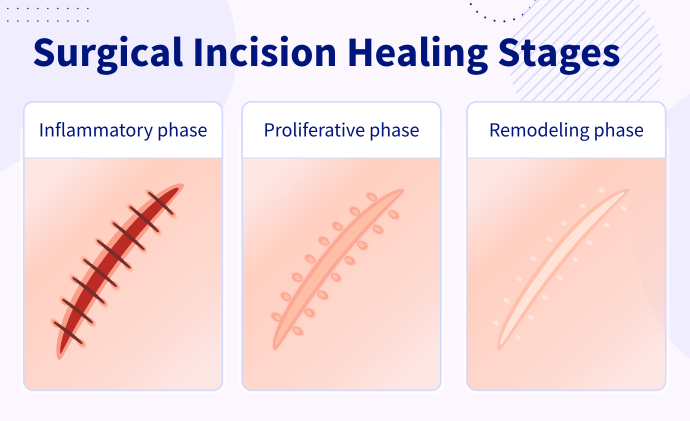
Your wound will go through three stages.
Stage 1: Swelling
The first steps toward healing start right away. Blood vessels around the cut begin to form clots that keep you from losing too much blood. White blood cells in your body move into the wound. Think of them as agents that fight bacteria and control infection.
This phase can go on for up to six days after your surgery; it’s normal to see some redness and swelling in this phase. Your doctor can tell you how much is OK. Your wound may also feel warm, and it may hurt around the site.
Stage 2: Rebuilding
This part of your healing may last about four days to a month after your surgery. A scar starts to form on the cut. The edges will pull together, and you might see some thickening there. It’s also normal to see some new red bumps inside your shrinking wound.
You might feel sharp, shooting pains in the area of your wound. This may be a sign that you’re getting sensations back in your nerves. Over time, the feeling should become less intense and happen less often, but check with your doctor if you’re concerned.
Stage 3: Remodeling
At this point, you’re nearing the end of the healing process. Your wound has filled in, and a new surface has formed. This final period can last from six months to two years. You’ll see some changes in your scar: At first, it may look thick, red or discolored, and raised. Then, it may go on to become thinner, flatter, and more like your usual skin color.
Infections
Though rare, infections do happen. If you’re going to get an infection, it’s usually in the first month after your surgery.
Your wound may be infected if you have:
- A fever
- A delay in your healing
- A bad smell that comes from your incision site
- An opening in the incision
- Pus, redness or other skin color changes, and pain that’s getting worse
- Tenderness, warmth, and swelling near your wound
Most of the time, infections in the area of your wound can be treated with antibiotics.
You may be more at risk for getting an infection if you have certain health conditions such as diabetes or obesity, or if you:
- Smoke or use tobacco products
- Don’t eat well
- Are going through chemotherapy
- Take medications that affect your immune system
When to Contact a Health Care Professional About Your Wound
If your surgical cut is taking a long time to heal, check in with a health care professional. They can answer any questions you have and make sure your recovery is still on track.
If you have any signs of infection or if your incision seems to be getting worse instead of better, see a medical professional right away.
Takeaways
When you have surgery, your incision site will go through three stages of healing: inflammation, rebuilding, and remodeling. To lower your chances of getting an infection, make sure you:
- Don’t pick at or itch your skin.
- Follow all instructions your doctor gave you.
- Keep your incision site clean and dry.
- Wash your hands often (especially before and after touching your incision site).
Surgical Wound Healing FAQs
Here are some commonly asked questions about healing for surgical cuts.
When can I take a shower or bath after surgery?
It depends on your procedure. Your doctor will give you instructions about when you can take a shower or bath. For example, if you have stitches or staples, you can usually shower or bathe a day after surgery. If your surgical site was glued shut, you’ll usually need to keep that glue dry for five days. You can cover the site with a bandage.
Why does my healing incision itch so much and how can I stop it?
It’s totally normal for your incision to itch. During the rebuilding stage, your body builds new skin to replace damaged skin. Your body also releases histamine, a chemical that acts as a barrier to protect your incision site. That causes the itchy feeling.
But don’t scratch your incision. Instead, use a cold compress to ease itching.
Is clear or yellowish fluid draining from my cut normal?
Yes. That thin, clear or slightly yellowish fluid you see draining from your incision is called serous drainage. This clear liquid may come out of wounds in small amounts — and it's a normal sign of healing.
But if the fluid is thick, milky, very yellow, green, or smelly, that could be a sign of infection.
Can I apply Neosporin, Vaseline, or scar creams to speed up healing?
Over-the-counter antibiotic ointments such as Neosporin are OK to put on wounds. But these ointments may not speed up healing. In one study, researchers compared white petroleum ointments (like Vaseline) to antibiotic ointments for wound healing and found no significant difference in infection rate.