


 Reviews
Overview: Tivicay is used to treat HIV. It is used with other medicine to stop HIV from multiplying in the body. The most common side effects are trouble sleeping, tiredness, and headache. Call your health care provider right away if you have fever, nausea, stomach pain, unusual tiredness, muscle pain, trouble breathing, or yellowing of your skin or eyes. Tivicay comes as an oral tablet and as a tablet that is mixed with water to make an oral liquid.
Uses
What is Tivicay used for?
Tivicay (dolutegravir) is commonly used for the treatment of HIV (in combination with other medicine).
Tivicay may also be used for other conditions as determined by your health care provider.
How does Tivicay work (mechanism of action)?
People with HIV have a virus that spreads in their body and damages the immune system, making it easier for them to get very sick from other infections. Tivicay works to help stop the spread of HIV in the body. This helps protect and preserve the immune system.
How is Tivicay supplied (dosage forms)?
Brands and other names
- Tivicay
- Tivicay PD
Dosage forms and strengths
- 10 mg, 25 mg, and 50 mg oral tablets
- 5 mg tablets for oral suspension
How should I store Tivicay?
Oral Tablets. Tivicay oral tablets should be stored at room temperature, between 68 F and 77 F (20 C and 25 C). They can be exposed to temperatures between 59 F and 86 F (15 C and 30 C), for shorter periods of time, such as when transporting them. Store in a cool, dry place, tightly closed in the original container. Protect from moisture (do not remove the desiccant from bottle).
Tablets for Oral Suspension. Tivicay PD tablets for oral suspension should be stored at room temperature below 86 F (30 C). Store in a cool, dry place, tightly closed in the original container. Protect from moisture (do not remove the desiccant from bottle).
Side Effects
What are the most common side effects of Tivicay?
The most common side effects of Tivicay are listed below. Tell your health care provider if you have any of these side effects that bother you.
- Trouble sleeping
- Headache
- Feeling tired
There may be other side effects of Tivicay that are not listed here. Contact your health care provider if you think you are having a side effect of a medicine. In the U.S., you can report side effects to the FDA at www.fda.gov/medwatch or by calling 800-FDA-1088 (800-332-1088). In Canada, you can report side effects to Health Canada at www.health.gc.ca/medeffect or by calling 866-234-2345.
What are the serious side effects of Tivicay?
While less common, the most serious side effects of Tivicay are described below, along with what to do if they happen.
Liver Damage. Liver damage, also called hepatotoxicity, can happen when taking Tivicay. Call your health care provider right away if you have any of the following symptoms of liver damage.
- Nausea or vomiting
- Stomach or belly pain
- Fever
- Weakness or unusual tiredness
- Itching
- Loss of appetite
- Light-colored poop
- Dark-colored urine (pee)
- Your skin or the whites of your eyes turning yellowish in color (also called jaundice)
Immune System Changes. When you start Tivicay, your immune system might get stronger and start fighting infections that have been hiding inside your body for a long time. The type of symptoms you may have will depend on the infection. Tell your health care provider right away if you notice any of the following new symptoms of infection.
- Fever, sweats, chills, or muscle aches
- Swollen lymph nodes
- Vision problems
- Confusion, problems talking, or headache
- Skin problems such as a painful rash or warts
- Cough or coughing up blood
- Weakness or coordination problems
Severe Allergic Reactions. Tivicay may cause allergic reactions, which can be serious. Tell your health care provider right away if you get a rash whiel taking Tivicay. Stop taking Tivicay and get help right away if you have a rash with any of the following symptoms of a serious allergic reaction.
- Blisters, sores, or peeling of the skin or mouth
- Eye redness or swelling
- Swelling of the face, lips, mouth, tongue, or throat
- Breathing problems or wheezing
- Racing heart
- Fever or general ill feeling
- Swollen lymph nodes
- Trouble swallowing or throat tightness
- Itching or skin rash
- Bumps on the skin called hives that can be red, pink, white, or brown depending on your skin tone
- Nausea or vomiting
- Dizziness, feeling lightheaded, or fainting
- Stomach cramps
- Joint pain
Warnings & Precautions
Who should not use Tivicay?
Allergies to Ingredients. People who are allergic to any of the following should not take Tivicay.
- Dolutegravir
- Tivicay
- Any of the ingredients in the specific product dispensed
Your pharmacist can tell you all of the ingredients in Tivicay.
Drug Interactions. Tivicay should not be taken while you are using certain other medicines. Before taking Tivicay, tell your health care provider about any prescription or over-the-counter (OTC) medicines, vitamins/minerals, herbal products, and other supplements you are using. See the Interactions section for more details.
What should I know about Tivicay before using it?
Do not take Tivicay unless it has been prescribed to you by a health care provider. Take it as prescribed.
There are two forms of Tivicay: Tivicay oral tablets and Tivicay PD tablets for oral suspension. Do not switch between them without talking to your health care provider.
Do not share Tivicay with other people, even if they have the same condition as you. It may harm them.
Keep Tivicay out of the reach of children.
Taking certain antacids or supplements with Tivicay can make it not work as well. Talk with your health care provider about the best way to take antacids and supplements while taking Tivicay.
While Tivicay can help keep the HIV infection under control (when used with other medicine), it does not cure it. Also, Tivicay does not help protect against or prevent the spread of sexually transmitted infections (STIs), like herpes, gonorrhea, or chlamydia.
If you are using Tivicay PD (tablets for oral suspension), do not chew, cut, or crush the tablets. The tablets should either be swallowed whole or they can be mixed in water to make an oral liquid. Make sure that you or a caregiver understands how to properly prepare and use the medicine. If you are making the oral liquid, use the cup or syringe that comes with the medicine to measure the dose. If you have any questions, talk to your health care provider.
Keep all appointments with your health care provider while taking this medicine.
What should I tell my health care provider before using Tivicay?
Tell your health care provider about all of your health conditions and any prescription or over-the-counter (OTC) medicines, vitamins/minerals, herbal products, and other supplements you are using. This will help them know if Tivicay is right for you.
In particular, make sure that you discuss any of the following.
Current and Past Health Conditions. Tell your health care provider if you have any liver problems, including hepatitis.
Pregnancy. It is not known if or how Tivicay could affect pregnancy or harm a fetus. Tell your health care provider if you are pregnant or plan to become pregnant. Your health care provider will let you know if you should take Tivicay while you are pregnant or trying to get pregnant. If you become pregnant while taking Tivicay, you can register for the Antiretroviral Pregnancy Registry by visiting www.apregistry.com. This registry collects safety information about the use of HIV medicines during pregnancy.
Breastfeeding. Tivicay passes into breast milk. Tell your health care provider if you are breastfeeding or plan to breastfeed. Your health care provider will let you know if you should take Tivicay while breastfeeding. There may be risks with breastfeeding while taking Tivicay and having HIV.
How can I get more information about Tivicay?
For more information about Tivicay, you can visit the drugmaker’s website at www.tivicay.com or call them at 877-844-8872.
Interactions
Does Tivicay interact with foods or drinks?
There are no known interactions between Tivicay and foods or drinks.
It is unknown if drinking alcohol will affect Tivicay.
Does Tivicay interact with other medicines (drug interactions)?
Always tell your health care provider about any prescription or over-the-counter (OTC) medicines, vitamins/minerals, herbal products, and other supplements you are using.
In particular, make sure that you discuss if you are using any of the following before taking Tivicay.
- Dofetilide (Tikosyn), which is a medicine to treat an abnormal heart rhythm
- Antacids or supplements containing calcium, aluminum, magnesium, or iron
- Dalfampridine (Ampyra), which is a medicine for multiple sclerosis
- Metformin (Glucophage), which is a medicine for diabetes
- Sucralfate (Carafate), which is a medicine for stomach ulcers
- Oxcarbazepine (Trileptal, Oxtellar XR) or phenytoin (Dilantin, Phenytek, and others) which is a medicine used to control seizures
- Phenobarbital, which is a medicine that may be used to treat trouble sleeping, migraines, or seizures
- St. John’s wort, which is a supplement that may be used for depression
- Any other medicine for HIV or AIDS
Some other medicines may alter the blood levels of Tivicay, and vice versa. Tell your health care provider about all medicines that you take or have recently taken.
This may not be a complete list of medicines that can interact with Tivicay. Always check with your health care provider.
Overdose/Missed Dose
What should I do if I accidentally use too much Tivicay?
If you or someone else has used too much Tivicay, get medical help right away, call 911, or contact a Poison Control center at 800-222-1222.
What should I do if I miss a dose of Tivicay?
If you miss a dose, take it as soon as you remember. If it is almost time for your next dose, skip the missed dose and only take the next dose. Do not take double or extra doses.
Missing doses of Tivicay can cause it to not work as well over time. So it is important not to miss or skip doses.
Images
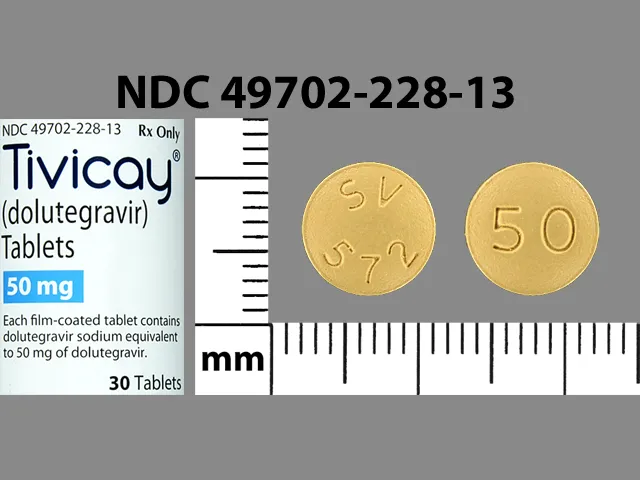
Tivicay
GENERIC: Dolutegravir
Add WebMD as a Preferred Source to see more of our trusted content across Google Search, AI Overviews, and AI Mode
You Might Also Like
Are you currently using Tivicay (Dolutegravir)?
This survey is being conducted by the WebMD marketing sciences department.