


 Reviews (1516)
Overview: Desvenlafaxine is used to treat depression. It works by increasing the amount of serotonin and norepinephrine in the brain. Common side effects may include nausea, trouble sleeping, constipation, decreased appetite, and sexual problems. Tell your health care provider right away if you have changes in your mood, dizziness, a fast or racing heartbeat, or muscle twitching or stiffness. Desvenlafaxine is a long-acting tablet that you take by mouth. Tell your health care provider about all of your health conditions and any medicines you take before taking desvenlafaxine.
Uses
What is desvenlafaxine used for?
Desvenlafaxine is commonly used to treat depression.
Desvenlafaxine may also be used for other conditions as determined by your health care provider.
How does desvenlafaxine work (mechanism of action)?
Desvenlafaxine is an antidepressant that belongs to a group of medicines called serotonin and norepinephrine reuptake inhibitors (SNRIs). It works by increasing the amount of natural chemicals called serotonin and norepinephrine in the brain.
How is desvenlafaxine supplied (dosage forms)?
Brands and other names
- Khedezla
- Pristiq
Dosage forms and strengths
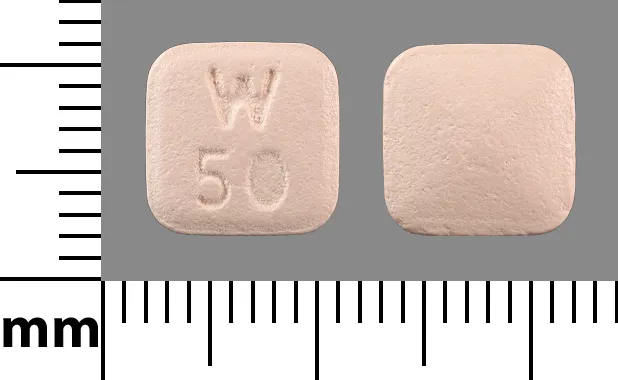
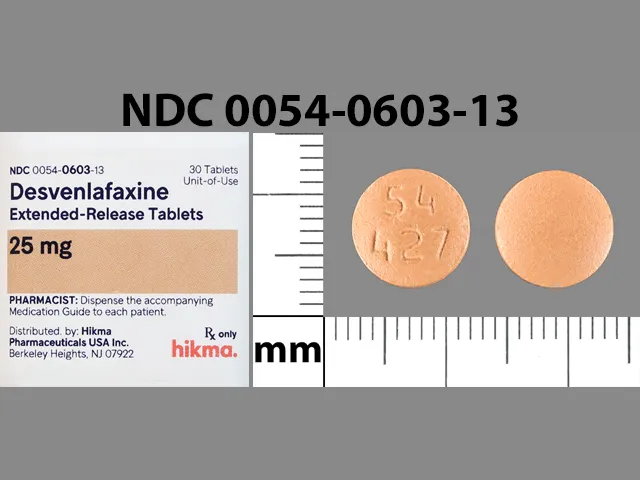
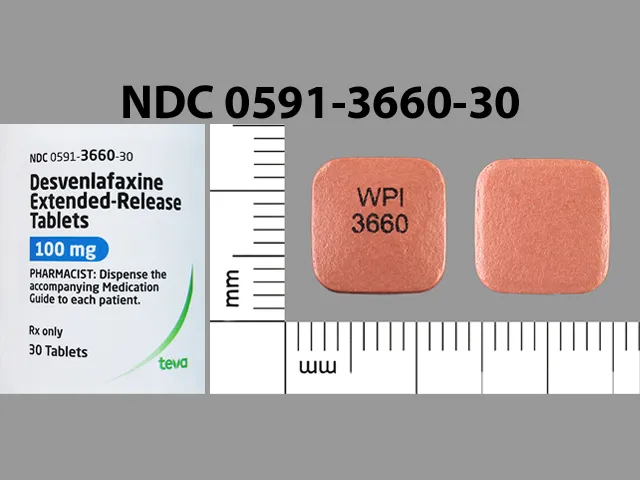
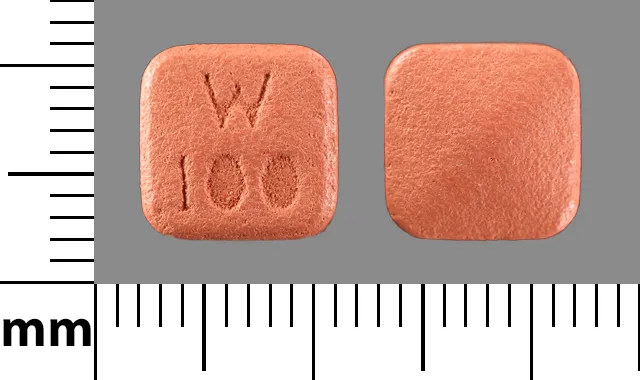
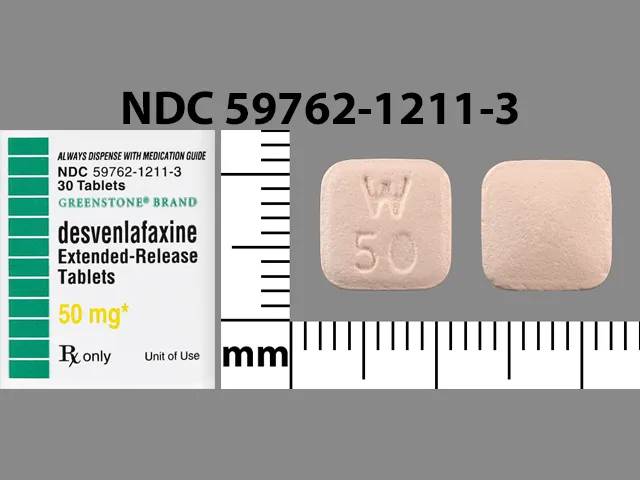
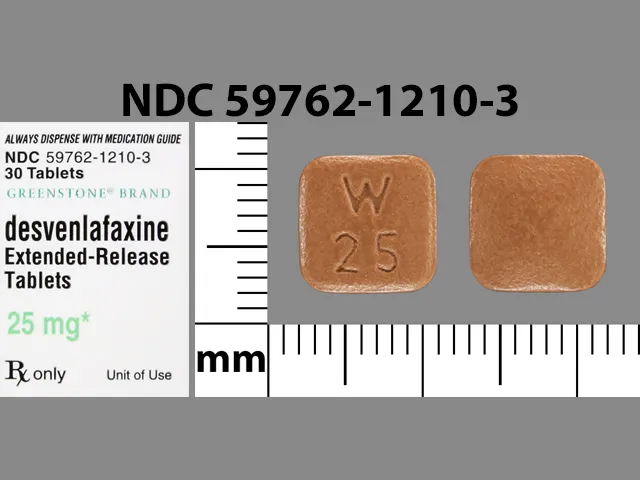
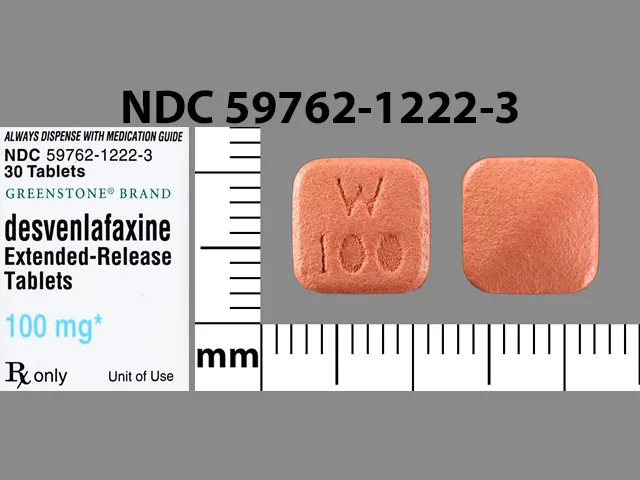
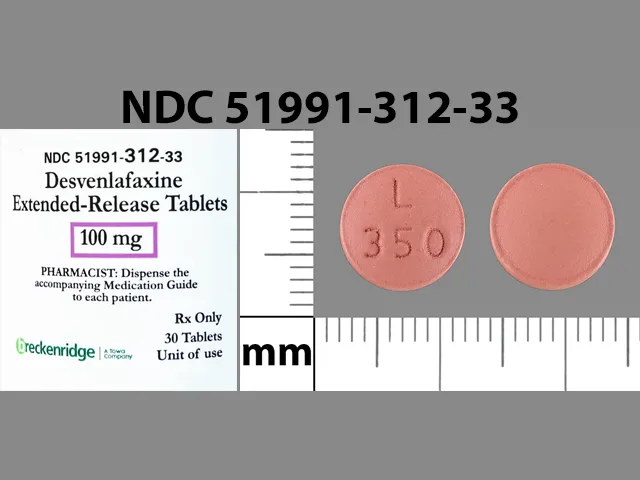
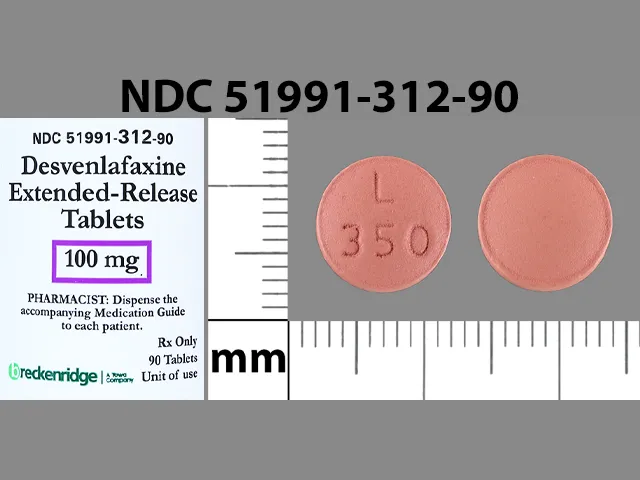
- 25 mg, 50 mg, and 100 mg extended-release oral tablets
How should I store desvenlafaxine?
Desvenlafaxine should be stored at room temperature, between 68 F and 77 F (20 C and 25 C). It can be exposed to temperatures between 59 F and 86 F (15 C and 30 C), for shorter periods of time, such as when transporting it. Store in a cool, dry place.
Side Effects
What are the most common side effects of desvenlafaxine?
The most common side effects of desvenlafaxine are listed below. Tell your health care provider if you have any of these side effects that bother you.
- Nausea
- Trouble sleeping
- Constipation
- Feeling less hungry
- Sexual problems
- Dizziness
- Sweating
- Sleepiness
- Anxiety
There may be other side effects of desvenlafaxine that are not listed here. Contact your health care provider if you think you are having a side effect of a medicine. In the U.S., you can report side effects to the FDA atwww.fda.gov/medwatch or by calling 800-FDA-1088 (800-332-1088). In Canada, you can report side effects to Health Canada at www.health.gc.ca/medeffect or by calling 866-234-2345.
What are the serious side effects of desvenlafaxine?
While less common, the most serious side effects of desvenlafaxine are described below, along with what to do if they happen.
Severe Allergic Reactions. Desvenlafaxine may cause allergic reactions, which can be serious. Stop taking desvenlafaxine and get help right away if you have any of the following symptoms of a serious allergic reaction.
- Breathing problems or wheezing
- Racing heart
- Fever or general ill feeling
- Swollen lymph nodes
- Swelling of the face, lips, mouth, tongue, or throat
- Trouble swallowing or throat tightness
- Itching or skin rash
- Bumps on the skin called hives that can be red, pink, white, or brown depending on your skin tone
- Nausea or vomiting
- Dizziness, feeling lightheaded, or fainting
- Stomach cramps
- Joint pain
Suicidal Thoughts or Actions. Desvenlafaxine or other antidepressants may increase the risk of suicidal thoughts or actions in a small number of children, teenagers, or young adults in the first few months of taking the medicine or when the dose is changed. Depression or other serious mental health conditions are the most important causes of suicidal thoughts or actions. If you or your child is about to harm themselves, call 911 or call or text 988, the Suicide & Crisis Lifeline. Call your health care provider right away if you have any of the following symptoms.
- New or increased thoughts of suicide or death
- Suicide attempt
- New or increased feelings of anxiety, depression, or other unusual changes in your mood or behavior
Serotonin Syndrome. Serotonin syndrome is when there is too much of a substance called serotonin in your body. Desvenlafaxine can cause serotonin syndrome when it is taken alone or with other medicines that affect serotonin. This condition can be life-threatening. Get emergency help if you have any of the following symptoms of serotonin syndrome.
- Sweating, fever, or flushing
- Confusion
- Feeling agitated or restless
- Seeing or hearing unusual things
- Dizziness
- Fast or racing heartbeat
- Nausea, vomiting, or diarrhea
- Muscle twitching, stiffness, or tremor
- Seizures
Increased Blood Pressure (Hypertension). Desvenlafaxine may increase your blood pressure or make it worse if you have a history of high blood pressure. Call your health care provider if your blood pressure increases while taking this medicine.
If you measure your blood pressure and the top number (systolic) is 180 mm Hg or higher or the bottom number (diastolic) is 120 mm Hg or higher, get medical attention right away. Increases in blood pressure may not be noticeable but look out for any of the following symptoms of severely high blood pressure.
- Sudden severe headache
- Chest pain
- Dizziness or confusion
- Trouble breathing
- Nausea/vomiting
- Blurry or other changes to vision
- Anxiety
- Buzzing in the ears
- Nosebleed
- Feeling of skipped heartbeats
Abnormal Bleeding. People taking desvenlafaxine or other antidepressants may have an increased risk of bleeding or bruising. You may be at higher risk if you are also taking aspirin, a nonsteroidal anti-inflammatory drug (NSAID), like ibuprofen or naproxen, or a blood thinner such as warfarin (Coumadin, Jantoven), apixaban (Eliquis), or rivaroxaban (Xarelto). Tell your health care provider if you notice any changes in how easily you bruise or bleed.
Glaucoma. Desvenlafaxine may increase pressure inside the eye and cause or worsen narrow-angle glaucoma, which can lead to blindness. Tell your health care provider right away if you have any of the following symptoms of glaucoma.
- Loss of vision
- Eye pain or redness
- Severe headache or vomiting
- Seeing bright, colorful circles around lights (vision halos)
Extremely Elevated Mood (Mania). People with bipolar disorder can have severe high and low moods. The first symptom of bipolar disorder may be depression. People with bipolar disorder who take an antidepressant, such as desvenlafaxine, may have a higher risk of having mania or a manic episode. Call your health care provider right away if you have any of the following symptoms of a manic episode.
- Dramatic increase in energy
- Significant trouble sleeping
- Your thoughts are racing and fast-paced
- Engaging in reckless behavior
- Having unusually grand ideas
- Feeling excessively happy or irritable
- Talking more or faster than usual
Seizures. Some people who have taken desvenlafaxine have reported having seizures. There are many different types of seizures and some of them are not easy to recognize. Stop taking desvenlafaxine and call your health care provider if you experience any of the following signs that a seizure is happening or could happen.
- Muscle twitching, jerking, spasms, tremors, or other uncontrolled movements
- Stiffening of your arms and legs
- Feeling anxious, nervous, confused, or a sense of dread
- Feeling dizzy or lightheaded
- Falling or losing consciousness
Low Sodium Level (Hyponatremia). Desvenlafaxine may cause low sodium levels. Call your health care provider if you have any of the following symptoms of a low sodium level.
- Headache
- Drowsiness
- Muscle weakness or cramps
- Nausea, vomiting, or loss of appetite
- Tiredness or sleepiness
- Dizziness
- Weight gain
- Restlessness or irritability
- Change in your mental condition such as hallucinations, confusion, decreased awareness, or alertness
- Seizures
Lung Problems. Desvenlafaxine can cause inflammation in your lungs, also called interstitial lung disease. Tell your health care provider if you have trouble breathing. You may also have a cough and/or fever.
Sexual Problems. Taking desvenlafaxine or another serotonin and norepinephrine reuptake inhibitor (SNRI) may cause sexual problems. Tell your health care provider if you have any of the following sexual problems.
- Decreased sex drive
- Delayed ejaculation or unable to have an ejaculation
- Problems getting or keeping an erection
- Delayed orgasm or unable to have an orgasm
Warnings & Precautions
Who should not use desvenlafaxine?
Allergies to Ingredients. People who are allergic to any of the following should not use/take desvenlafaxine.
- Desvenlafaxine
- Effexor
- Khedezla
- Pristiq
- Venlafaxine
- Any of the ingredients in the specific product dispensed
Your pharmacist can tell you all of the ingredients in the specific desvenlafaxine products they stock.
Drug Interactions. Desvenlafaxine should not be taken while you are using certain other medicines. Before taking desvenlafaxine, tell your health care provider about any prescription or over-the-counter (OTC) medicines, vitamins/minerals, herbal products, and other supplements you are using. See the Interactions section for more details.
What should I know about desvenlafaxine before taking it?
Do not take desvenlafaxine unless it has been prescribed to you by a health care provider. Take it as prescribed.
Do not share desvenlafaxine with other people, even if they have the same condition as you. It may harm them.
Keep desvenlafaxine out of the reach of children.
Do not divide, chew, crush, or dissolve desvenlafaxine tablets.
Desvenlafaxine can make you feel tired or affect your thinking and reaction time. Do not drive or do other activities that require alertness and coordination until you know how desvenlafaxine affects you.
People who are 65 and older can be at greater risk for some side effects from desvenlafaxine. Talk to your health care provider about your risks if you are in this age group.
Do not stop taking desvenlafaxine without talking to your health care provider. Stopping too quickly may cause serious side effects. Call your health care provider right away if you have any of the following symptoms.
- Anxiety, irritability, or high or low mood
- Feeling restless
- Changes in sleep habits
- Headache
- Sweating or shaking
- Nausea
- Dizziness
- Electric shock-like feelings
- Confusion
What should I tell my health care provider before using desvenlafaxine?
Tell your health care provider about all of your health conditions and any prescription or over-the-counter (OTC) medicines, vitamins/minerals, herbal products, and other supplements you are using. This will help them know if desvenlafaxine is right for you.
In particular, make sure that you discuss any of the following.
Current and Past Health Conditions. Tell your health care provider if you have or have had any of the following.
- Liver problems
- Kidney problems
- Heart problems
- Blood vessel problems, including clotting or bleeding problems
- History of a stroke
- Bipolar disorder or mania
- Seizures
- Low sodium levels in the blood
- High blood pressure
- High cholesterol
- Suicidal thoughts or actions
Pregnancy. Taking desvenlafaxine later in pregnancy may lead to an increased risk of certain problems in a fetus. Tell your health care provider if you are or plan to become pregnant. Your health care provider will let you know if you should take desvenlafaxine while you are pregnant or trying to become pregnant. If you become pregnant while taking desvenlafaxine, you can register for the National Pregnancy Registry for Antidepressants by calling 866-961-2388 or at www.womensmentalhealth.org/research/pregnancyregistry/antidepressants. This registry collects safety information about the use of antidepressant medicines during pregnancy.
Breastfeeding. Desvenlafaxine passes into breast milk. Tell your health care provider if you are breastfeeding or plan to breastfeed. Your health care provider will let you know if you should take desvenlafaxine while breastfeeding.
Interactions
Does desvenlafaxine interact with foods or drinks?
There are no known interactions between desvenlafaxine and foods or drinks.
Avoid drinking alcohol while taking desvenlafaxine. The combination can increase sleepiness or affect your alertness or concentration.
Does desvenlafaxine interact with other medicines (drug interactions)?
Always tell your health care provider about any prescription or over-the-counter (OTC) medicines, vitamins/minerals, herbal products, and other supplements you are using.
In particular, make sure that you discuss if you are using any of the following before taking desvenlafaxine.
- A monoamine oxidase inhibitor (MAOI) within the past 2 weeks, which is a medicine usually used for depression or Parkinson’s disease
- A selective serotonin reuptake inhibitor (SSRI) or serotonin and norepinephrine reuptake inhibitor (SNRI), which is a medicine commonly used for anxiety and depression
- A tricyclic antidepressant, such as amitriptyline, nortriptyline, or protriptyline, even if it is not used for depression
- A type of medicine called a triptan, such as eletriptan (Relpax), sumatriptan (Imitrex and others), and others, which is commonly used to treat migraines
- St. John’s wort, which is a supplement that may be used for depression
- Lithium, which is a medicine for certain mental health conditions
- Buspirone, which is a medicine for anxiety
- An antipsychotic, which is a medicine for certain mental health conditions
- An amphetamine, such as Adderall, which is used to treat attention deficit hyperactivity disorder (ADHD) and narcolepsy
- An opioid pain medicine, such as tramadol or fentanyl
- Any other medicine that causes dizziness and sleepiness, such as prescription pain medicines, sleep medicines, and medicines for anxiety
- A medicine that can affect bleeding, such as aspirin, a nonsteroidal anti-inflammatory drug (NSAID), or warfarin
Some other medicines may alter the blood levels of desvenlafaxine, and vice versa. Desvenlafaxine interacts with many other medicines. Always tell your health care provider about any prescription or over-the-counter (OTC) medicines, vitamins/minerals, herbal products, and other supplements you are using.
This may not be a complete list of medicines that can interact with desvenlafaxine. Always check with your health care provider.
Overdose/Missed Dose
What should I do if I accidentally use too much desvenlafaxine?
If you or someone else has used too much desvenlafaxine, get medical help right away, call 911, or contact a Poison Control center at 800-222-1222.
What should I do if I miss a dose of desvenlafaxine?
If you miss a dose, take it as soon as you remember. If it is almost time for your next dose, skip the missed dose and only take the next dose. Do not take double or extra doses.
Images
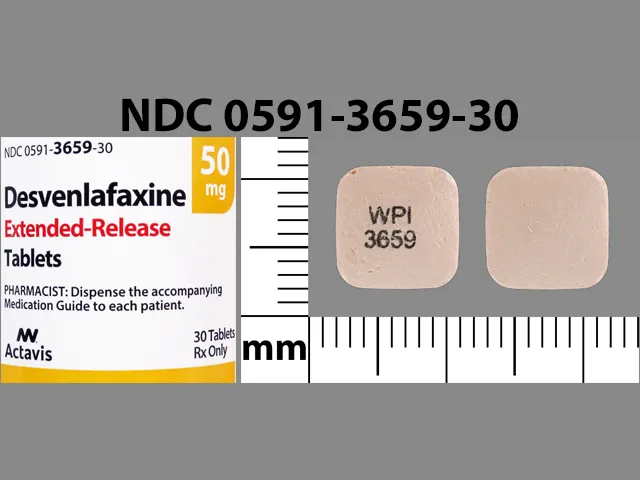
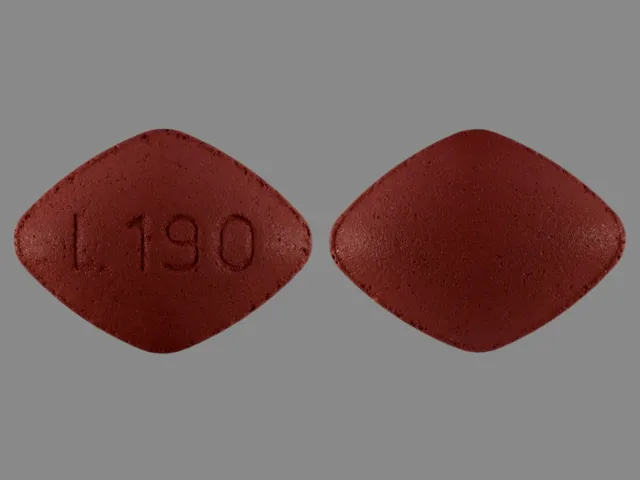
Desvenlafaxine Succinate
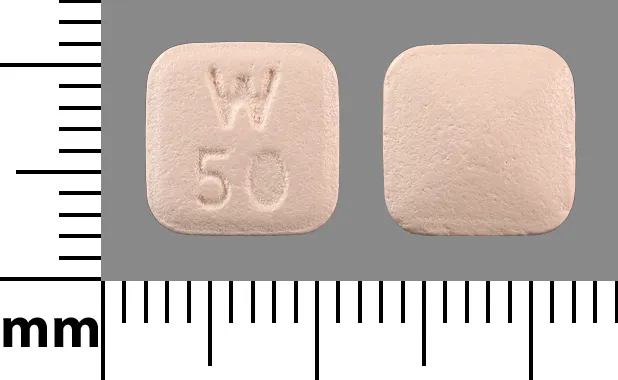
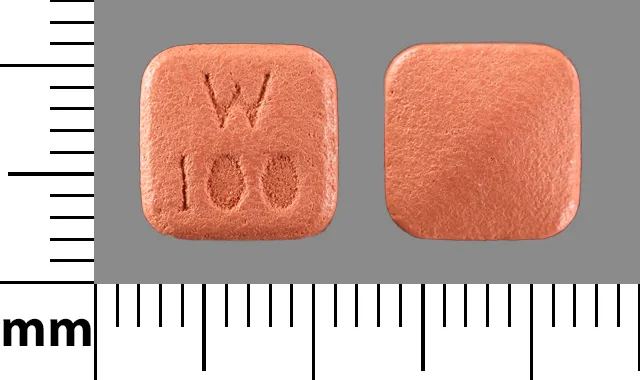
Add WebMD as a Preferred Source to see more of our trusted content across Google Search, AI Overviews, and AI Mode
You Might Also Like
Are you currently using Desvenlafaxine (Pristiq)?
This survey is being conducted by the WebMD marketing sciences department.