
PBC is a rare autoimmune disease in which the body attacks and progressively destroys the ducts in the liver that carry the digestive fluid bile. This fluid begins to build up and damage your liver.
In 1997, the FDA approved the first treatment for this condition, ursodeoxycholic acid (UDCA), commonly known as ursodiol. Seladelpar (Livdelzi) and elafibranor (Iqirvo) are the newest PBC drugs to be granted FDA approval.
There's no cure for PBC, but treatments like these can help to slow liver damage and reduce symptoms like itchy skin, tiredness, and pain.
What Are the Treatments for PBC?
These medicines help reduce scarring and improve symptoms and liver function. Some PBC treatments bring down inflammation in the liver. The goal of treatments is to slow the disease as much as possible and relieve symptoms. These are the approved medicines for PBC:
Researchers are studying more new treatment options in clinical trials, including bezafibrate and fenofibrate, which are in the same class of drugs as Iqirvo. They help to reduce inflammation in the body and have shown promise for improving PBC in people who haven't responded to ursodiol.
Understanding how each of these medicines work, how you take them, and what side effects they might cause can help you have a more informed discussion with your doctor.
What Is Ursodiol?
Ursodiol (Actigall, Urso), is a bile acid. Bile is a digestive fluid that your liver makes. Bile acids help your body break down fat and certain vitamins from foods so that your intestines can absorb them more easily. Your liver makes bile acids from cholesterol.
Doctors have been prescribing ursodiol to treat liver disease for more than 100 years. It's been approved to treat PBC since 1997.
When you have PBC, bile gets stuck inside your bile ducts and damages your liver. Ursodiol treats this condition by:
- Clearing bile from your liver
- Protecting your liver cells from damage
- Reducing inflammation in your liver
- Calming your immune system to prevent it from damaging your liver
Ursodiol comes as a tablet that you take once or twice a day.
How effective is ursodiol?
Studies show that this medicine can slow disease progression and delay cirrhosis, especially if you start taking it in the early stages of PBC. Ursodiol also helps some people avoid the need for a liver transplant. Many people who take this medicine have improved liver function tests and are less likely to need a liver transplant.
What are the side effects of ursodiol?
Studies have found that side effects of ursodiol are relatively rare. But the drug may cause side effects like these:
- Weight gain
- Hair loss
- Diarrhea
- Nausea
- Vomiting
Is ursodiol safe?
Long-term research has shown that this medication is well tolerated with few long-term complications, even after 12 years of use.
Who should not take ursodiol?
Your doctor may advise you not to take ursodiol if you:
- Are allergic to bile salts
- Have a bile duct blockage
What Is Elafibranor?
This medicine, sold under the brand name Iqirvo, is part of a class of drugs called PPAR agonists. It treats PBC by reducing the amount of bile in your body. It comes as a once-daily pill.
How effective is elafibranor?
In clinical trials, more than half of those taking part who took 80 milligrams of Iqirvo daily had a biochemical response, compared to just 4% of those taking a placebo, or inactive treatment.
What are the side effects of elafibranor?
The most common side effects people have had from taking Iqirvo are:
- Weight gain or loss
- Diarrhea
- Belly pain
- Nausea and vomiting
- Joint pain
- Constipation
- Fractures
- Gastroesophageal reflux disease (GERD)
- Dry mouth
- Rash
Is elafibranor safe?
Besides minor side effects, all medications have some risk of more serious complications. Some of these may mean that certain people should not take a specific drug.
This medicine isn't recommended for people with very severe cirrhosis and liver damage.
Elafibranor can raise your likelihood of having a bone fracture. Talk to your doctor about ways to protect your bones while you take this medicine.
Who should not take elafibranor?
You should not take elafibranor if you have advanced cirrhosis or a complete obstruction of your bile ducts.
What Is Seladelpar?
Seladelpar (Livdelzi) is a newer treatment for PBC and is also a PPAR agonist. This type of drug activates a type of protein called a peroxisome proliferator activated receptor. When active, these proteins regulate how certain genes work. With PBC, they ease inflammation and block the formation of bile acids.
Livdelzi is a once-daily capsule that you take along with ursodiol if ursodiol alone didn't help you enough.
How effective is seladelpar?
In a clinical trial, 61.7% of those who took seladelpar had a clinical response, compared to 20% of those who did not. About 25% reached normal alkaline phosphatase levels, while none of the participants who did not take seladelpar had this result. About 94% of those taking part in the study received ursodiol as standard treatment.
What are the side effects of seladelpar?
In studies, people who took Livdelzi for one year saw improvements in their liver function tests. After six months on this drug, itching improved. The most common side effects with this drug are:
- Headaches
- Belly pain
- Nausea
- Bloating
- Dizziness
Is seladelpar safe?
Research has shown that people who took Livdelzi for up to three years reported no new serious symptoms and had no increase in side effects.
Who should not take seladelpar?
Your doctor may advise you not to take seladelpar if you:
- Are allergic to seladelpar
- Have advanced liver disease, including cirrhosis
What Is Obeticholic Acid (OCA)?
Obeticholic acid (OCA) is another bile salt. It’s in a drug class called farnesoid X receptor (FXR) agonists. Ocaliva was originally approved by the FDA on an accelerated basis for adults with PBC who couldn't take ursodiol or didn't get help from it. People were allowed to take it while researchers continued to study it. During that time, it was found that some people who had PBC and advanced cirrhosis developed liver failure, and that some who had PBC but didn't have cirrhosis had serious liver damage that required treatment with a liver transplant.
In September 2025, the manufacturer of Ocaliva withdrew the medication from the market and stopped all clinical trials in response to a request by the FDA.
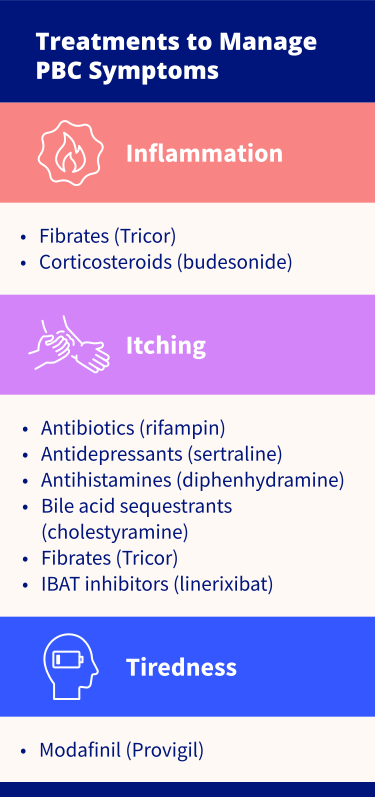
Medications to Treat Your Symptoms
In addition to medications that help to improve liver function and slow the progression of PBC, your doctor may prescribe other drugs that help to ease some of the symptoms that come along with this condition:
How Much Do PBC Medications Cost?
The price of a medication for PBC will depend on several things, including:
- Which drug you take
- The dosage
- Insurance coverage
- Your pharmacy
- Your access to patient assistance programs (PAPs)
Without insurance coverage, rebates, or coupons, a 30-day supply of ursodiol generally costs under $100. Elafibranor and seladelpar can cost tens of thousands of dollars per 30-day cycle.
Many drug companies that make these medications offer PAPs to help reduce out-of-pocket costs. They may give you the medication at a reduced cost or, sometimes, for free. You may need to meet certain income standards to qualify.
You may also be able to get a copay card to reduce the out-of-pocket price. Some drug companies will also help answer questions you have about your insurance coverage or other ways to get financial help.
You can find information about financial assistance for PBC medications at these sources:
Clinical Trials of PBC Treatments
Researchers continue to do clinical trials to study how safe PBC medications are and how well they work.
You can visit clinicaltrials.gov to find clinical trials across the country. For each trial listed, you’ll find information on:
- The research goal
- How the trial is set up
- Whether it’s still recruiting
- Where it's located
- What conditions you must meet to qualify
If you're interested in taking part in a clinical trial, ask your doctor to suggest one that might be a good fit for you.
When deciding on a PBC medicine, talk to your doctor about your treatment goals and the benefits and risks of each drug. Here are five important things to ask about.
Show Sources
SOURCES:
Brain, Behavior, & Immunity – Health: "From Dried Bear Bile to Molecular Investigation of Differential Effects of Bile Acids in Ex Vivo and In Vitro Models of Myocardial Dysfunction: Relevance for Neuroinflammation."
Cleveland Clinic: "Primary Biliary Cholangitis (PBC)," "Ursodiol Capsules or Tablets."
Clinics in Liver Disease: "Treatment of Primary Biliary Cholangitis: First-Line and Second-Line Therapies."
FDA: "Drug Trials Snapshots: LIVDELZI," "Highlights of Prescribing Information: Iqirvo," "Highlights of Prescribing Information: Livdelzi," "Highlights of Prescribing Information: Ocaliva," “Serious liver injury being observed in patients without cirrhosis taking Ocaliva (obeticholic acid) to treat primary biliary cholangitis.”
Gastroenterology & Hepatology: "Diagnosis, Treatment, and Monitoring of Patients with Primary Biliary Cholangitis."
Hepatology: "Primary Biliary Cholangitis: 2018 Practice Guidance from the American Association for the Study of Liver Diseases."
JHEP Reports: "Loss of Biochemical Response at any Time Worsens Outcome in UDCA-Treated Patients with Primary Biliary Cholangitis."
Mayo Clinic: "Primary Biliary Cholangitis."
National Health Service (U.K.): "Symptoms."
PubChem: "Ursodiol."
StatPearls: "Obeticholic Acid," "Ursodeoxycholic Acid."
The Childhood Liver Disease Research Network: "Bile Acid Synthesis and Metabolism Defects."
Turkish Journal of Gastroenterology: "Management of Primary Biliary Cholangitis: Current Treatment and Future Perspectives."
Journal of Translational Autoimmunity: “PPAR agonists for the treatment of primary biliary cholangitis: Old and new tales.”
Gastro Hep Advances: “Farnesoid X Receptor Agonists: A Promising Therapeutic Strategy for Gastrointestinal Diseases.”
The New England Journal of Medicine: “Efficacy and Safety of Elafibranor in Primary Biliary Cholangitis,” "A Phase 3 Trial of Seladelpar in Primary Biliary Cholangitis."
National Library of Medicine: “LiverTox: Clinical and Research Information on Drug-Induced Liver Injury [Internet].”
MedlinePlus: “Elafibranor,” "Seladelpar," "Ursodiol."
Gilead Sciences: “Gilead’s Livdelzi (Seladelpar) Demonstrated a Sustained Efficacy and Long-Term Safety Profile in Management of Primary Biliary Cholangitis.”
Journal of Hepatology: “Effects of ursodeoxycholic acid after 4 to 12 years of therapy in early and late stages of primary biliary cirrhosis.”
Intercept Pharmaceuticals: “Intercept Announces Voluntary Withdrawal of OCALIVA® for Primary Biliary Cholangitis (PBC) from the US Market; US Clinical Trials Involving Obeticholic Acid Placed on Clinical Hold.”
GSK: “Lynavoy (linerixibat) approved by the US FDA for cholestatic pruritus in patients with primary biliary cholangitis (PBC).”