Chlorophyll is the natural compound present in green plants that gives them their color. It helps plants absorb energy from the sun as they undergo the process of photosynthesis. This nutrient is present in green vegetables and other plant-based foods, such as algae. The greener the vegetable is, the higher its chlorophyll content.
Chlorophyllin, which comes from chlorophyll, is semi-synthetic and water-soluble. It is commonly used as an additive to medicines or food colorings. It is also used to treat wounds.
Health Benefits
The benefits of chlorophyll on the human body is still being researched. However, research has already found that this compound does indeed provide certain health benefits. Talk to your health care provider if you want to try a supplement.
Cancer prevention
Animal studies show that chlorophyll can reduce the occurrence of cancerous tumors. It was found that chlorophyll can bind to cancer-causing (carcinogenic) chemicals called aflatoxins, which may help block their absorption in the intestines. Further studies in humans are needed to support these findings.
Chlorophyll also helps prevent gene damage caused by harmful aflatoxins. Scientists are studying the effects of chlorophyll intake when it comes to liver, skin, stomach, and colon cancers. It's important to note that this research is on chlorophyllin and not natural chlorophyll. This allows the dosage to be monitored more accurately.
Early studies on humans show that taking 100-milligram doses of chlorophyllin three times a day for four months decreased aflatoxin damage to DNA by up to 55%. Other studies show that there is a link between eating vegetables and cancer protection. The more green vegetables you eat daily, the greater their potential cancer-preventive effect.
Antioxidant effects
Chlorophyll has antioxidant properties, even though they're not as strong as those found in other nutrients like vitamins C and E. Some studies show that regular intake of leafy, green vegetables helps boost antioxidants in the bloodstream.
Limited studies show that chlorophyll may also reduce oxidative damage done by harmful carcinogens. So far, these studies have only been tested on animals.
Health Risks
Natural chlorophyll has no known side effects and so far has only been shown to have benefits for humans. However, chlorophyllin as a supplement may have some possible side effects that you should consider, such as:
- Occasional diarrhea
- Discoloration of the urine or feces
- Discoloration of the tongue
- Mild burning or itching when applied directly to a wound
It's also important to note that the safety of taking chlorophyllin has not yet been studied in those who are pregnant or breastfeeding. If you're pregnant, don't take a chlorophyllin supplement.
Amounts and Dosage
Chlorophyll is abundant in plant-based foods, with the highest concentration in green vegetables. It's recommended to eat at least four servings of green vegetables a day, but there's no recommended amount of chlorophyll to ingest per day.
Supplements
Green algae such as chlorella and spirulina are often sold as chlorophyll supplements. Since natural chlorophyll is costlier, over-the-counter supplements labeled as having chlorophyll are usually chlorophyllin products.
What Are Some Chlorophyll-Rich Foods?
Looking to get more chlorophyll in your diet? Add the following foods to your plate.
Spinach and leafy greens
Spinach has a high chlorophyll concentration, with around 24 milligrams per one-cup serving. This vegetable is easy to prepare, as you can eat it raw or cooked in different ways. Other leafy greens have between 4 and 15 milligrams of chlorophyll per raw serving. These include:
- Bok choy
- Lettuce
- Beet greens
- Green cabbage
- Collard greens
- Swiss chard
- Algae
- Turnip greens
- Parsley
- Kale
- Mustard greens
Other vegetables
Other green vegetables are also good sources of chlorophyll and may contain up to 15 milligrams per serving. These include:
- Broccoli
- Cucumbers
- Green beans
- Asparagus
- Leeks
- Brussels sprouts
- Peas
Fruits, nuts, and seeds
Small amounts of chlorophyll are present in green fruits such as kiwi and green grapes. Green nuts and seeds, like pistachios, also contain low levels of chlorophyll.
Chlorophyll FAQs
Can cooking or heating vegetables destroy the chlorophyll content?
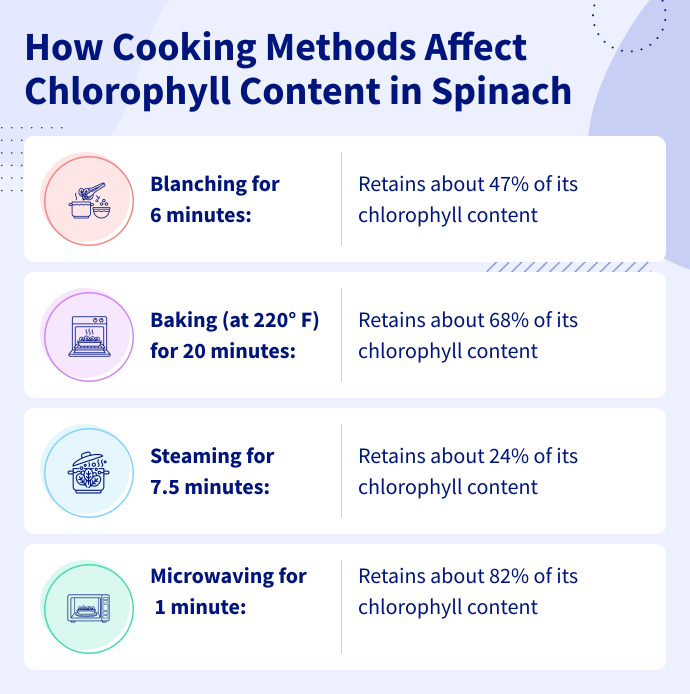
Certain cooking methods, such as stir-frying or boiling, can lower the level of chlorophyll in some vegetables.
Is liquid chlorophyll more effective than taking chlorophyll capsules or pills?
There isn't a huge difference in effectiveness between liquid chlorophyll and chlorophyll capsules or pills. Usually, it's cheapest and easiest to get chlorophyll from the vegetables you eat.
Can chlorophyll interact with prescription medications or medical tests?
If you take any prescription meds that make you more sensitive to sunlight, chlorophyll may worsen these symptoms. Always talk with your doctor before starting a new supplement.