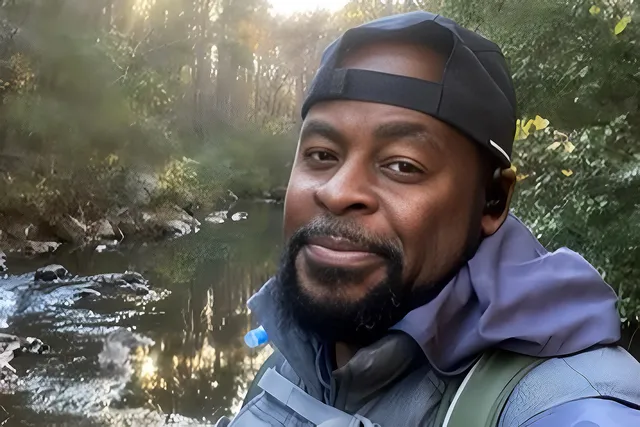
By Todd Shumpert, as told to Stephanie Booth
After the shock of being diagnosed with type 2 diabetes, Todd Shumpert, a pastor in New Jersey, learned that he also had a severe, life-threatening blockage in one of his arteries. Now, he's eager to share what helped him cope with both these health events in the hopes that it will also help others.
A Surprise Diagnosis
I found out that I had type 2 diabetes in 2016. Oddly enough, I knew very little about it. I knew that it had a strong genetic component and that my mother and grandmother had it. But I didn't know what it meant for me.
My A1c numbers were 11-12 – crazy off the charts. To turn the ship around felt like a very tall order. I didn't see myself as a person who could make drastic lifestyle changes. Especially because the more I learned, the more I understood that type 2 diabetes is a cumulative disease. The effects keep growing and affecting various systems of your body.
At first, my diabetes diagnosis felt depressing. Crushing. Very sad. It felt bleak. I gave up at the beginning. It was like, "I'm so upset about this. Let's go discuss it with some cake."
But because of the genetic component to diabetes, I started looking at my eldest daughter, who was 4 years old at the time, and thinking, "Diabetes could be in her future too." I wanted to start showing her that you can be aware and take small steps to help yourself.
Small Steps Toward Change
Little steps were helpful. One big thing was portion control – eating what I always eat, but eating less, which was easier to do than I imagined. Another thing that was helpful was changing doctors. My regular doctor at the time also had diabetes. I thought, "This is great! He'll have inside information." Instead, his attitude was tragic and defeatist – basically, "Well, that's diabetes for you."
Last fall, I changed to a primary care doctor who had a more forward outlook. That turned out to be hugely beneficial for my heart.
Life-Threatening News
Based on my diabetes diagnosis, my new doctor suggested a cardiac calcium scan (a CT scan that looks for calcium in the arteries and can check your risk of heart attack and stroke).
I'd been fortunate enough to receive medications early on to help with my diabetes. My A1c had dropped to the low to mid-6s with a 5 now and then, so it was like, "We made it!" But after the scan, there was more breaking news: It found significant plaque buildup, which put me at severe risk of a heart attack.
I had more tests, including a catheterization, which showed a critical blockage in my left anterior descending (LAD) artery. It's called the "widow-maker" because it can be fatal if not treated right away. I was 55 at the time and felt perfectly healthy, but I had a silent ticking time bomb inside me.
I dissociated at this news, especially when my cardiologist explained that I needed open-heart surgery, where they would open my chest and stop my heart. I told my doctor that I couldn't see myself going through that.
Fortunately, he knew of a surgeon, Dr. Anderson, at Hackensack University Medical Center (HUMC), who does robotic cardiac surgery. (Using tiny cuts on the side of the chest, the surgeon performs the procedure using robotic tools.) I ended up having a much less invasive procedure with a quicker, easier recovery. I only missed one Sunday service.
Dealing With the Emotional Toll of T2D and CVD
I'm a trained minister, but as I was going through this, I never wanted my congregation to feel like they had to offer pastoral counseling to me.
I shared with them that my prognosis was good. And I wanted them to know that a $99 cardiac scan, as I had, is an inexpensive and easy test that could change your life.
You hear stories all the time about actors in decent shape who have a stroke or drop dead. Part of it is that you have no real symptoms. I thought, "Let's get the word out." I even put in the back of our church bulletin: "Have you gotten your cardiac calcium scan?" I wanted everyone to know.
Advice for Others
A couple of things really helped my mental health.
Community
Community is at the top of my list. In situations like this that seem overwhelming, community is vital. You need people you can openly and deeply share with and who will hold you accountable to your standards, not theirs.
Make sure your community is intact and works. That's a huge key. My congregation is small and elderly. Many have walked this path before me or cared for a spouse in the same situation. Being able to hear from people who've managed a similar health issue and are now in their 80s or 90s was encouraging. Also, being there for others is a huge deal.
Where you find community isn't the tricky part, but the quality is. Community in this day and age can be found anywhere. You can reach out to it from your basement. We're all so connected. The key is that it has to be a community that's reciprocal, where you can take care of each other. You're not judged or shamed. Instead, people hold your hand through whatever you're dealing with.
And there's gentle accountability. For instance, "What you said you wanted was this – is that still the case or no?"
Humor
When I talk to people who know me, one thing that will come into the conversation quickly is my constant stream of dad jokes. Whether I'm picking up my kids at school or in the hospital recovering from surgery, I've got them, and they're groan-worthy.
"Silly" is from an old German word that means "happy." It's a healthy gift to be silly with people. Laughter is great medicine.
It's an ancient truth that light shines in the darkness. We're all gonna know darkness. It will find us. But it takes very little light to change everything.
A doctor who's the right fit
It was my wife's suggestion to switch from my original primary care doctor. I'd come home from a checkup and say, "Well, that was a ball of sunshine." She said, "You really have to switch doctors." And so I did.
I got a very good recommendation from a source I trusted. And I instantly clicked with my current doctor. He's the first one I've had who's younger than me, so that was interesting. But he made me comfortable right away. I like his attitude and spirit, and therefore, I listened, and I still listen, to him. The cardiac scan he wanted me to have saved my life.
Sharing your story with others
I talk to members of my congregation. And when HUMC asked if I would share my story with others, I said, "I'm on board!"
I want as many people as possible to know what I've gleaned from this experience. That helps me, and maybe it can help others, too.
Show Sources
Photo Credit: Westend61/Getty Images
SOURCES:
Todd Shumpert, Bloomfield, New Jersey.
Hackensack University Medical Center: "Robotic Heart Surgery in New Jersey."
Merriam-Webster.com: "Silly."