Depression doesn’t only affect your mood; it can also change how you move through your day. If you can kick off your morning with a few mood-boosting habits, you’ll set yourself up for the best start possible.
Why Depression Disrupts Morning Routines
Common depression symptoms include fatigue, trouble concentrating, and changes in sleep. It can interfere with your energy and motivation. When these factors aren’t working well, it’s hard to get going in the morning.
Depression also messes with your executive function, which is the mental skill you need to plan, prioritize, and start tasks. Without your executive function online, even small decisions, like what to eat or when to shower, can feel paralyzing.
Without structure, it’s easy to fall into patterns that can worsen depression. Having a routine in place for your day reduces the need to constantly make decisions. You can go on autopilot, knowing that the moves you’re making will help instead of creating unhealthy cycles that worsen your symptoms.
The Benefits of a Morning Routine
Science shows that having structured daily habits can support better mental health. When you have a routine in place, it promotes:
- A sense of control
- Lower stress
- Improved sleep patterns
- Better energy levels
All of these work together to improve your overall well-being. A step-by-step structure can get you going without tiring your brain. Take some time during the day when you have energy to think through which specific habits you can build into your daily wake-up routine, and then stick to them.
Build Your Routine With Small Steps
There’s no need to make a rigid plan and follow it strictly. Instead, you can think of your morning routine as having categories:
- Wake up at a consistent time.
- Avoid looking at screens.
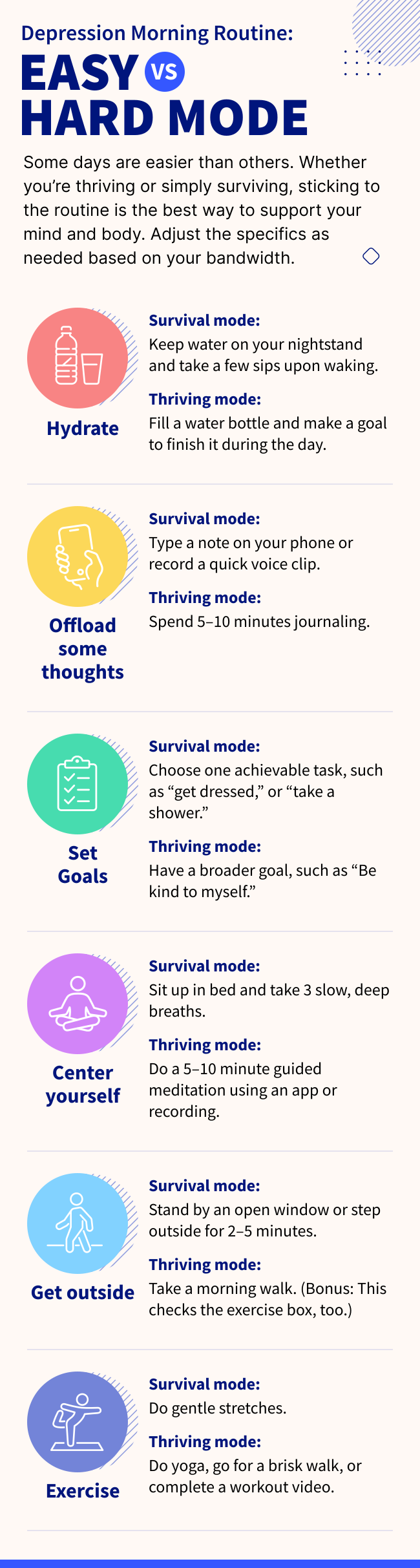
- Hydrate and fuel your body.
- Move or stretch.
- Get natural light.
- Tend to your mind.
Here’s more about each category and ways you can kick off your day more gently:
Wake up at a consistent time
Around 75% of people with depression have trouble going to sleep and staying asleep. But the one thing you can control is when you wake up. Your sleep-wake cycle, also called your circadian rhythm, has a big impact on mood.
An irregular sleep-wake cycle worsens sleep problems. You should talk to your doctor to be sure there aren’t underlying issues keeping you from falling asleep and staying asleep, but if you can set a wake time and stick to it, your body will adjust to the routine.
Avoid looking at screens
If your current habit is to reach for your phone the moment you wake up, you may be undermining your mental health. When you check emails, scroll social media, or read the news before you’re fully awake, your brain can interpret that rapid stream of information as a stress signal. This can activate your body’s fight-or-flight response, increasing feelings of anxiety and overstimulation right at the start of the day. Over time, this habit can train your brain to expect stress first thing in the morning.
Ultimately, avoiding screens for one full hour in the morning is best, but you can start smaller and build up. After you practice a slower digital start, you may notice your brain feels calmer, more regulated, and more able to focus.
Tips for staying off screens:
- Opt for an alarm clock instead of using your phone as one.
- Plug your phone in outside your bedroom.
- Turn on music when you get up.
- Have a book next to the bed and read a few pages when you wake up.
Hydrate and fuel your body
After a night of sleep, your body needs replenishing. Dehydration can lead to fatigue and difficulty concentrating, which can add to depression symptoms. Recent studies show that skipping breakfast can also increase the risk of depression.
Keep a bottle of water by your bed so it’s there first thing when you wake, and consider adding low-sugar, protein-filled snacks to the mix, especially on the days when getting out of bed feels too difficult.
If water feels boring or unappealing, you can add fruit or electrolytes to add flavor, or you may drink green tea instead. Some people find a goal amount to be motivating. You can use a water bottle with ounce markers on the side to track your progress during the day.
Your body and mood do best with a consistent blood sugar level. Regular high spikes and low lows can keep you in a more depressive state. Protein can help keep your blood sugar steady, so try to make part of your morning foods protein-packed.
Easy options to have on hand include:
- Hard-boiled eggs
- Toast with peanut butter
- Cottage cheese
- Low-fat Greek yogurt
Move or stretch
Movement is one of the most well-supported ways to improve mood. Studies show it can work as well as antidepressants at treating depression (but isn’t meant to be a substitute).
If the thought of exercise sounds scary, know that even short periods of physical activity can help ease symptoms of depression. You can focus on light, gentle movements you enjoy. If you’re up for it some days, you can try getting your heart rate up and blood pumping.
You can:
- Stretch your arms, legs, and back for a few minutes.
- Take a short walk around your home or outside.
- Try a brief yoga or mobility routine.
- Do a few simple exercises, such as squats or shoulder rolls.
Get natural light
While you’re avoiding screens, take the time to let natural light into your system. Studies show that being in natural light improves your mood and can even increase happiness. If going outside isn’t in the cards for you, spend time by a window. Open the curtains and let the sun in.
If you have a little more energy or motivation, go outside. You can simply sit and soak in the light while you meditate or drink your water, or go for a walk (while knocking out two parts of your morning routine at once).
Tend to your mind
Before the rest of the day happens, take some time to check in with yourself. You can do this in several ways:
Journal. Do it in whatever way works for you. Doodle, scribble, or write full sentences — let whatever’s in your mind come out. If you’re stuck, try listing some things you feel grateful for. Practicing gratitude can improve mood.
Meditate. Regular mediation practices actually help your brain deal with stress better. If you’re new to meditation, just aim for five minutes where you sit still, say a mantra, or simply notice your thoughts without judgment.
Set an intention. This can be quick and easy — you can name one task you hope to finish that day, or an overall mindset you’d like to adopt. Saying it out loud or writing it down can help you bring it to the front of your thoughts.
Nonnegotiable: Take Your Medications
If your doctor has prescribed medication to help treat your depression, taking it exactly as you should is one of the most important parts of managing your symptoms. Don’t skip doses, even if you feel like your symptoms are better. When you stop depression medications, symptoms can come back and you can even have withdrawal symptoms.
You can make medication part of your morning routine by pairing it with your water habit. If you prefer taking it another time of day, pair it with a different daily habit, such as brushing your teeth, so you don’t forget.