Severe itching is a hallmark symptom of Alagille syndrome (ALGS). This condition causes bile — a substance your body makes to break down fats — to build up in the liver.
“The itch is related to the changes that the disease causes internally, and there are now amazing medications that decrease itching,” says Joan Tamburro, DO, a pediatric dermatologist at the Cleveland Clinic Children’s in Cleveland, Ohio.
Experts emphasize that medications should be the mainstay of treatment for Alagille syndrome. But home remedies can sometimes provide extra itch relief, though they’re not a replacement for medication.
“Home remedies for skin management are secondary to medications,” says Robert Smith, MD, a pediatric dermatologist at Johns Hopkins Children’s Center in Baltimore, Maryland.
What Is Cholestatic Pruritus?
Cholestatic pruritus is a name for the intense itching triggered by the abnormal flow of bile — called cholestasis — that happens with Alagille syndrome and some other conditions. Pruritus is the medical term for itching.
Cholestasis leads to the buildup of bile components like bilirubin and bile acids in the liver and blood stream, says Shari Sheflin-Findling, DO, the director of pediatric liver disease at Northwell Cohen Children’s Medical Center in Glen Oaks, New York.
The itch can happen anywhere on your child’s body. But it’s most common on the palms of your child’s hands, the soles of their feet, and their upper body.
“Children may scratch so hard that they break the skin, causing sores, bleeding, scars, and the potential for skin infections,” Sheflin-Findling says.
The itch can have other significant impacts on a child’s quality of life. For example, it can make sleep difficult, as the scratching is often worse at night.
Lost sleep, combined with itching, can make a child cranky and upset. They also may not want to eat. The result? They may be less able to focus in school, and their lack of appetite also may affect their growth, Sheflin-Findling says.
Why does Alagille syndrome cause itching?
Experts agree that the itching is a result of bile buildup. But it’s not fully understood how this buildup triggers itching.
“The nitty-gritty as to why increased bile acids specifically cause itch is still being worked out,” Smith says.
One theory is that it’s caused by bile being deposited in the skin as it moves through the bloodstream, he says. Another theory is that the bile activates the nerves involved in itching. We need more research to know for sure.
Home Remedies May Help Relieve Itch
Treatment of Alagille syndrome focuses in large part on improving the flow of bile. This fluid is made by your liver and helps rid your body of waste. It also aids digestion by breaking down fats in the foods you eat and helping your body absorb vitamins A, D, E, and K.
“The idea is that systemic treatment that decreases the buildup of bile will lead people to be less itchy,” Smith says.
But there are a number of things you can do to provide additional itch relief to help your child be more comfortable and sleep better.
While home remedies won’t cure the itch, they can help reduce triggers and provide some relief, says Sophia Jan, MD, the division director of general pediatrics at Northwell Cohen Children’s Medical Center.
Skin Care and Bathing
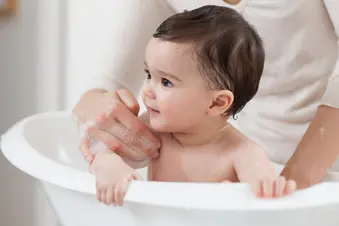
Jan tells parents to use lukewarm water when bathing their child. Why? Hot water activates and exacerbates itch.
But that’s not all it does. Hot water peels away more of your skin’s natural moisturizing factor than cooler water, Smith says. He recommends gentle, fragrance-free bar soaps over liquid soaps. That’s because making liquid soaps requires an ingredient that can irritate the skin.
Also, limit time in the tub. Aim for bathing routines that last no longer than 10 minutes, though five minutes is even better, Smith says.
But avoid using a washcloth or loofah. These can cause friction and irritate the skin. Instead, gently lather soap onto your child using your hands.
Once out of the tub, you’re almost ready to start the next step: moisturizing.
First, gently pat your child with a soft towel. Rubbing can irritate the skin. Also, don’t aim to get your child completely dry. Moisturizers work best on damp skin.
Another important reason to keep the bathwater lukewarm: Hot water evaporates quickly, making it harder to get moisturizer applied while your child’s skin is still damp.
It’s best to moisturize at least twice a day, generously, all over the body. Thick, fragrance-free ointments and creams make the best moisturizers. How can you tell whether a moisturizer will be thick enough?
“I often tell families to pick moisturizers that are in jars as opposed to pump bottles,” Smith says. “If a moisturizer can make its way through a pump bottle, it’s likely too thin.”
Thin moisturizers don’t get trapped under the skin, where they need to be, in order to be most effective.
Smith recommends moisturizers that use petrolatum (petroleum jelly) as a base and also have ceramides. Both are common, but if you’re in doubt, ask your dermatologist for specific recommendations.
Both Smith and Jan say that moisturizers that have menthol and/or pramoxine can offer additional relief, as these ingredients provide a cooling sensation. But some children may find that sensation too intense, which can be upsetting.
“That could make them hesitant to allow creams to be applied,” Tamburro says. “For young children, try applying them to just a small area and see how they respond.”
Keeping Cool
Heat is a major trigger of itching. Scientists don’t fully understand why heat makes the itch worse. It may be because the nerves that register the temperature of our environment are closely related to nerves involved in itching.
Whatever the reason, one thing is clear.
“As parents will tell you, when kids get really hot, they’re itchier,” Tamburro says.
Jan recommends keeping your entire house cool, but especially your child’s bedroom. Cool, humidified air in their bedroom can help.
Make sure your child sleeps in loose-fitting, breathable fabrics, such as cotton pajamas and sheets.
“Avoid wool synthetic fabrics that trap heat,” Jan says.
Managing Itching at Night
In addition to keeping your child’s bedroom cool and using breathable sheets and bed clothes, try the following:
Helping your child to sleep will benefit you as well.
“Parents and caregivers often feel exhausted and helpless while watching their child suffer and remaining awake through the night with them,” Sheflin-Findling says.
Finding Effective Distractions
Your child may get some itch relief if they have something that takes their mind off of it.
“Distraction is often an effective tactic in dermatology,” Smith says. “Having things that actively engage your child could be helpful for their itch.”
Toys and interactive games can be effective distractions. The right ones will depend on your child’s age and interests. Also, consider a dog, cat, or other pet companion that your child can play with.
At-Home Remedies to Avoid
Smith tells parents of his patients not to fall for claims that “all natural” products are better for your child than other products proven to be helpful.
One product he’s seen hyped recently is beef tallow as a moisturizer. It’s natural, and you certainly can use it, but there’s no evidence it works better than other moisturizers, he says.
“But you’re putting something kind of smelly on somebody’s skin, and I don’t know that that helps them all that much,” Smith says.
Jan recommends avoiding essential oils, apple cider vinegar, and tea tree oil.
“They are not proven to work for this type of itch and can cause rashes or allergic reactions, making the problem worse,” she says.
Parents should also avoid products with fragrance. If you can’t tell from the ingredients list, open the jar and sniff it to be sure it’s not perfumed.
When to Reach Out to Your Care Team
If your child’s itch continues to trouble them and affect their sleep — despite their medications and at-home remedies — call their doctor. Good sleep is too important for their development and health. Don’t wait and hope for them to stop scratching.
“I want parents to have a lower threshold to seek help,” says Tamburro. “That itch has got to be stopped.”
Show Sources
Photo Credit: Connect Images/Getty Images
SOURCES:
Sophia Jan, MD, division chief of general pediatrics, Northwell Cohen Children’s Medical Center, Glen Oaks, New York.
Shari Sheflin-Findling, DO, director of pediatric liver disease, Northwell Cohen Children’s Medical Center, Glen Oaks, New York.
Robert Smith, MD, pediatric dermatologist, Johns Hopkins Children’s Center, Baltimore, Maryland.
Joan Tamburro, DO, pediatric dermatologist, Cleveland Clinic Children’s, Cleveland, Ohio.
Current Hepatology Reports: “Cholestatic Pruritus: Pathophysiology, Current Management Approach, and Emerging Therapies.”
Hepatology Communications: “Unraveling the Relationship Between Itching, Scratch Scales, and Biomarkers in Children With Alagille Syndrome.”
Journal of the American Academy of Dermatology: “Petroleum jelly: A comprehensive review of its history, uses, and safety.”
Children’s Liver Disease Foundation: “Pruritus.”
Cleveland Clinic: “Alagille Syndrome,” “What Are Ceramides?”