By Elise Roth Tedeschi, as told to Julie Marks
On Jan. 4, 2012, my life changed completely. At 43 years old, I was diagnosed with stage IV pancreatic ductal adenocarcinoma (PDAC). I had two small children, a loving husband, and a successful career.
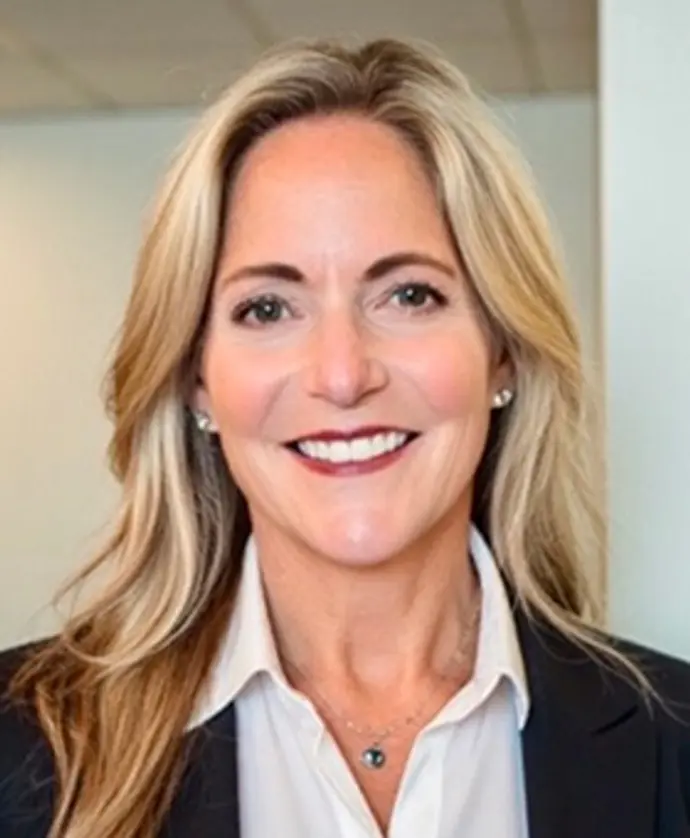
I was completely devastated and kept thinking this couldn’t be happening. All I knew was that pancreatic cancer was the one you don’t want. Once the news sank in, I just kept thinking that dying was not an option. I really stuck by that. I said to my family and friends, “I don’t care what I have to go through, but I have to survive. I’m not leaving my boys, and no one else is marrying my husband.”
When I asked my oncologist, “How long do I have to live?,” he replied “Most people in your condition don’t survive longer than nine months.”
Well, that was 14 years ago, and I now have what they call NED, or no evidence of disease, which means I have no active cancer. I became a part of the 1% that survives more than five years. My doctors were shocked. But I have always thought that if someone is in that 1%, why can’t it be me?
Getting a PDAC Diagnosis
Starting in 2011, I was getting this weird pain in the middle of my back that was constant and somehow worse at night. I went to my doctor a bunch of times, and they said, “Well, you’ve always had back pain.” But this was different. I was in horrible pain, and it just kept getting worse despite trying all sorts of treatments and medicines.
After switching internal medicine doctors, this doctor decided to do a CT scan with contrast, and it revealed a 7-centimeter tumor at the head of my pancreas. I remember my first surgical oncologist saying to me, “Well, there’s no way it could be pancreatic cancer because you’re way too young.” Then, they did an endoscopic biopsy.
Long story short, it took nine months, and I finally got diagnosed in January 2012 at an NCI-designated hospital. By the time I got diagnosed, the cancer had spread. There were lesions in my liver and some spots in my chest and lungs.
I was in complete shock. My kids were so young at the time. They were in kindergarten and second grade. I was working full-time and traveling all over the Eastern Seaboard. I just couldn’t imagine leaving my boys so young and not seeing them grow up. I just had to survive.
Treatment Experiences
While chemotherapy had a slew of side effects, I had an incredible response to it. I was on a regimen called FOLFIRINOX, which is a combination of four drugs. Back in 2012, it was 20% stronger than it is now. During my 12 full rounds of chemo, I dropped to 89 pounds, experienced intense neuropathy, mouth sores, lots of GI issues, and I even became allergic to the chemo after round nine.
However, after the first six rounds, most of the metastasized areas were gone, and my tumor had shrunk almost in half. Once I finished FOLFIRINOX, my oncologists decided that I needed a break from this chemo, so I completed 25 rounds of radiation along with a 24/5 chemo pump. Radiation with a chemo pump of one drug was a breeze compared to FOLFIRINOX. Once I finished, I had to take what seemed like the longest month from treatment.
On Oct. 4, my scans revealed no active cancer. I really cannot describe how amazing that day was. It was a miracle. My oncology team told me that I was the talk of the entire hospital because they had never seen a pancreatic patient have such an extreme response to treatment and go from stage IV to having no active cancer.
However, I still had a 2-centimeter primary tumor that was wrapped around my superior mesenteric artery. For the most part, a traditional Whipple surgery was not an option, as there was no way to get clear margins. My surgical oncologist suggested that I go to the University of Louisville Hospital and have a new cutting-edge surgery that could eliminate the existing tumor without severing a major artery. Getting rid of that tumor was important to help avoid recurrence.
I underwent a procedure called irreversible electroporation (IRE) or NanoKnife. The eight-hour surgery was successful, yet I had some complications. I ended up going back to the hospital about three weeks later when I had a serious infection in my feeding tube that required IV antibiotics and a blood transfusion. Once I recovered from surgery, I did another four months of chemo, which gave me a whole new set of side effects, but I got through them.
Positive Mindset Matters
One thing that really helped me get through the diagnosis and treatment is that I am an insanely positive person. That certainly came in handy because I was laser-focused on beating this and choosing to be happy every single day.
I’m just one of those solution-oriented people. I’m always like, “What do I need to do? Let’s do it.” I would just push through; I had to. When people would ask me, ‘How do you stay so positive?,’ I would tell them that I didn’t choose to get cancer or go through this, but I do get to choose my attitude.
So, I chose to be happy because if the doctors were right and I had nine months left, I was going to be happy. I was very intentional; I spent a lot of time talking to my boys about how much I loved them and just about life in general. I told them how they could do whatever they set their minds to with hard work and determination. I shared stories of my successes and my failures because if the oncologists were right, I wanted to make sure they felt loved and that they would be OK. I also lived my life. I continued to work from home, go to concerts, and make memories with everyone in my family.
I also just had this peace that I was going to be OK the entire time, which is kind of crazy. My husband and I would pray together every night, and I believe that faith is what carried us through. Of course, not every day was rainbows and unicorns, but I consciously took negative people out of my life and would stop myself from going down that ‘what if,’ negative rabbit hole.
Navigating the Health System: Advice for Others
First and foremost, if you are diagnosed with pancreatic cancer, you must find a pancreatic cancer specialist. Find one that’s willing to fight for you and has a plan A, plan B, and maybe even a plan C. You need someone who is positive and believes you’re going to live. My doctor told me that I was a “statistic of one.”
I realized that all doctors are not created equal. When I sought additional opinions, I was shocked by how two top doctors could have completely different opinions. So, you have to trust your own gut instinct, too.
If I got diagnosed today, I would look at hospitals and oncologists who are doing the most clinical trials, as they are usually the experts who not only see patients but are actively doing research.
I would also get more than one opinion. Get two, three, four; whatever it takes until you feel confident about an oncologist and their team.
Make sure your team does germline hereditary testing and tumor sequencing to identify the tumor’s somatic mutations. Understanding what these are should guide your oncologists in choosing the best therapies for you. This testing has become more important in the last couple of years, with over 90% of pancreatic cancer patients having a mutated KRAS protein, which is what drives the growth of most PDAC cancer patients.
I am excited for all the promising clinical trials that specifically target that KRAS mutation. It’s an exciting time with the FDA approval of daraxonrasib. What’s more exciting is the extensive pipeline of new therapies being tested in clinical trials. I believe it’s the beginning of a new era in pancreatic cancer survivorship.
Advocacy and Support
When I was going through cancer, I was thankful that I really did not know much about pancreatic cancer or cancer in general. I think for me, ignorance was bliss.
Every patient needs to advocate for themselves or have a trusted relative or friend to advocate for them. I was lucky enough to have my sister, Cari, who became my own personal medical advocate. She did all the research and came to every appointment prepared with a list of questions. She was already thinking about plan B or plan C. She researched pancreatic cancer specialists and lined up additional opinions just to make sure I was on the right track. She became so knowledgeable that every new oncologist we met asked her if she was an oncologist herself. She would reply with a simple “No, just her medical advocate.”
If you have to be your own advocate, don’t be afraid to ask questions. I also suggest asking your oncologist if you can record your visits, as there is a lot of information to absorb. Also, I experienced a lot of “chemo brain,” where I wouldn’t remember things that happened in the last 10 minutes. Trying to remember an entire oncology appointment with oncologists using medical terms is difficult.
I think the best resource is finding other patients and survivors. While some social media groups can be toxic or filled with people trying to sell you something, there are some groups that can offer solid advice. I have personally learned more from other pancreatic cancer patients than any specific oncologist or researcher.
When I was diagnosed, it was difficult to find someone close to my age who was going through this cancer. I found my friend, Robb, through the Pancreatic Cancer Action Network (PanCAN)’s Survivor & Caregiver Network, which links patients and families with trained volunteers who share similar experiences. PanCAN also provides free, personal one-to-one support and information about the disease through their Patient Services Program. Be sure to look at all the wonderful pancreatic cancer nonprofit organizations. They are all incredibly valuable and offer different types of support.
Living With PDAC
Today, I am a research patient advocate and marketing and PR professional, and I share my experiences and knowledge on social media. I especially like working with industry partners on trial design, patient support/patient advocacy services, and writing patient-facing materials that are understandable to all patients while staying accurate to the research.
This year, I was selected to be an ad hoc programmatic reviewer for the Pancreatic Cancer Research Program (PCARP), which is a U.S. Congress-established fund in the Department of Defense. I was the only survivor advocate on the newly published ASTRO guidelines for pancreatic cancer, ensuring our patient voices are heard. In addition, I was appointed to the NCI’s Pancreatic Task Force as the only survivor and one of two patient advocates.
As a rare long-term survivor, I think we need to talk more about survivorship because I do believe more people are living with this cancer. There are a lot of treatment side effects that survivors deal with long-term. For example, the cancer damaged my pancreas. I now have type 3c diabetes, which makes me insulin-dependent and pancreatic enzyme-dependent. It’s a small price to pay, but it’s something I have to deal with.
The biggest thing I want people to know is that pancreatic cancer is not necessarily a death sentence. I was the “worst-case scenario.” But guess what? I’m still here!
Follow Elise on Instagram: @stagefoursurvivor and TikTok: @stg4survivor.
Show Sources
Photo Credit: E+/Getty Images
SOURCE:
Elise Roth Tedeschi.