A new drug's journey from bench to bedside can take decades, and the path is often riddled with detours.
The discovery process starts with an idea, an insight, or even just keen interest. A researcher may notice that an existing treatment has unexpected effects, a vocal patient advocacy group may make noise about the lack of existing therapies for a given condition, or perhaps a scientist will uncover a new biological process that causes a disease.
All of these scenarios can, and do, open up new avenues of research and may spur the development of new medications.
Let's explore the journey of Tecvayli (teclistamab-cqyv), a medicine that helps people with certain diseases like multiple myeloma. We'll see how it was made and why it's safe and potentially helpful for patients like you.
Tecvayli is a bispecific antibody, a class of drugs that falls under the umbrella of immunotherapy. These agents harness your body's immune system to wage war on cancer. Bispecific antibodies were actually first discovered in the 1960s, but Tecvayli – the first in its class for multiple myeloma – wasn't approved by the FDA until 2022.
Here's the story of what happened in those 50+ years.
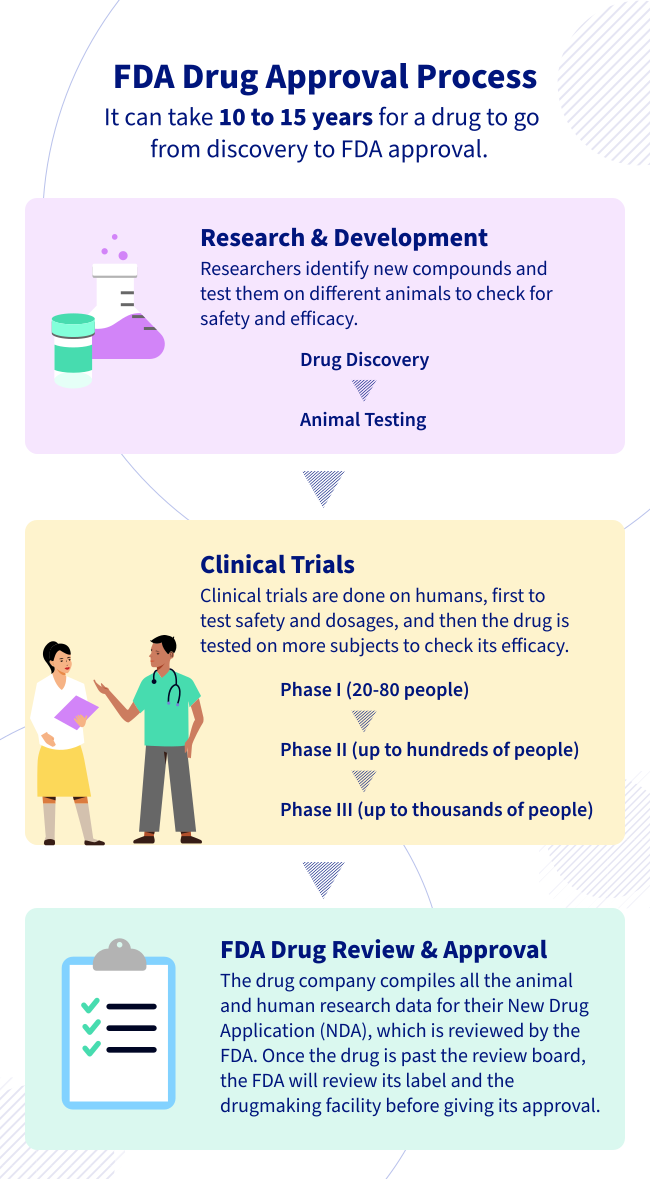
Step 1: Discovering and Making the Drug
Bispecifics are lab-made proteins that bind to two different antigens that allow the proteins to attach to cells in your body. Thousands upon thousands of potential bispecifics were screened to see which is most likely to be effective against a disease or condition like multiple myeloma.
Screening bispecific antibodies involves high-volume, automated techniques that quickly check whether a candidate molecule sticks to specific targets.
Once a promising candidate or candidates are identified, the journey to the pharmacy or bedside is just beginning.
Bispecifics bring immune T cells directly to the myeloma cells to attack them. Myeloma cells express certain molecules, such as B-cell maturation antigen (BCMA), which is why researchers thought to attack this cancer with bispecifics that attach to these targets, explains Hearn Jay Cho, MD, PhD, a clinical professor of medicine (hematology and medical oncology) at the Icahn School of Medicine at Mount Sinai in New York City and the chief medical officer of the Multiple Myeloma Research Foundation.
Step 2: Testing in the Lab
Before testing a drug like Tecvayli in people, researchers must make sure it does not cause any undue harm. They do this via in vitro (lab-based) studies or in vivo (animal) studies. Adhering to Good Laboratory Practices ensures that these studies are done consistently and safely.
Tecvayli maker Janssen Pharmaceutical Companies of Johnson & Johnson first shared preclinical trial results late 2016 and 2017. Teclistamab showed that it had tumor-slaying activity against BCMA-expressing cells in preclinical studies in mice when compared to other antibodies.
Step 3: Trying Tecvayli in People
Once a drug passes preclinical muster, further studies are needed in people – lots of them.
Before trials in people are even started, companies must submit an Investigational New Drug (IND) application to the FDA, which includes:
- Preclinical data
- Manufacturing information
- Study plans
Another added layer of safety is monitoring by an institutional review board (IRB) that makes sure benefits of the trial outweigh any risks.
Trials in people are organized by phases.
Phase 1 trials. These small tests evaluate a drug in a small group of people for the first time to see if it is safe, identify the best way to give it, and to see if there are signs that cancer responds to it. About 70% of drugs move on from phase 1 trials.
Phase 2 trials. These bigger tests involve a larger group of people and look at effectiveness and safety. Around 33% of drugs move to phase 3.
Phase 3 trials. These biggest tests use even larger groups of people and seek to confirm a drug's effectiveness, monitor any side effects, and compare it with standard or similar treatments. Roughly 25%-30% of drugs move on from phase 3 trials.
Step 4: Checking by Experts
If the new treatment is found to be effective and meets safety requirements throughout all three phases, the sponsor of the trial may ask the FDA for its blessing.
The approval process
This formal process starts with a New Drug Application (NDA) requesting approval and includes:
- Data from all studies
- Details from the manufacturing process
Specialized FDA advisory arms made up of subject matter experts weigh all the evidence. If it accepts the NDA, the FDA then sets a Prescription Drug User Fee Act (PDUFA) as the target for approval. Reviews typically take six to 10 months, following a 60-day filing check. The FDA's Oncologic Drugs Advisory Committee (ODAC), which is made up of myeloma experts, was the advisory panel that reviewed the data for Tecvayli.
Some drugs can cut the line and get reviewed faster. Tecvayli was granted Orphan Drug Designation by the FDA in 2020 for the treatment of multiple myeloma. This status is given to medications that show promise in the treatment, prevention, or diagnosis of diseases with limited or no other options. The drug also received an FDA Breakthrough Therapy Designation in June 2021. This designation is designed to speed the development and review of drugs that are intended to treat a serious condition.
Tecvayli was approved in October 2022 for relapsed/refractory multiple myeloma in the U.S.
The approval, based on the results of the MajesTEC-1 trial, is for adults with multiple myeloma that has come back after at least four prior lines of treatment.
In this study, people had an overall response rate (the percentage of people whose cancer shrinks or disappears) of 61.8%. The complete response or better rate – the percentage whose treatment led to the disappearance of all detectable signs of myeloma – was 28.2%.
Bispecifics, including Tecvayli, do come with side effects.
In the MajesTEC-1 study, cytokine release syndrome (CRS) occurred in 72% of patients, and neurologic problems occurred in 57%. CRS is marked by the rapid release of inflammatory cytokines into the bloodstream.
Due to these risks, Tecvayli carries a boxed warning, which is the strictest alert that the FDA can give about a drug's risks.
Side effects also include infections, but these can be prevented with antibiotics and other therapies.
Combination treatment
More recently, the FDA gave its nod to the combination treatment of teclistamab with daratumumab hyaluronidase-fihj (Tec-Dara). In the study that led to its approval, MajesTEC-3, there was an 83% reduction in the risk of disease progression or dying, compared to standard treatments. The combination was as safe as the drugs when they are used alone.
This study was part of the FDA's new Commissioner's National Priority Voucher (CNPV) Pilot Program, which aims to fast-track new drugs that address an unmet need. It aimed to move this combination forward so it can be used at the first relapse.
"The results are remarkable," says Cho. "The combination is now an attractive second-line therapy for patients with relapsed myeloma."
This trial also looked at minimal residual disease (MRD), which describes a very small number of cancer cells that remain in the body during or after treatment and is an early indicator of success.
Step 5: Watching Over Time
Drugs are still studied after they are approved. Phase 4 trials track their safety to validate the benefits. The FDA also pays attention to how they are used in the real world and looks out for any safety problems.
For example, Johnson & Johnson is seeking approval from the European Medicines Agency to expand the indication of Tecvayli for adult patients with relapsed/refractory multiple myeloma who have received at least one prior therapy.
This filing is buoyed by data from the phase 3 MajesTEC-9 study evaluating Tecvayli against established second-line treatments. It found that Tecvayli results in superior progression-free and overall survival when compared with standard of care as early as second line.
New Medicines Are Developed With Your Safety in Mind
Tecvayli has been studied a lot to make sure it's safe and helpful. Scientists, doctors, and other experts worked together to make sure it's an effective medicine for people who need it. While it's normal to wonder about the safety of any new medicines, Tecvayli's long journey from lab to pharmacy shows that a lot of care and attention went into making sure it's the best it can be. If you have questions or worries about Tecvayli or any other medicine, ask your doctor or pharmacist. They're there to help and make sure you feel comfortable with your treatment.