
Diffuse large B-cell lymphoma (DLBCL) is the most common type of non-Hodgkin lymphoma in adults. Doctors consider it an aggressive lymphoma, meaning it grows and spreads quickly. The word “aggressive” can sound worrisome, but in lymphoma care, aggressive cancers often respond to treatment better than slow-growing ones.
The most common first-line treatments for DLBCL are a combination of chemotherapy plus one immune-targeting medication, or immunomodulator. For everyone with DLBCL, this immunomodulator is either the monoclonal antibody rituximab (Rituxan or a biosimilar) or the antibody-drug conjugate polatuzumab vedotin (Polivy).
Two common combinations treatment are:
- R-CHOP: Four chemotherapy drugs plus rituximab
- Pola-R-CHP: Three chemotherapy drugs plus rituximab and polatuzumab
R-CHOP is the most common option. If your DLBCL is at an early stage (I or some stage II), you may also need radiation therapy.
Initial Treatments for DLBCL
The two different types of medicines you’ll take for your initial DLBCL treatment come in combination, but are separate drug classes that work in different ways. Although some DLBCL cases may involve other chemotherapy agents not on this list, the majority of treatments include those listed here.
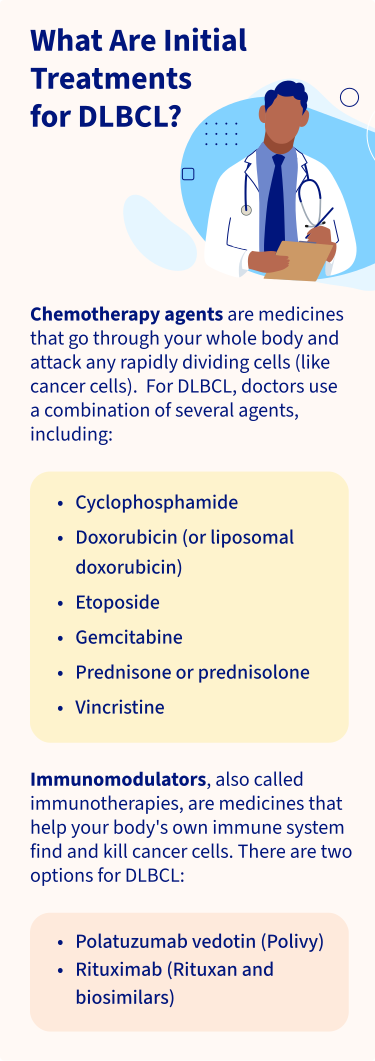
What to know about chemotherapy agents:
- They target rapidly dividing cells, including lymphoma cells.
- They are often combined to improve how well they work (for example, in R-CHOP).
- You get chemotherapy treatment in cycles with rest periods.
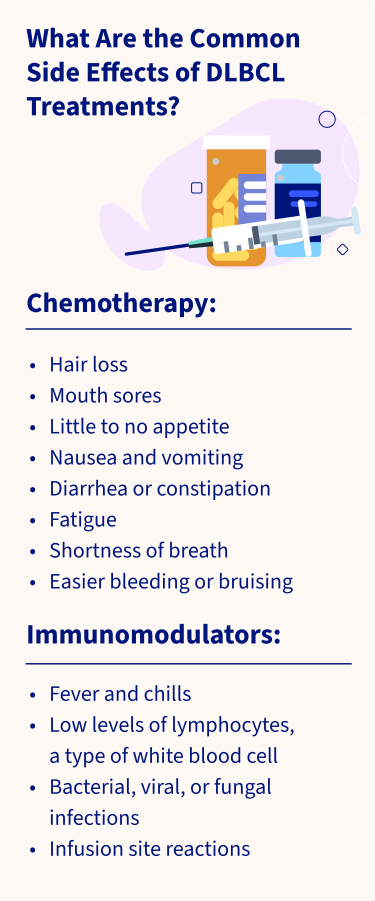
- Side effects can include fatigue, hair loss, nausea, infection risk, and low blood counts.
- Many side effects are temporary and manageable with supportive care.
What to know about immunomodulators:
- They help your immune system find and kill lymphoma cells.
- They can make immune cells more active.
- They may block signals that lymphoma cells use to grow and survive.
How Do Chemotherapy Agents Work?
Chemotherapy travels through your bloodstream and can reach lymphoma cells throughout your body. Some chemotherapy medicines damage the DNA inside lymphoma cells. DNA gives the cell instructions on how to grow and divide. When the DNA is damaged, the cell can’t reproduce and dies. Other chemotherapy drugs get in the way of the part of a cell’s structure that allows it to divide, stopping it from splitting into new cells.
Each chemotherapy agent doctors combine in R-CHOP attacks the cancer in a different way. Using multiple drugs increases the chance of destroying more lymphoma cells and lowers the risk that the cancer will resist treatment.
How Do Immunomodulators Work?
Rituximab (Rituxan), the most common immunomodulator for DLBCL treatment, is a monoclonal antibody. It targets a protein called CD20 found on B cells. Once it attaches to this protein, it:
- Flags cancer cells for destruction by your immune system
- Sets off chain reactions that harm cancer cells
- Triggers cell death
Polatuzumab (Polivy) works like a cancer-killing delivery system. It uses an antibody that knows how to find lymphoma cells and a powerful chemotherapy drug that can kill them:
- The antibody part attaches to a protein called CD79b, which sits on the surface of many B-cell lymphoma cells.
- Small amounts of a chemotherapy drug are connected to this antibody.
- After the antibody attaches to the cancer cell, the whole package gets pulled inside the cell and releases the chemotherapy, triggering cell death.
Which Chemotherapy Agents Are Used to Treat DLBCL?
There are two common combinations of chemotherapy agents doctors use to treat DLBCL.
When is R-CHOP Prescribed for DLBCL?
Doctors have prescribed R-CHOP as the first-line treatment for both early-stage and advanced-stage DLBCL for over 20 years. If your lymphoma is in only one or two areas (stage I or certain types of stage II), you may have several cycles of R-CHOP.
Before starting treatment, your doctor will evaluate your overall health, heart function, and stage of disease to be sure R-CHOP is safe and appropriate for you.
When is Pola-R-CHP Prescribed for DLBCL?
You may benefit from Pola-R-CHP if you have a higher-risk disease or if your gene profile shows you have a certain subtype of DLBCL. Pola-R-CHP is newer, and some studies show it can be more effective in higher-risk groups.
How Effective is R-CHOP?
In clinical trials for R-CHOP that led to its FDA approval, researchers compared R-CHOP with CHOP, an older standard treatment regimen of a combination of chemotherapy agents without rituximab. They found:
While R-CHOP can cure the disease, it’s still possible for the cancer to come back. About 40% of people on R-CHOP have a recurrence of the DLBCL.
How Effective is Pola-R-CHP?
The FDA approved Pola-R-CHP as a first-line treatment for DLBCL based on results from the POLARIX trial. This study compared treatment results of Pola-R-CHP to R-CHOP in intermediate- to high-risk cases of DLBCL in people who hadn’t had taken any previous treatments.
Key findings included:
- Slightly higher survival rate. 76.7% of people receiving Pola‑R‑CHP were alive without progression versus 70.2% with R‑CHOP.
- Less disease progression. 27% fewer people had disease progression, relapse, or death on Pola-R-CHP.
Ultimately, the overall survival rate isn’t different between the two treatments, but studies show people taking Pola-R-CHP have fewer relapses. Some doctors choose it as the first-line treatment over R-CHOP for this reason. Talk to your doctor about what’s best for you and your risks and disease.
Are DLBCL Treatments Safe?
Researchers have studied both R-CHOP and Pola-R-CHP well, and most people tolerate both treatments well. There are some safety risks and potential complications, though for the most part these are rare.
R-CHOP also comes with a black box warning, which is a highlight drugmakers put on medications to alert users to potential severe adverse effects.
Pola-R-CHP doesn’t have a black box warning. Your doctor will monitor you while you’re on these treatments to help watch for serious side effects or complications.
How Much Do DLBCL Treatments Cost?
First-line DLBCL treatments can cost tens of thousands of dollars. Estimates range from $27,000 to $70,000 depending on where you receive care and how your clinic and insurance calculate costs.
Your actual out-of-pocket costs will depend on:
- Your insurance plan
- Deductible
- Coinsurance
- Annual out-of-pocket maximum
Before treatment begins, ask your care team to connect you with a financial counselor. Many drug manufacturers offer patient assistance or copay programs that can lower what you pay for medications like rituximab.
Nonprofit organizations and hospital financial aid programs may also help cover copays, travel, lodging, or other treatment-related expenses. Taking these steps early can significantly reduce your financial stress during treatment.
Clinical Trials of R-CHOP and Pola-R-CHP
Clinical trials are research studies that test new treatments, find better ways to use existing treatments, or explore how to improve care. They’re an important part of cancer research and help doctors learn what works best.
Many clinical trials include people with DLBCL, including studies around regimens like R‑CHOP and polatuzumab‑based combinations. For example, there are ongoing active trials comparing Pola‑R‑CHP to other treatment regimens or testing variations on these regimens in different groups at multiple centers around the world.
What to know about clinical trials:
- Clinical trials happen at many stages of research, from early safety studies to larger trials that compare treatments.
- Not all trials are enrolling at all times, so availability changes.
- Trials can be local, national, or international.
How to explore clinical trials:
- Visit ClinicalTrials.gov, a large database of registered trials
- Ask your doctor or cancer care team if there are trials you might qualify for.
- Cancer centers and advocacy organizations often have lists of trials and support services.
Is R-CHOP or Pola-R-CHP Right for Me?
Keep in mind that every person is different and responds in slightly different ways to treatments. Other factors play a part in your decision, too, such as your overall health and previous treatments.
Your doctor will go over the risks and benefits of DLBCL treatments with you so you can make an educated choice about what’s most safe, effective, and affordable for you.