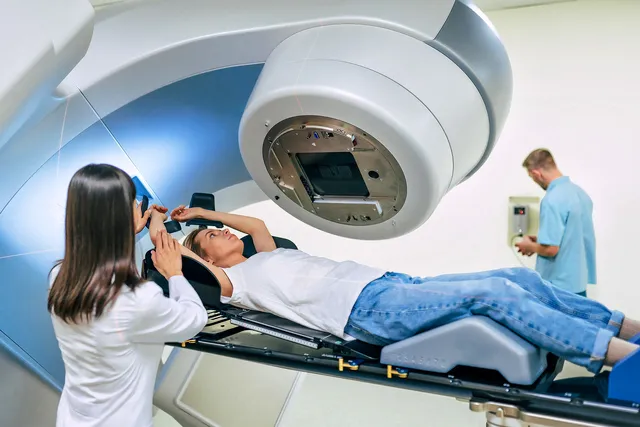
Taking part in a clinical trial is often a good option for people who have HR+/HER2- metastatic breast cancer (mBC). The disease has no cure, and doctors are constantly looking for more effective ways to treat it.
Clinical trials are scientific studies of the safety and effectiveness of experimental treatments. They’re an important part of the process of developing new medications.
HR+/HER2- mBC Treatment Research
There’s no single treatment that works best for everyone with HR+/HER2- mBC. Right now, most people start with two kinds of medication — one that prevents cancer cells from using estrogen as fuel and one that blocks certain processes cancer cells need to grow and survive.
This combination of hormone therapy and targeted therapy can improve your symptoms and keep the cancer from growing for a while. But most people eventually need to switch to different medications within these drug classes or try a different type of treatment. Researchers are looking both for new treatments and for ways to make existing treatments work better. Here’s some of what they’re studying.
Hormone therapy. For people who’ve gone through menopause, one of the main types of estrogen-blocking treatment is fulvestrant (Faslodex), a drug that’s given as a monthly injection. Researchers are developing other choices that you can take as a daily pill.
Targeted therapy. As doctors learn more about how cancer cells survive and grow, they’re finding new ways to block these processes. A targeted drug called a CDK4/6 inhibitor, such as abemaciclib (Verzenio), palbociclib (Ibrance), or ribociclib (Kisqali), is usually added to hormone therapy to help it work better. But cancer cells can adapt to these drugs so that they’re no longer effective.
A large number of clinical trials focus on targeted drugs that work in different ways to interrupt the chemical signals that control things like cell division, cell death, and the formation of a tumor's blood supply. These may help if your cancer has become resistant to the available treatments.
Antibody-drug conjugates (ADCs). This type of drug combines a monoclonal antibody with a chemotherapy drug. The antibody finds and attaches to a particular protein on a cancer cell and delivers the chemo directly to it, causing less damage to healthy cells.
Datopotamab deruxtecan (Datroway) and sacituzumab govitecan (Trodelvy) are approved to treat HR+/HER2- mBC if you’ve already tried hormone therapy and chemotherapy, and researchers are working on several more ADCs.
Immunotherapy. Drugs are also being tested that fight cancer using the power of your own immune system. They work by helping your immune cells either recognize or attach to cancer cells so they can attack and destroy them.
In addition to developing new drugs, clinical trials for HR+/HER2- mBC are also helping doctors learn:
- The best order in which to try different drugs or types of treatment
- Which combinations of drugs are most effective
- Characteristics of cancer cells that can tell your doctor which treatment will work best
- Tests that can show when the cancer is becoming resistant to your current treatment
- How often you should have tests to see if the cancer is growing or spreading
If you think you’d like to be part of the research into new and better HR+/HER2- mBC treatments, here’s what you need to know.
How Clinical Trials Work
Once scientists find a medication that shows promise in lab tests, they study how it works in people.
In a phase III clinical trial for metastatic breast cancer, you may or may not get the treatment that’s being tested. Some people taking part in the study get the standard treatment. Others get the new treatment being tested. Depending on how it’s set up, you might not know which group you’re in until the study is over.
Before you join, the research team will explain the study procedure, including the schedule for your treatments and any tests you’ll need before and during the study. They’ll make sure you understand your rights and any possible risks.
You shouldn’t have to pay to be part of a clinical trial. The costs are usually covered by the people running the study, although your health insurance plan may be responsible for routine care you need while you’re taking part. You might also be paid for your time and expenses, like transportation.
It’s important to know that even after you’ve signed up, you are free to leave a clinical trial at any time, for any reason.
Who Can Join a Clinical Trial?
You can consider taking part in a clinic trial at any point in your treatment. But each study has different requirements for who can join, called the inclusion criteria. These are things like your age and general health. For clinical trials of HR+/HER2- mBC treatments, whether you can participant will also depend on:
- Whether you’ve been through menopause
- Characteristics of the cancer cells, like gene mutations
- Other treatments you’ve had
- Your life expectancy
Inclusion criteria make sure that the treatment is being tested on the kinds of patients it’s designed to help.
Should You Consider Joining a Clinical Trial?
Treatments for HR+/HER2- mBC can slow its growth and help you live longer, but the disease is considered incurable. That may make a clinical trial of an experimental treatment an attractive option. But there are risks.
Possible benefits
- You may get good results from the new treatment.
- You’ll help doctors learn more about treating HR+/HER2- mBC.
- You may be watched more closely by your care team.
Possible drawbacks
- The new treatment may not help you.
- The side effects could be worse than those of your current treatment.
- The study location may not be convenient for you.
- You’ll probably have extra testing and office visits.
How to Find a Clinical Trial
If you think you’re interested in taking part in a clinical trial, the first step is to talk to your doctor. They’ll know whether it would be safe for you to participate and what type of treatment might help you. They may also know of a trial in your area that would be a good fit.
Other places to look include:
- Clinicaltrials.gov, a searchable database managed by the National Institutes of Health
- Medical schools
- Hospitals or cancer centers
- Education and advocacy groups like the American Cancer Society and Susan G. Komen
- Websites for drug companies
Even if you don’t qualify for a clinical trial, you might still be able to try an experimental treatment. Drug companies are sometimes allowed to provide unapproved medications to people who have no other treatment options. Your doctor can help with this process.
Show Sources
Photo Credit: EyeEm/Getty Images
SOURCES:
National Cancer Institute: “Breast Cancer Treatment (PDQ®)–Health Professional Version,” “How Do Clinical Trials Work?” “What to Expect During a Clinical Trial,” “Who Pays for Clinical Trials?” “Why Participate in a Clinical Trial?”
American Cancer Society: “Treatment of Stage IV (Metastatic) Breast Cancer,” “Hormone Therapy for Breast Cancer,” “Targeted Drug Therapy for Breast Cancer,” “Phases of Clinical Trials,” “Being Part of a Clinical Trial,” “Things to Consider Before Taking Part in a Clinical Trial,” “Finding a Clinical Trial,” “If You Can’t Join a Clinical Trial: Compassionate Use.”
National Comprehensive Cancer Network: “NCCN Guidelines for Patients: Metastatic Breast Cancer, 2025.”
Frontiers in Pharmacology: “Therapeutic evolution in HR+/HER2- breast cancer: from targeted therapy to endocrine therapy.”
Journal of Clinical Medicine: “Novel Treatment Strategies for Hormone Receptor (HR)-Positive, HER2-Negative Metastatic Breast Cancer.”
Clinicaltrials.gov.
Experimental & Molecular Medicine: “Targeting CDK4/6 in breast cancer.”
Cancer Treatment Reviews: “Current and emerging treatment approaches for hormone receptor-positive/human epidermal growth factor receptor 2-negative metastatic breast cancer.”