Tidbits From the Field: Myasthenia Gravis
A Changing Landscape
When we first started out, we had prednisone and other agents. Those were OK. But they came with significant side effects, especially prednisone. Now, since 2018, the landscape has changed. We have newer therapies coming on the horizon which block different kinds of B cells. We also have what we call the 'Big Two' targeted therapies: One is complement blocking; the second is FcRn blocking. Therapy in the MG landscape has really exploded.
– Raghav Govindarajan, MD, stroke director, Primary Stroke Center (DNV), St. Elizabeth Hospital

A Blast of Awareness
I'm excited for the future of myasthenia gravis. In the last couple years, there has been an influx of research, new medications, and even seeing commercials on TV for MG. I'm optimistic that the new research can lead to a cure. We are understanding more about MG and how it affects people, also how different antibodies affect us differently. I believe that by continuing to raise awareness for MG, I'm helping push towards a cure for our community.
– Jen Ottman, Janesville, Wisconsin

Landmark Discoveries
For the first time, researchers at UC San Diego mapped a 3D model of the muscle acetylcholine receptor. The investigators found that antibodies from each patient bind to different areas on the receptor, disrupting its functioning through diverse mechanisms. The MGFA (Myasthenia Gravis Foundation of America)'s scientific advisers believe this to be one of the most important discoveries in MG in this century.
– Kate Stober, Myasthenia Gravis Foundation of America, Westborough, Massachusetts

Strong Social Media Support
One of the best things in the MG world, in my opinion, is the community. We have a wonderful support system on social media. People who understand me, and what I'm going through, are just a click away. The people in this community are so thoughtful and truly want the best for each other. The disease can cause such loss, but it has also given me new friends, a sense of belonging, and a purpose!
– Karah Humphries, Diana, Texas

Dramatic Advances in Science
The new treatments for myasthenia gravis (MG) present a dramatic advance in science. The old treatments suppressed the immune system more indiscriminately. The new treatments suppress more specific parts of the immune system. The first are complement inhibitors. They attack the nerve terminal on the muscle fiber, thus blocking the signal from the nerves to the muscles. The results are often dramatic, with substantial increases in strength and stamina within a few days.
– Kevin Gaffney, MD, neurologist, Memorial Hermann Mischer Neuroscience Associates, Memorial Hermann Health System, Houston
Stopping Rogue Antibodies
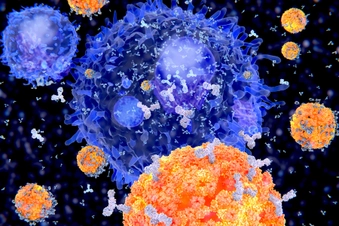
The second type works indirectly on antibody levels. Antibodies are supposed to recognize foreign invaders and target them for destruction. The process by which these drugs decrease antibodies is very complex. … To use a soldier analogy, antibodies are more like scouts who find and identify the enemy. These drugs essentially send the scouts home so they don't identify enemies. In the body, they actually destroy some antibodies. They do leave plenty of antibodies to fight off viruses and other invaders.
– Kevin Gaffney, MD, neurologist, Memorial Hermann Mischer Neuroscience Associates, Memorial Hermann Health System, Houston

A Realistic Perspective
A key to managing myasthenia gravis has been recognizing that life is marked by seasons, and these seasons bring about change. Within the first year of my diagnosis, I endured a thymectomy, a myasthenic crisis, seven weeks in a hospital (with 12 days on a ventilator), and more. … I'm in a good place now, but experience has taught me that could change. To live successfully – and realistically – with MG, I must accept there is no 'set it and forget it' treatment.
– Stephen V. Smith, Rainsville, Alabama

More Focus on Lifestyle
From my perspective, what seems especially promising is the renewed attention being paid to lifestyle modulation, where proper nutrition, stress reduction, and the best sleeping experience enhance patient resilience in immune therapy. Research has shown me that when a patient is educated in metabolic health [improving the risk factors for diabetes and diseases of the heart and blood vessels], they somehow experience higher tolerance to chronic corticosteroid use, finally allowing for a much greater state of stability.
– Andreas Bernhardt, Dr. Med., Kapf Health Center, Emmen, Switzerland

More Connection
There is more support than ever before for MG patients. While MGFA is the largest, leading patient advocacy organization solely supporting the MG Community, other small groups have been able to achieve more than ever over the last two to three years. More support groups, more educational events, more opportunities to connect with treatment providers and with each other. Social media groups have also proved a boon for the rare disease community.
– Kate Stober, Myasthenia Gravis Foundation of America, Westborough, Massachusetts

Precision Medicine
One of the most exciting developments in myasthenia gravis (MG) care is the ongoing shift toward individualized treatment. We're seeing real momentum in tailoring specific therapies, like complement inhibitors or FcRn blockers, to match patient subtypes and disease severity. This precision medicine approach not only improves outcomes but also reduces treatment burden. It's exciting to envision a future where 'one size fits all' is no longer the norm, and people with MG have more options that align with their unique clinical presentation and goals of treatment.
– Faisal Fecto, MD, neuromuscular neurologist, Advocate Medical Group Neurology, Park Ridge, Illinois


